Seleccionar una organización
Contribute to the Open Source Commons
Fecha de publicación: Nov 19, 2024
This article is one of four dedicated to providing information about the Commons Program:
- Innovate with the Open Source Commons
- Contribute to the Open Source Commons
- Understand the Requirements for Joining the Program
- Salesforce.org Open Source Commons Terms of Participation
Table of Contents:
- Contribute Your Skills and Expertise at a Commons Community Sprint Event
Commons Community Sprint events are one or two day working sessions where you can collaborate with other members of the Salesforce nonprofit and education community to solve problems and contribute solutions. These events are a product of the collective actions of individuals contributing their thoughts, ideas, talents, and skills like Salesforce administration and development, problem solving and innovation, and teamwork and leadership. Every Sprint is different because each one is composed of unique individuals. And, it's not just about contributing skills. Over 90% of participants say they learned new skills by participating in the Commons! - Mini-Sprint Events
Mini-Sprint events are virtual one day events focused on the work of one community-led project team. When you attend a mini-sprint, you spend your time working alongside other volunteers working on the specific goals that team has prioritized. - Contribute Your Skills and Expertise to a Community-Led Project
Community-led Open Source Commons projects are developed by our Nonprofit and Educational community, and led and owned by community volunteers. Salesforce.org staff provides guidance on community-led projects, removing technical and strategic blockers whenever they can. - Contribute Your Great Idea
We've heard it time and time again, and have seen it in action at our Commons Community Sprints—when we bring our community together, they come up with incredible solutions for tough challenges familiar to the nonprofit and education community. Solutions generally start at the same place: an idea someone has to solve a challenge! Add in a pinch of excitement, a dash of dedication, and a measure of planning, and you've got a recipe for an open source success story! - Build a Successful Project Team
Successful Community projects stick around for the long term, regardless of whether those with the original idea remain on the team. A successful open source project is more than just code, and requires a team committed to the philosophy of open source and the sustainability of the project over time. It all starts with building a solid project team.
Contribute Your Skills and Expertise at a Commons Community Sprint Event
Commons Community Sprint events are one or two day working sessions where you can collaborate with other members of the Salesforce nonprofit and education community to solve problems and contribute solutions. These events are a product of the collective actions of individuals contributing their thoughts, ideas, talents, and skills like Salesforce administration and development, problem solving and innovation, and teamwork and leadership. Every Sprint is different because each one is composed of unique individuals. And, it's not just about contributing skills. Over 90% of participants say they learned new skills by participating in the Commons!
Community Sprint events include many community-led projects - often including 10 or more teams - and each one could use your help in some capacity. When you register for the virtual or in-person event, you pick a project or two to focus on at the event, alongside other volunteers working toward the same goals.
Mini-Sprint Events
Mini-Sprint events are virtual one day events focused on the work of one community-led project team. When you attend a mini-sprint, you spend your time working alongside other volunteers working on the specific goals that team has prioritized.
Whichever type of event you choose to explore, you don’t need to be a developer or to be highly technical to attend. Everyone is invited and encouraged to participate. Regardless of your role in the community, consider your passion, your goals, what brings you joy, and how you best want to contribute to the Community Sprint events. The majority of Sprint event participants are Nonprofit and Education customers and consulting professionals. Their skills and experience will range from those just discovering Salesforce for the first time, to highly skilled, very active community veterans like MVP’s and Golden Hoodie recipients.
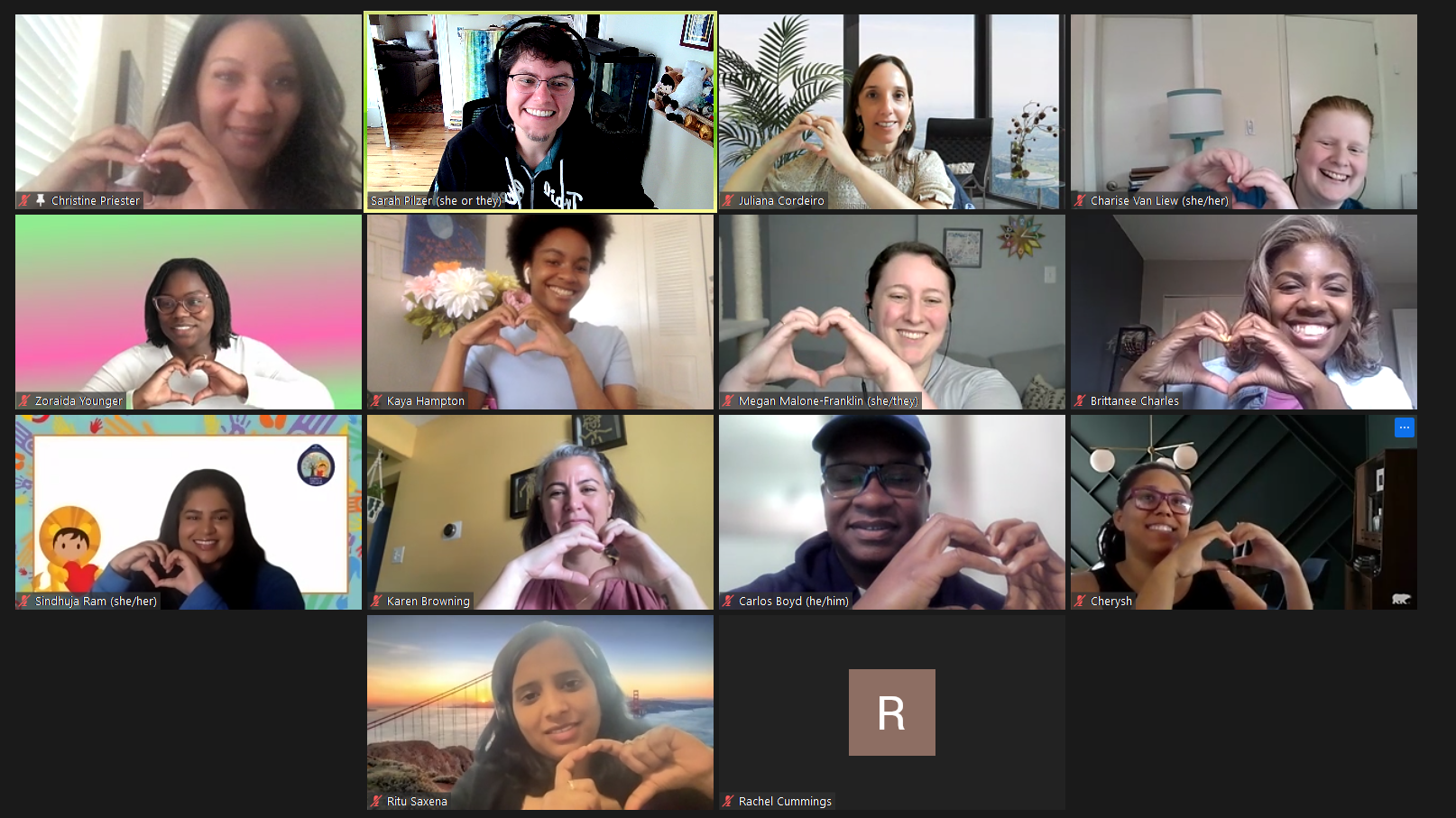
Members of the Diversity, Equity, and Inclusion Framework team at the May 2022 Community Sprint event.
At a Community Sprint anything can (and usually does) happen! For a look at past Community Sprint projects, many of which are still a work-in-progress, check out the Sprint GitHub Org.
Find an upcoming Sprint Event and join the conversation in the Trailblazer Community today.
Contribute Your Skills and Expertise to a Community-Led Project
Community-led Open Source Commons projects are developed by our Nonprofit and Educational community, and led and owned by community volunteers. Salesforce.org staff provides guidance on community-led projects, removing technical and strategic blockers whenever they can.
Project teams welcome all who would like to contribute their time, professional skills, and expertise, either during a Community Sprint event (link to Sprint article) or during monthly working sessions, and meetings.
If you’re interested in contributing to a project team, join the conversation in the Trailblazer Community today.
Contribute Your Great Idea
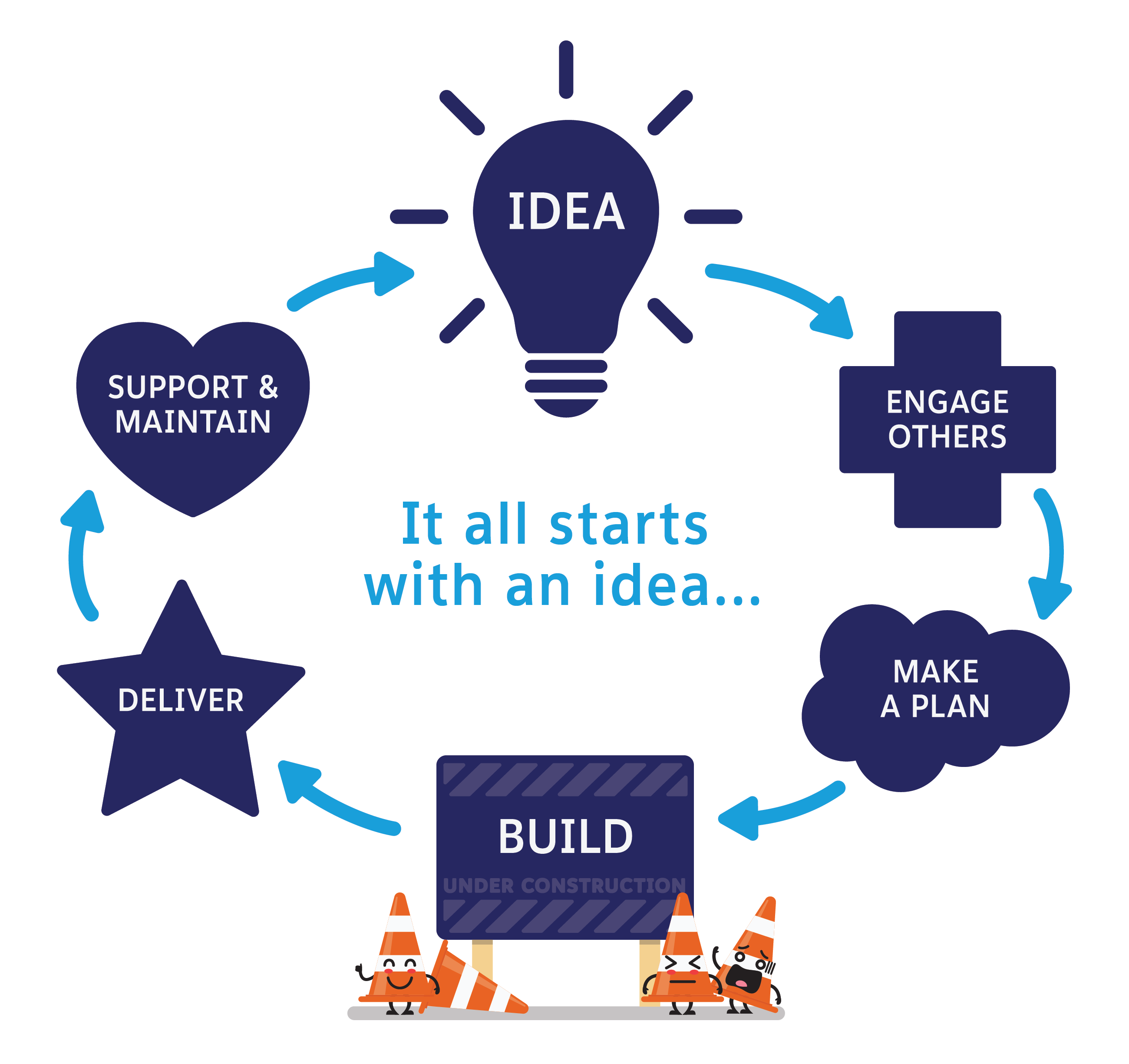
We've heard it time and time again, and have seen it in action at our Commons Community Sprints—when we bring our community together, they come up with incredible solutions for tough challenges familiar to the nonprofit and education community. Solutions generally start at the same place: an idea someone has to solve a challenge! Add in a pinch of excitement, a dash of dedication, and a measure of planning, and you've got a recipe for an open source success story!
Let's say you've built a custom solution in your org and think it could help other orgs facing the same challenge. Initially, you share your idea in the Trailblazer Community or on social media hoping to get some feedback. The post gets quite a bit of feedback and likes—everyone agrees your idea would be a great solution to the problem. Now what? The Open Source Commons is here to help you, which often begins with enlisting other community members to help you get started building on the idea. Reach out to the OSC program managers via sfdo-opensource@salesforce.com or the Trailblazer Community and we'll help you determine next steps.
Build a Successful Project Team
Successful Community projects stick around for the long term, regardless of whether those with the original idea remain on the team. A successful open source project is more than just code, and requires a team committed to the philosophy of open source and the sustainability of the project over time. It all starts with building a solid project team.
Assign Key Roles
To ensure the sustainability of your team and prevent burnout, we strongly recommend assigning team members to fulfill the following roles at minimum:
-
Product/Project Manager: This person leads the project as a whole, schedules and runs meetings, and provides meeting notes. The PM is the hub of communication and keeps the team on track.
-
Developer/Engineer: Projects with technical elements (like custom code or apps) need a technical engineer to develop the build. This role will likely also package and release your application using GitHub and CumulusCI.
-
Quality Assurance Tester: Each new element will need to be thoroughly tested to ensure a quality product.
-
Technical Writer: Documentation can make or break your project. If users don't know how to use what you've built, support needs increase and users will likely abandon the solution.
-
Support/Training: Users who post in your Trailblazer Community group need timely responses to their questions. Also, consider hosting demos, recording training videos, or conducting in-person training sessions.
-
Marketing: If no one knows about your project, what's the point in spending all this time on it? Promote your solution throughout the Salesforce.org community, host webinars or office hours, and create presentations.

Note One team member may want to take on more than one role at a time. That's perfectly fine, but in our experience no one person should take on too many roles at once. As suggested by the NPSP Videography Team, engage enough volunteers to avoid burnout! Members of your team will have other commitments, so spread the work over more people to ease the workload.
Strive for Team Diversity
Diversity fosters more creativity and innovation and ensures your solution will serve the largest community it can. Your team should:
-
Be a mix of customers and partners (after all, it's a requirement to join our program) to ensure community trust and inclusion.
-
Encourage a diverse makeup of differently skilled team members who represent a variety of cultures and backgrounds.
-
Be open to new team members. New team members mean new ideas and can help prevent burnout.
-
Continually seek out and engage thought leaders—especially at Commons Community Sprints and in the Trailblazer Community. They might be your next key team members.
Adopt a Contributor License Agreement
Projects should adopt a Contributor License Agreement (CLA) for new volunteers who join their team. A CLA protects teams against a volunteer's employer claiming rights to the intellectual property (i.e., the project) due to laptop use, time spent, etc. While not strictly required, CLAs are highly recommended. The Open Source Commons program uses its own CLA, which can be used as a template by program participants upon request.
Define the Time Commitment
Every well meaning volunteer will have something valuable to contribute to your team, but be sure they understand what's involved with joining your team and the importance of sticking to their commitment. For example, the NPSP Videography group asks their committee members to serve for at least a year, attend monthly meetings to plan videos, and manage the steps to produce certain videos from beginning to end. If that is more than the volunteer can commit to, periodically contributing or editing scripts might be more feasible.
Here are some more specific recommendations from our Commons Team:
-
Have a candid conversation with your volunteers and ensure they are prepared to commit the time needed to help move your project along.
-
Know your team's capacity and the needs of your project. Some volunteers may have a lot of spare time to help out, while others may only have an hour per month.
-
Have distinct tasks for schedule-limited members. For instance, documentation is a great task for folks with limited availability to attend regular team meetings because drafts can be created to suit a volunteer's schedule and worked collaboratively as a team before publishing.
-
Set a minimum term for volunteering in one of the primary roles. It takes time to ramp up on a project and time to hand a role off to another person when it's time to step down.
The next related knowledge article, Understand the Requirements for Joining the Program, can be found here.
Número del artículo de conocimiento
000372476
¿Resolvió este artículo su problema?
¡Háganos saber cómo podemos mejorar!
