Vælg en organisation
Salesforce Flow Error: Probably Limit Exceeded or 0 Recipients in Send Email or Email Alert Action
Udgivelsesdato: Jun 18, 2026
Beskrivelse
This error message occurs if you have a Flow with a Send Email action or Email Alert action. After triggering the Flow, you receive a Flow Error with the message: "Error Occurred: Probably Limit Exceeded or 0 recipients."
This error usually occurs when an email recipient field is blank, does not contain a valid email address, or references an inactive user or when using derived field as recipient.
Løsning
If the Flow has an Email Alert action, open the Email Alert under Setup > Process Automation > Workflow Actions > Email Alerts and review the Selected Recipients list. Check which email field is configured as a recipient and confirm that the field on the triggering record contains a valid email address.
If the Flow has a Send Email action, review the values configured in the following fields:
- Recipient ID
- Recipient Address Collection
- Recipient Address List
- CC Recipient Address List
- BCC Recipient Address List
If a Recipient ID is used, verify that the related Email field contains a value.
If Recipient Address Collection, Recipient Address List, CC Recipient Address List, or BCC Recipient Address List fields are used, ensure that the variables contain valid email addresses.
How to Identify the Email Alert in the Flow
- Go to Setup.
-
- In Lightning Experience, click the Gear icon in the upper-right corner and select Setup.
- In Salesforce Classic, click Setup in the upper-right corner.
- In the Quick Find box, search for "Flows."
- Under Process Automation, select Flows.
- Open the Flow that triggered the error.
- Double-click the Email Alert element referenced in the error email.
- Review the configuration panel. The Email Alert name appears:
-
- In the panel title
- In a text field in the middle of the panel
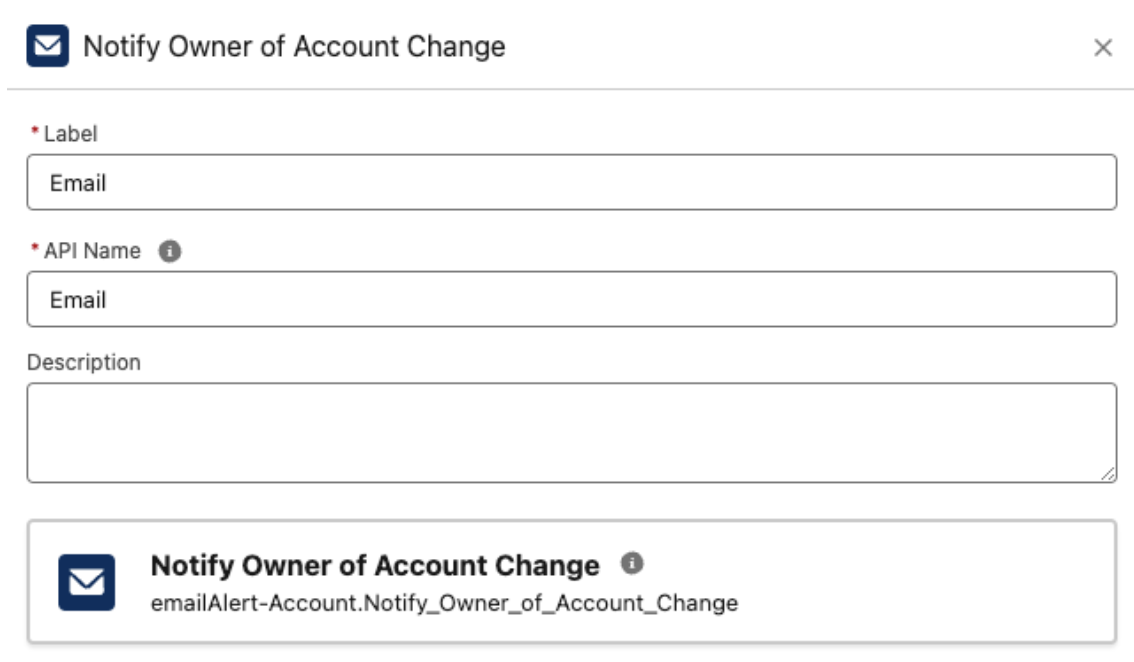
Image alt text: "Screenshot showing the Email Alert element configuration panel in a Salesforce Flow. The panel title and a text field in the middle both display the name of the Email Alert being used in the flow."
How to Open and Review the Email Alert in Setup
- Go to Setup.
-
- In Lightning Experience, click the Gear icon in the upper-right corner and select Setup.
- In Salesforce Classic, click Setup in the upper-right corner.
- In the Quick Find box, search for "Alerts."
- Under Process Automation > Workflow Actions, select Email Alerts.
- Locate the Email Alert referenced in the Flow and click Edit.
Resolution Options
To resolve this error, you can:
- Create a validation rule to require that the email field contains a value.
- Make the email field required on the field detail page or applicable page layouts.
- Update the Flow so the Send Email or Email Alert action runs only when the email variable or the triggering record’s Email field contains a value.
- For Derived Field Issue: Create an custom email field and update the custom email field with the related record email address using field update automation and then use the custom email field in the email alert.
Yderligere ressourcer
Email Alert Actions
Make a custom field required
General Email Limits
Daily Workflow Email Limit
Send Email Action
Vidensartikelnummer
000384002
Løste denne artikel dit problem?
Giv os besked, så vi kan forbedre os!
