Select An Org
The Power of Kanban Boards in Quip
Publish Date: Sep 28, 2023
Resolution
What you'll learn:
- How to access
- Why Kanban Boards?
- How to empower yourself and your team
- Kanban Boards in Quip for Sales
Accessing a Kanban Board
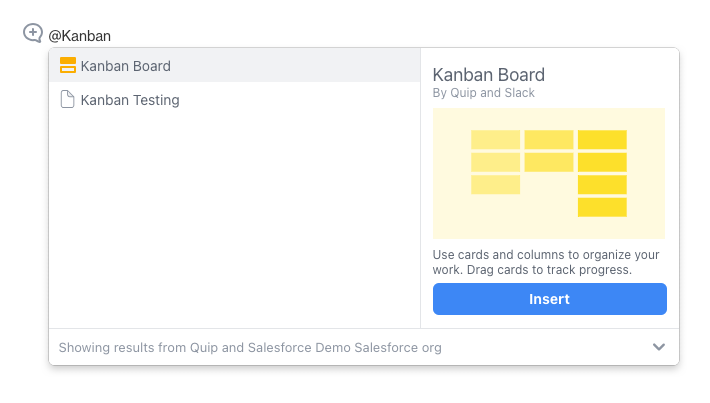
The @ key is a gateway to our Live Apps. By simply typing “@” followed by “kanban” you can add a Kanban Board to your document.
But Why should I use Kanban Boards?
The Kanban Board Live Application is an easily digestible way to convey high-level project details and goals for yourself and your team. By utilizing the cards and column format unique to a Kanban Board, users can identify and manage the status of current objectives within a project or an outline on the status of multiple projects all at once. Cards are moved from left to right through the columns to show progress and coordinate teams executing tasks.
Users can also @mention documents, dates and people in a card to manage projects and deadlines.
Empowering you and your team
When utilizing Kanban Boards users can @mention documents, dates and people in a card to manage projects and deadlines. @mentioning people and dates is an easy and effective way to delegate tasks to you and your team; @mentioning documents will allow your team to access the relevant documents quickly, ensuring that they're equipped with the means to complete tasks quickly and easily. Additionally, project statuses are fully customizable allowing users to make Kanban Boards truly their own.
Leveraging Kanban Boards in Salesforce
Have you heard of Quip In Salesforce? We are incredibly excited for our users to be able to use Quip inside of Salesforce to help increase their productivity and collaboration! With editable Quip documents inside of Salesforce, users can now stay on top of important tasks relating to Accounts, Opportunities and much more.
Knowledge Article Number
000389885
Did this article solve your issue?
Let us know so we can improve!
