Seleccionar una organización
Mark Salesforce Sales Account Inactive if No Opportunity for X Days
Fecha de publicación: Aug 18, 2026
Descripción
To automatically deactivate accounts with no recent opportunity activity, implement a Scheduled Flow to update the account status based on custom time thresholds.
To track the account's status, you can create a status picklist field on the Account object with two values: Active and Inactive. Else, you can create a checkbox field.
Solución
Step 1: Create a Roll-Up Summary Field
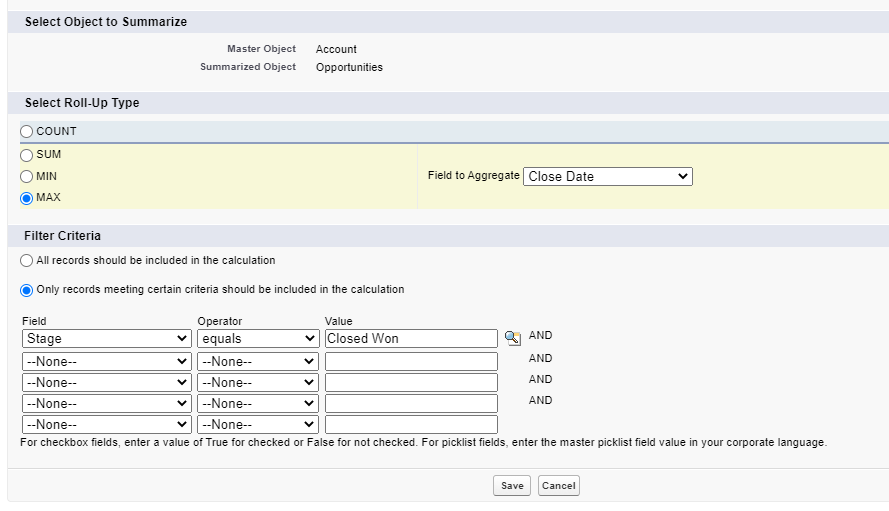
On the Account object, create a Roll-Up Summary Field that shows the most recent Close Date of the Opportunity where Stage equals Closed Won, using the MAX option. Set the Field to Aggregate to Close Date.
Step 2: Create a Formula Field
Create a number formula field (0 decimal places) on the Account object that calculates days since the account's most recent Closed Won opportunity. If no Closed Won opportunity exists, it falls back to days since the account was created.
IF(
ISBLANK(Most_Recent_Closed_Date__c),
TODAY() - DATEVALUE(CreatedDate),
TODAY() - Most_Recent_Closed_Date__c
)
Step 3: Create a Scheduled Flow
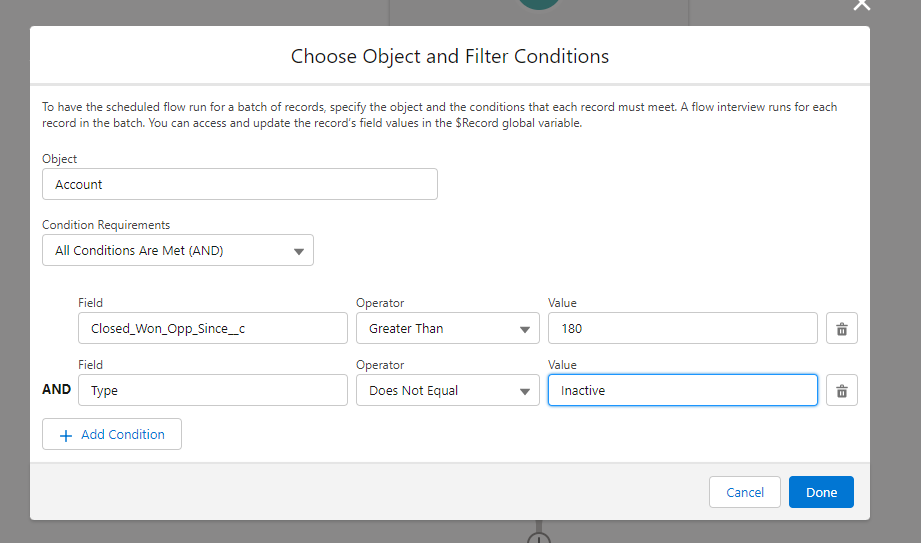
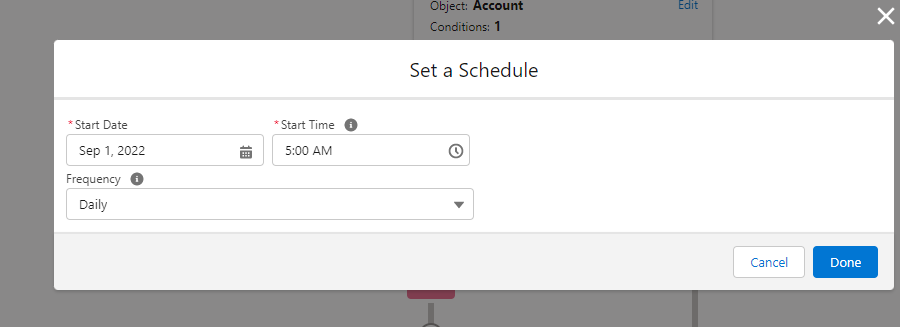
Create a Scheduled Flow to run daily. Set the criteria: Closed_Won_Opp_Since__c greater than 180 AND Account Status not equal to Inactive. Set the Start Date, Start Time, and Frequency as preferred.
Step 4: Update the Account Record
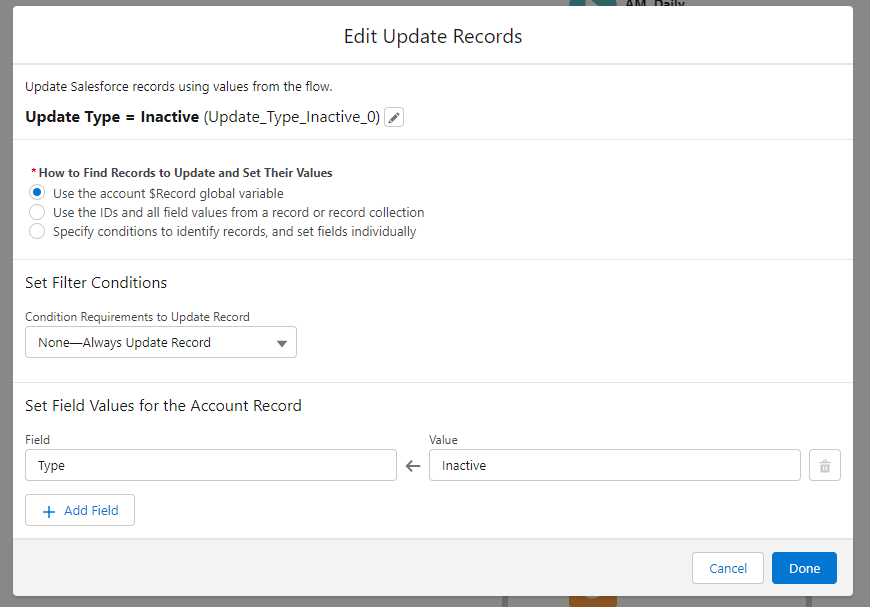
Add an Update Records element in the flow to set the Account Status field to Inactive for records matching the criteria.
Result: This Scheduled Flow runs daily and updates any Account with no Closed Won opportunity in the last 180 days to Inactive.
Número del artículo de conocimiento
000393490
¿Resolvió este artículo su problema?
¡Háganos saber cómo podemos mejorar!
