組織を選択
HTTP Gzip Responses with Mule 4
公開日: Aug 4, 2025
タスク
GOAL
Produce a gzipped response to a HTTP Request using Mule 4.
On the client side, you can advertise a list of compression schemes that will be sent along in an HTTP request. The Accept-Encoding header is used for negotiating content encoding.
By using `Accept-Encoding: gzip` header you are requiring the server to return this kind of content. The server responds with the scheme used, indicated by the Content-Encoding response header. (Content-Encoding: gzip)
ステップ
The process of compression in Mule 4 is done by the Compression module.
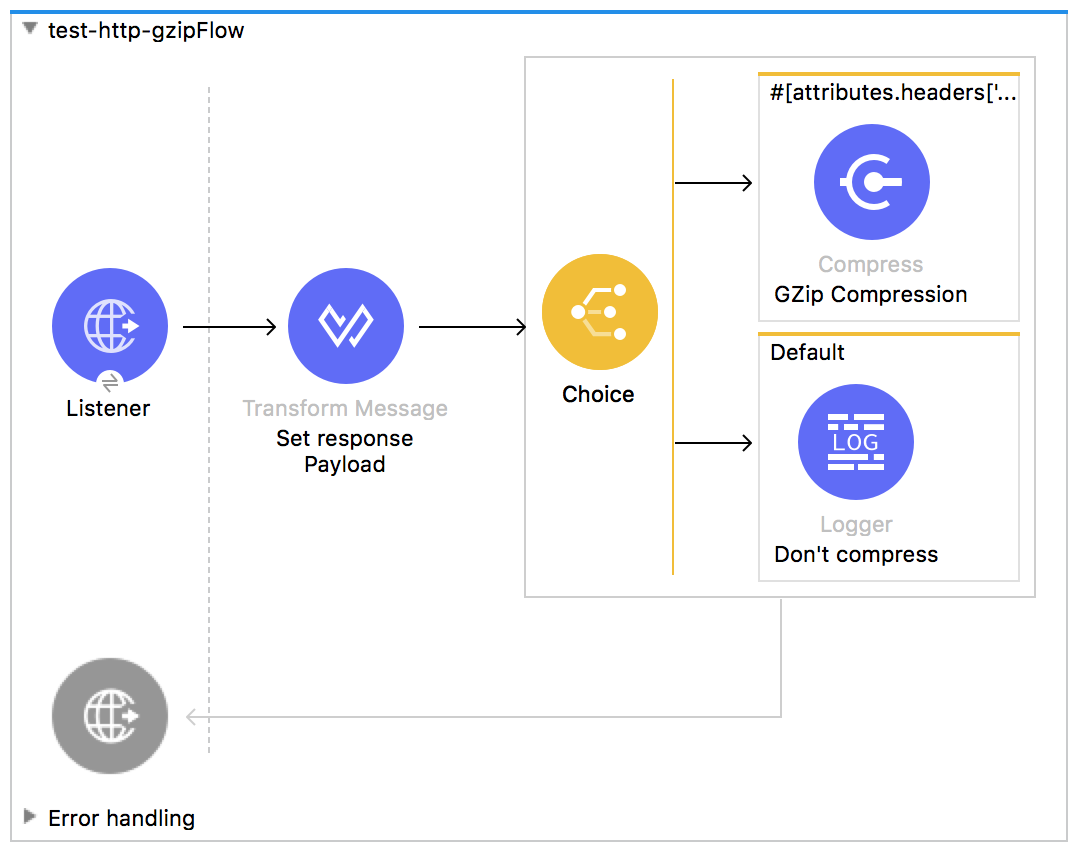
Find the complete source code attached that takes care of the `Accept-Encoding` value send as header.
To test it you can use cURL:
curl -sH 'Accept-encoding: gzip' localhost:8081 | gunzip -
Disclaimer: This solution provides a suggestion that should be considered in conjunction with your specific use-case and requirements and does not represent a complete solution for all circumstances.
その他のリソース
ナレッジ記事番号
001114556
この記事で問題は解決されましたか?
ご意見をお待ちしております。
