Valitse organisaatio
How to Create a Self-Signed CA, Certificate, and CRL Revocation List for the DLB
Julkaisupäivä: Mar 2, 2024
Vaiheet
CONTENTS
You are using the DLB. Here is how to create a self-signed CA, certificate and CRL revocation list for the DLB.STEPS TO FOLLOW
1) Please run the following command to generate CA key:openssl genrsa -out ca.key 40962) Run the following to create self-signed root CA:
Ensure all fields are filled out and "Common Name" is different from your certificate (to be generated later).
openssl req -new -x509 -days 1826 -key ca.key -out ca.crt3) Create private key for your certificate:
openssl genrsa -out cert.key 40964) Make a certificate request:
openssl req -new -key cert.key -out cert.csr5) Run the following:
touch certindex
echo 01 > certserial
echo 01 > crlnumber
6) Create a file called ca.conf and paste the following. Replace "test.com" with your desired certificate Common Name:
[ ca ]
default_ca = myca

[ crl_ext ]
# issuerAltName=issuer:copy
authorityKeyIdentifier=keyid:always

 [ myca ]
 dir = ./
 new_certs_dir = $dir
 unique_subject = no
 certificate = $dir/ca.crt
 database = $dir/certindex
 private_key = $dir/ca.key
 serial = $dir/certserial
 default_days = 729
 default_md = sha1
 policy = myca_policy
 x509_extensions = myca_extensions
 crlnumber = $dir/crlnumber
 default_crl_days = 729

 [ myca_policy ]
 commonName = supplied
 stateOrProvinceName = supplied
 countryName = optional
 emailAddress = optional
 organizationName = supplied
 organizationalUnitName = optional

 [ myca_extensions ]
 basicConstraints = CA:false
 subjectKeyIdentifier = hash
 authorityKeyIdentifier = keyid:always
 keyUsage = digitalSignature,keyEncipherment
 extendedKeyUsage = serverAuth
 crlDistributionPoints = URI:http://test.com/root.crl
 subjectAltName  = @alt_names

 [alt_names]
 DNS.1 = test.com
 DNS.2 = *.test.com
7) Sign your request:
openssl ca -batch -config ca.conf -notext -in cert.csr -out cert.crt
8) Export to a PKCS12 format:
openssl pkcs12 -export -out cert.p12 -inkey cert.key -in cert.crt -chain -CAfile ca.crt
9) Create the CRL file:
openssl ca -config ca.conf -gencrl -keyfile ca.key -cert ca.crt -out rt.crl.pem
openssl crl -inform PEM -in rt.crl.pem -outform DER -out root.crl
rm rt.crl.pem
10) Convert the CRL file to PEM format:
openssl crl -in root.crl -inform DER -out crl.pem
11) Create a new DLB: link
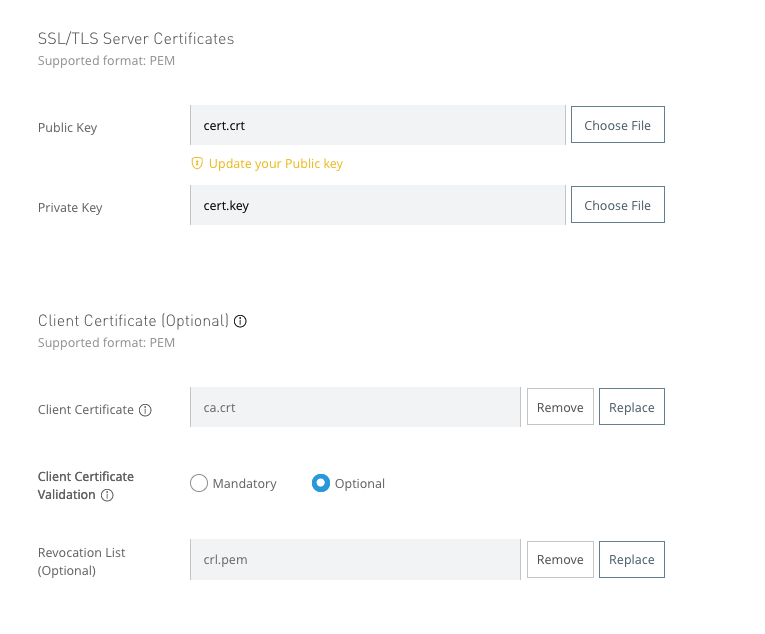
Ensure that you have the following files selected for certificate (You can choose mandatory or optional for client certificate validation)
Knowledge-artikkelin numero
001115414
Ratkaisiko tämä artikkeli ongelmasi?
Anna palautetta, jotta voimme kehittyä!
