Выбрать организацию
Tableau Server Services Are In Error State After Running Tsm Import With --Force-Keys Option
Дата публикации: Feb 19, 2026
Описание
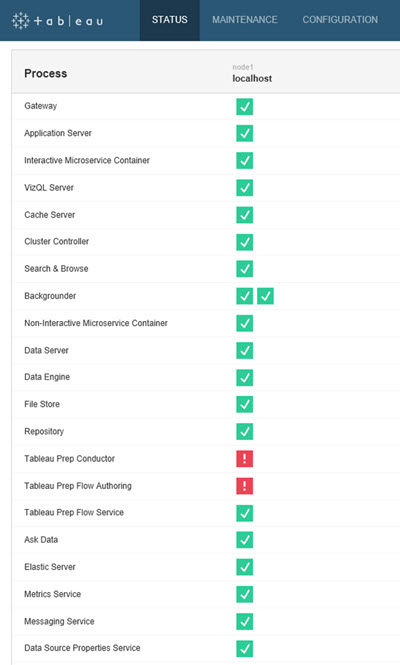
Cause
Tableau Server cannot decrypt the unused passwords.Решение
Export TSM Settings export (tsm settings export -f settings.json) and look for any of the following settings keys:
- telemetry.servicepassword
- recommendations.servicepassword
- authentication.servicepassword
- vizportal.servicepassword
- authorization.servicepassword
The settings keys can be set to null values to remove them from the configuration:
tsm configuration set -k telemetry.servicepassword -v ""
tsm configuration set -k recommendations.servicepasword -v ""
Should the steps above not clear the keys another method is to use the -d flag to set the keys to null. Ex:
tsm configuration set -k <config.key> -d
Confirmation that they keys have been cleared can be done by running "tsm pending-changes list". The expected result is that the keys value will be set to "null" or empty strings.
Once the appropriate keys have been set to null, commit the changes with the "tsm pending-changes apply" command.
Дополнительные ресурсы
These keys were deprecated as of 2018.1 (pre-tsm) and may cause issues in later installations. When exporting settings as part of a Tableau Server backup, they may have been included as custom settings. They can be safely removed from the settings.json file as well prior to import.
Using a settings file from pre-tsm and has used this template for server deployments has the potential to prevent Tableau Prep Conductor services from starting up, which will cause Tableau Server to become degraded from 2020.4 onwards.
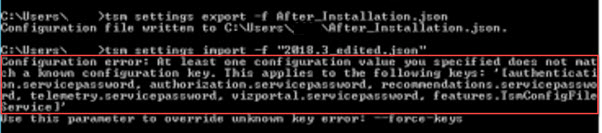
When importing a configuration from an old .json file after upgrading or installing a new environment, pay attention to the --force-keys option. On the safe side, we recommend removing the configuration parameters from the .json file that is not recognized by default. The following is an example.
When upgrading versions, backing up and restoring, or adding new nodes to a cluster, Tableau Server can manage secrets storage and related processes automatically. For more information see:
Номер статьи базы знаний
001471416
Эта статья решила вашу проблему?
Оставьте свой отзыв, чтобы мы могли стать лучше!
