Vælg en organisation
Deprecate Support For Invalid Steptypes.json Files in B2C Commerce
Udgivelsesdato: Dec 17, 2024
Beskrivelse
What are Steptypes.json Files:
Within B2C Commerce, customers can set up a Steptypes.json file, which allows them to define custom job steps that can be used within the job processes. This file is crucial for extending the functionality of the B2C Commerce platform through custom scripts or pipelines. Customers can validate these json files to reduce runtime errors.
Why Stop Support For Invalid Files:
Currently, we have cases where customers still have invalid steptypes.json files. To reduce impact for customers, multiple third party tools have been leveraged to process invalid steptypes.json files. While this has ensured that customers can continue to use invalid steptypes, this has added additional complexity and resulted in multiple investigations and issues over the years. In the interest of ensuring that Trust remains our number 1 priority, we need to stop support for invalid steptypes.json files.
Timelines:
We will be deprecating support for invalid steptypes.json with the 25.4 ECOM release.
How Does This Affect Customers:
Customers whose steptypes.json files are all valid are not impacted by this change. In cases where there are invalid steptypes.json files, customers might see errors with the execution of jobs. Depending on the implementation, this also can affect the execution of custom cartridges.
How Can Customers Identify If They Are Impacted:
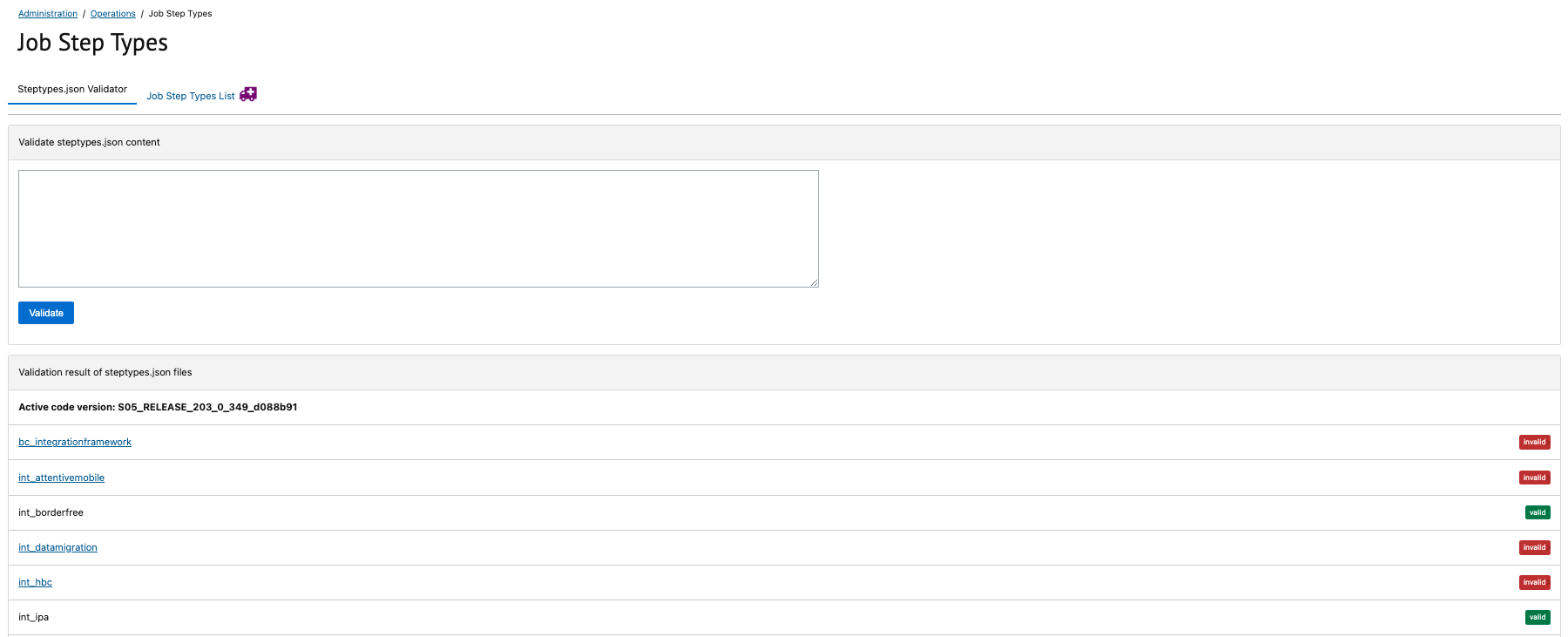
Customers can go to the Administration → Operations → Job Step Types page within Business Manager to get a full list of their steptypes.json files, including the valid and invalid ones.
Depending on the implementation details, customers can either remove inactive steptypes.json files or fix the errors with the files that are required.
Additionally, we will publish a notification in Business Manager for customers using invalid steptypes.json files.
Vidensartikelnummer
002520720
Løste denne artikel dit problem?
Giv os besked, så vi kan forbedre os!
