組織を選択
Action Required for US Short Code Programs - Brand Vetting
公開日: Jul 17, 2026
説明
In December 2024, the CTIA and the US Short Codes Registry (SCR) implemented new US market industry requirements for all brands and customers using US short codes. This initiative, in partnership with Aegis Mobile, aims to enhance transparency, protect consumers, and maintain the integrity of short code messaging.
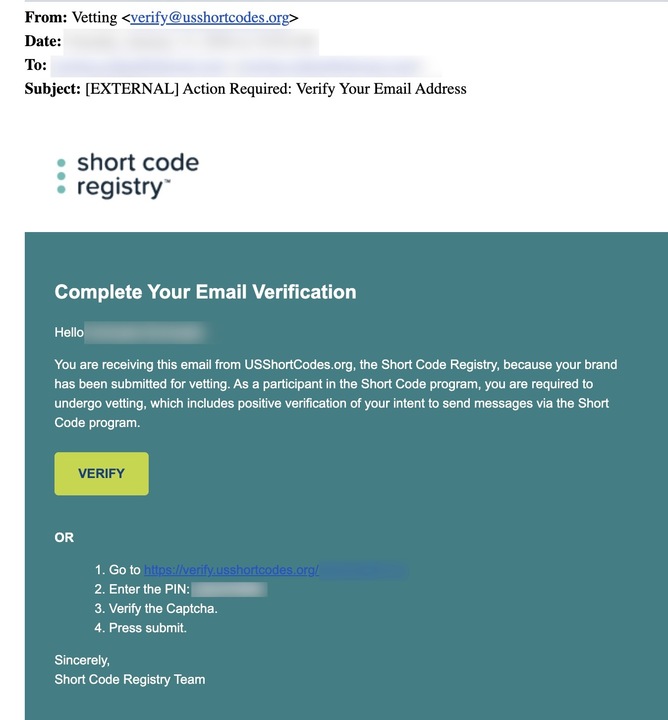
US vetting requires an annual re-vetting to be completed, so each of the initial SMS contacts who were listed on the original brand vetting requests will start to receive the 2FA email PIN to confirm again. The requests will not be all on one day, rather on the one year “anniversary” of the original vetting request.
What is brand vetting?
Brand vetting is a process of verifying the legitimacy and identity of a business or organization.
For US short codes, brands need to be registered and vetted only once, with short code leasing available post-vetting. In subsequent years, the point of contact on file must complete annual email verification.
Why is this important?
- Enhanced Security and Trust: The vetting process strengthens consumer protection and reinforces short codes' reputation as a reliable communication channel.
- Compliance with Industry Standards: This change ensures all stakeholders adhere to the latest CTIA and SCR regulations.
- Continued Service: Failure to complete vetting results in the deprovisioning of your US short codes, impacting your SMS program.
Who is affected?
All Salesforce Marketing Cloud customers with active US short code programs.
Steps to Complete Brand Vetting:
- Review the Guide:
- Review the US Short Code Brand Vetting with Salesforce guide. This document provides a comprehensive overview of the new requirements and steps involved.
- Gather Required Information:
- Collect all necessary brand, business, and contact details. Ensure accuracy to avoid delays or rejections.
- Submit the Vetting Form:
- Complete the US Short Code Brand Vetting Form.
- Important: You only complete the form once for all codes leased with Salesforce Marketing Cloud. After 1 year of the original submission, there will be a renewal email sent to the email address of the original form submitter.
More details on the new vetting requirements are available in the Short Code Registry FAQ section with additional resources available on our partner's website. For any other questions or queries, customers are advised to contact their Salesforce Marketing Cloud Account Executive or Success Manager.
ナレッジ記事番号
004517921
この記事で問題は解決されましたか?
ご意見をお待ちしております。
