Organisation auswählen
Salesforce Platform: JWT Certificate Visibility on JWKS Endpoint
Veröffentlichungsdatum: Apr 1, 2026
Beschreibung
Automatically expose the Named Credentials JWT’s public key with External Credential in the keys endpoint
JWT (JSON Web Token):-
Salesforce JWT (JSON Web Token) OAuth 2.0 Bearer Flow enables secure, server-to-server integration without user interaction by using a digital certificate to sign a token. It replaces username/password authentication for high-security, automated, or backend-to-backend communication, requiring a Connected App, RSA SHA256 signing, and specific claims (iss, sub, aud, exp).
JWKS (JSON Web Key Set)
Salesforce utilizes JSON Web Key Sets (JWKS) for secure token-based authentication, specifically for scenarios like validating external JSON Web Tokens (JWTs), configuring OAuth 2.0 flows, and managing public keys for server-to-server integrations
Lösung
Below steps are required to expose the JWKS and it is not supported with new Named credentials.
1. Create test org and Switch to the Lightning UI if you haven't done so. External Credentials are available only in Lightning.
2. Create a certificate on the Certificate and Key Management
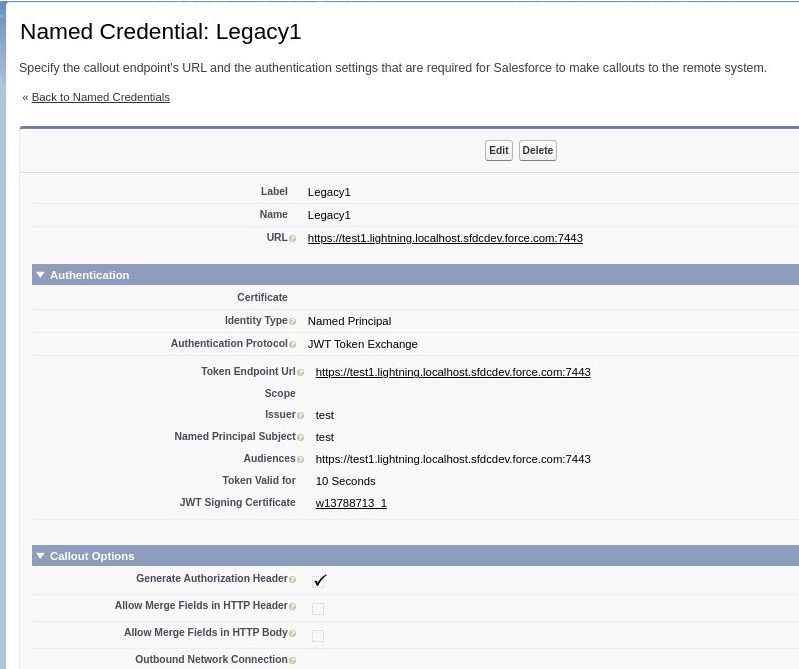
Label: Legacy1
Identity Type: [Named Principal]
Authentication Protocol : [JWT Token Exchange]
JWT Signing Certificate: <the created certificates>
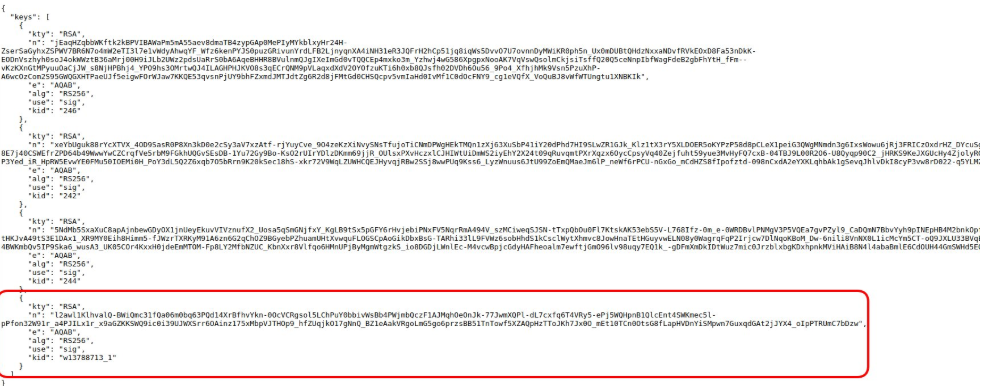
4. Open https://<mydomain>/id/keys. You'll see the certificate used for the named credential with Legacy type.
This is expected behaviour

Nummer des Knowledge-Artikels
004980324
Konnten Sie Ihr Problem mithilfe dieses Artikels lösen?
Geben Sie uns Feedback, damit wir uns verbessern können.
