조직 선택
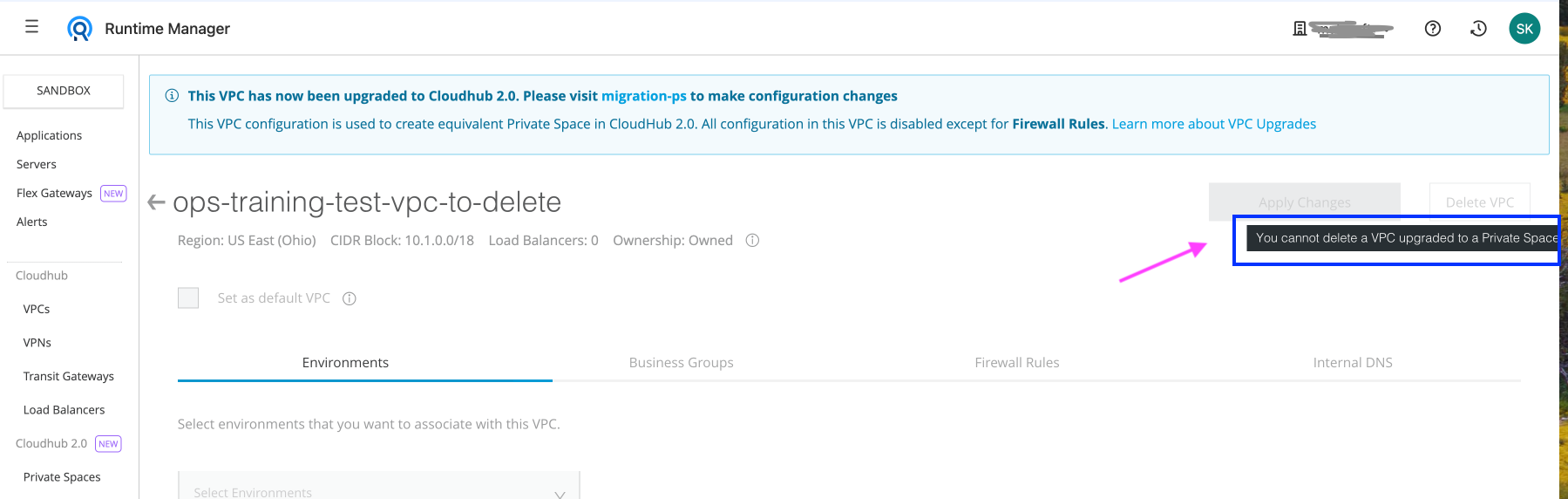
You cannot delete CH 1.0 VPC after it upgraded to CH 2.0 (Private Space) from Runtime Manager UI
게시 일자: Aug 8, 2025
상세 설명
The user experienced extra resource consumption after upgrading their VPCs to Private Spaces, They could not delete the VPCs.
While attempting to delete the CH1.0 VPC from Runtime Manager, the following error was observed: "You cannot delete a VPC upgraded to Private Space".
솔루션
1. After migrating all your applications to CH 2.0 (Private Space), ensure that there are no CH 1.0 applications with the status Running, Stopped, or Deployed. If so, please delete them.
2. Also, ensure no active DLBs are attached to the CH 1.0 VPC, and delete if found.
3. The network connections (VPNs, Transit Gateway) will automatically gets deleted once VPC is deleted with PATCH command
4. Run the below PATCH commands if Private Space is deployed on US control plane
Option 1 : With Validation (default):
curl -X PATCH 'https://anypoint.mulesoft.com/runtimefabric/api/organizations/{Anypoint-Org-ID}/migration/privatespaces/{privateSpaceID}/migrationComplete' -H 'Authorization: Your Bearer Token'
Option 2 : To bypass validation (force=true):
curl -X PATCH 'https://anypoint.mulesoft.com/runtimefabric/api/organizations/{Anypoint-Org-ID}/migration/privatespaces/{privateSpaceID}/migrationComplete?force=true' -H 'Authorization: Bearer YOUR_BEARER_TOKEN'
5. If Private Space is deployed on EU control plane, use the below PATCH command.
curl -X PATCH 'https://eu1.anypoint.mulesoft.com/runtimefabric/api/organizations/{Anypoint-Org-ID}/migration/privatespaces/{privateSpaceID}/migrationComplete' -H 'Authorization: Bearer Token'
6. Once the PATCH command runs successfully, you should no longer see the CH 1.0 VPC from Anypoint Runtime Manager. 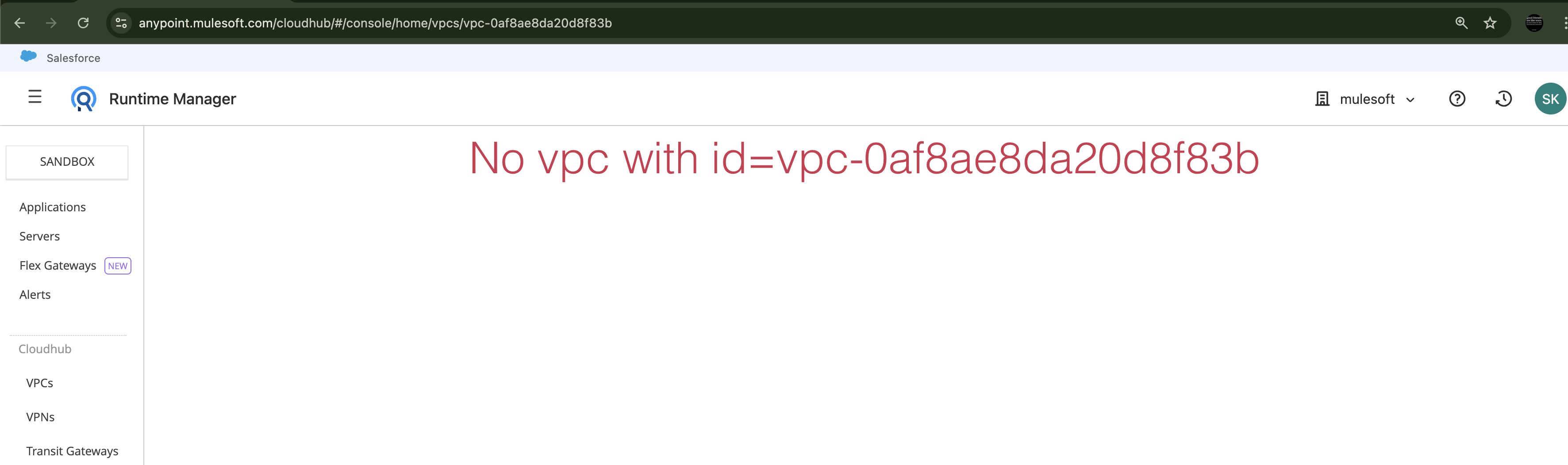
추가 자원
- To know your Anypoint Org ID - Please refer this KB article
- To know the Bearer token, please refer this KB article
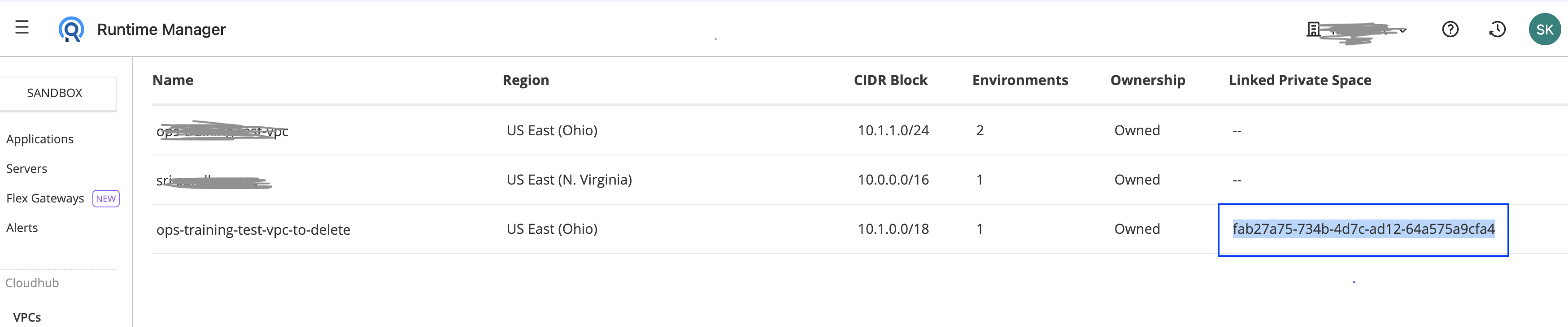
- To know the privateSpaceID, navigate to Runtime Manager UI -> VPC's -> Look for VPC in question & refer last column "Linked Private Space" refer below screenshot
Knowledge 기사 번호
005115579
이 기사를 통해 문제를 해결했습니까?
개선을 위한 의견을 보내주세요.
