Selecionar uma organização
Understanding the Exact Appointment Field in Salesforce Field Service Book Appointment
Data da publicação: May 11, 2026
Descrição
This article explains how the Exact Appointment field on a Work Type affects scheduling behavior in the Salesforce Field Service (SFS) Book Appointment flow, including its impact on arrival windows and the getSlots() API method.
The Exact Appointment field controls whether a Service Appointment must start at an exact time or within an arrival window. The table below summarizes the two scenarios:
| Scenario | Description | Behavior |
|---|---|---|
| Exact Appointment = False | Appointment uses arrival window scheduling. | The Service Appointment can start at any time between the window start and end, based on resource availability. |
| Exact Appointment = True | Appointment enforces exact start time. | The Service Appointment must start exactly at the start time of the arrival window. The window duration becomes 0 minutes. |
Note: This also applies to the getSlot() method. If an exact appointment value is set on the work type, it will be considered when using getSlot(). However, if no value is provided for the exactAppointment parameter in the getSlots() API call, the exactAppointment value defined on the Work Type is ignored when getSlots() is called.
Resolução
The following scenarios demonstrate the difference in scheduling behavior based on the Exact Appointment setting.
Scenario 1: Exact Appointment = False
- Work Type: Exact Appointment = False
- Operating Hours: 9:00 AM – 6:00 PM
- Slot size: 2 hours | Duration: 1 hour
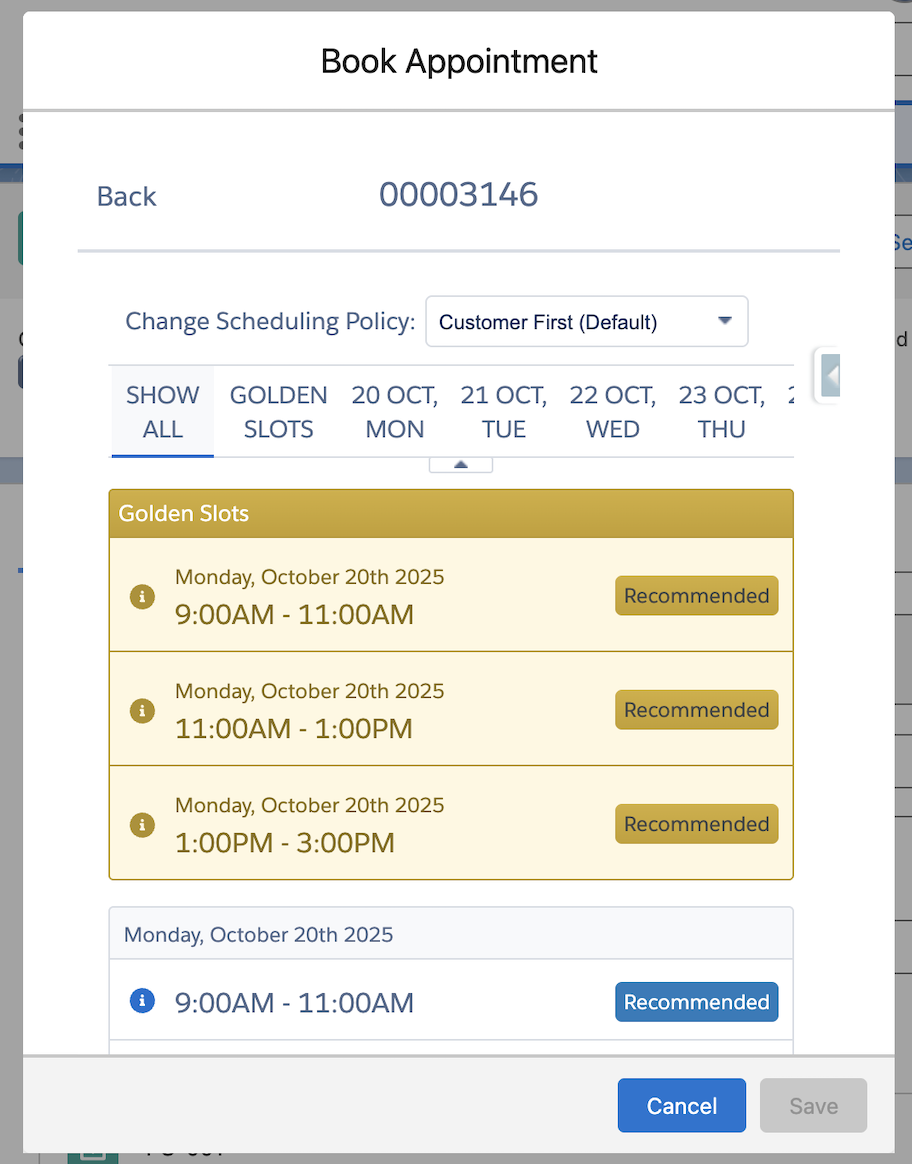
Result: The Book Appointment API returns available start times such as 9:00 AM–11:00 AM. The appointment can start any time between the start and end of the arrival window.
Scenario 2: Exact Appointment = True
- Work Type: Exact Appointment = True
- Operating Hours: 9:00 AM – 6:00 PM
- Duration: 1 hour
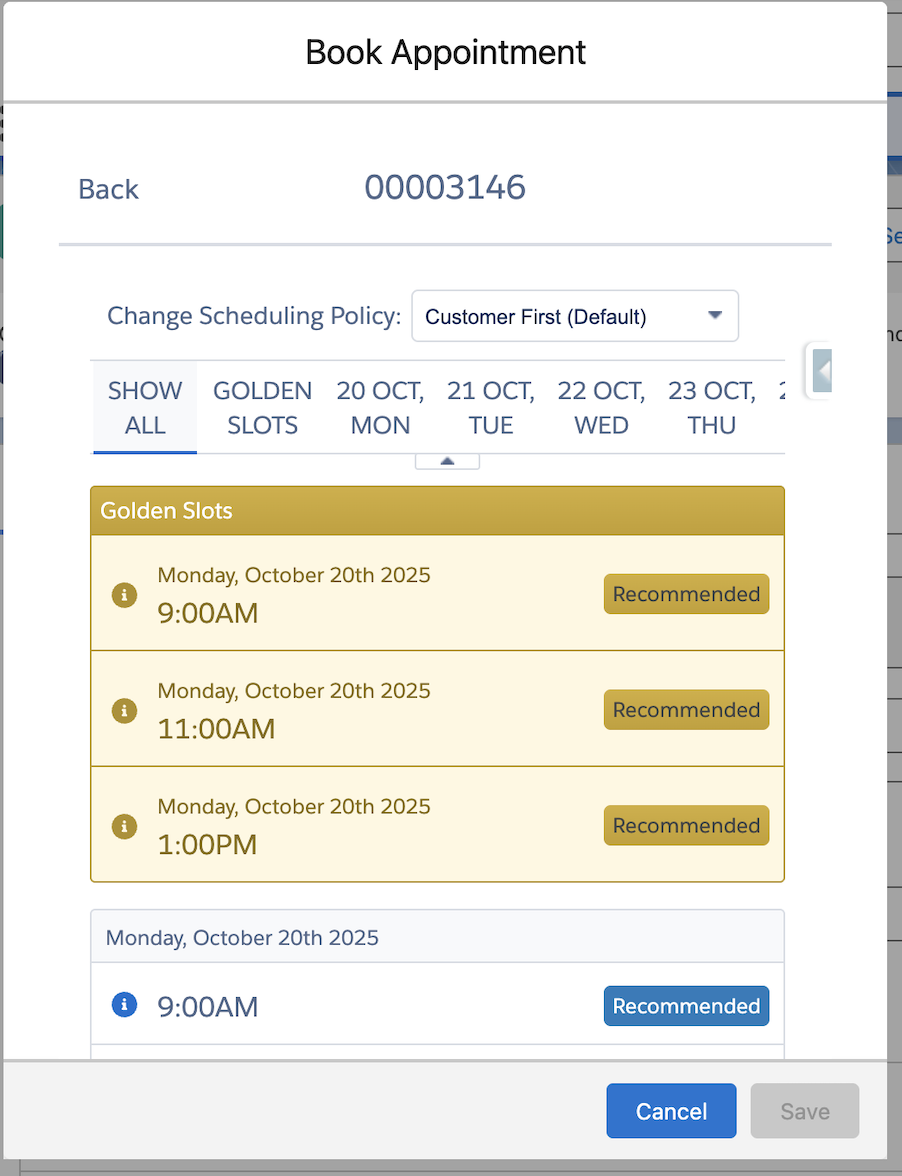
Result: The Book Appointment API returns exact start times such as 9:00 AM, 10:00 AM. When scheduled, the Service Appointment starts exactly at the chosen start time (arrival window becomes 9:00 AM – 9:00 AM, i.e., 0-minute window).
Recursos adicionais
Número do artigo do Knowledge
005226789
Este artigo resolveu seu problema?
Diga-nos para podermos melhorar!
