조직 선택
Data Model Optimization Superbadges: Trailhead Challenge Help
This help article is designed to provide resources to complete the superbadge challenges. It also offers links to useful articles and details various troubleshooting techniques.
- About superbadges
- How is a superbadge different compared to modules and projects on Trailhead?
- General notes and tips
- Accessibility considerations for this superbadge
- Resources for the superbadge challenges:
- Need more help? The Trailblazer Community awaits!
About superbadges
Superbadges assess your understanding and ability to apply key concepts, tools, and methodologies across Salesforce roles in a hands-on practice environment. These technical assessments help bridge the gap between what you’ve learned and how you can apply those skills in real-world scenarios. Completing a superbadge shows your ability to work on Salesforce implementations, demonstrates your expertise, and can even help with certification preparation.
How is a superbadge different compared to modules and projects on Trailhead?
Modules introduce you to specific topics in bite-sized units and projects give you hands-on practice with Salesforce technologies via step-by-step instructions. Superbadges present the requirements in a narrative format with multiple hands-on challenges. Trailblazers need to complete the requirements by configuring a technical solution in a special Salesforce Developer Edition org. Superbadges are designed to test your Salesforce skills and abilities.
Read more about how the Salesforce Program Agreement applies to superbadges.
General notes and tips
-
Each superbadge includes recommended learning. Completing the recommended learning for each superbadge is the best way to prepare for the superbadge challenges. Many concepts tested in the superbadge are covered in the recommended learning.
-
Make sure you’re using the org specified to complete the challenges.
-
Review the use of standard and custom objects.
-
Check out Superbadge Challenge Help article for more notes on completing superbadges.
Accessibility considerations for this superbadge
Salesforce is committed to providing on-demand enterprise applications accessible to all individuals, including users working with assistive devices, such as speech recognition software and screen readers. Check out our Accessibility Standards Help article for more information.
Where possible, we changed noninclusive terms to align with our company value of Equality. We maintained certain terms to avoid any effect on customer implementations.
Resources for completing the Superbadge: Object Relationships
This superbadge tests your ability to design a data model based on appropriate object requirements.
Additional context, resources, and links:
- Salesforce Help: Object Relationships Overview
- Salesforce Help: Create a Many-to-Many Object Relationship
- Salesforce Help: Build Your Own Salesforce App
- Trailhead: Data Modeling
Resources for completing the Superbadge: Security and Performance
This superbadge tests your ability to design a data model based on a set of security and performance requirements.
Note: Before you create a big object, make sure that you understand the restrictions on updating and deleting fields for big objects described in Changing Big Object Fields.
Do not delete or erase external objects from the org. If you need to re configure the external objects, rename the object name and API Name.
Additional context, resources, and links:
- Salesforce Help: External Services
- Salesforce Help: Define External Objects
- Salesforce Help: Data Classification Metadata Fields
- Salesforce Help: Field History Tracking
- Trailhead: Big Object Basics
- Salesforce Help: Changing Big Object Fields
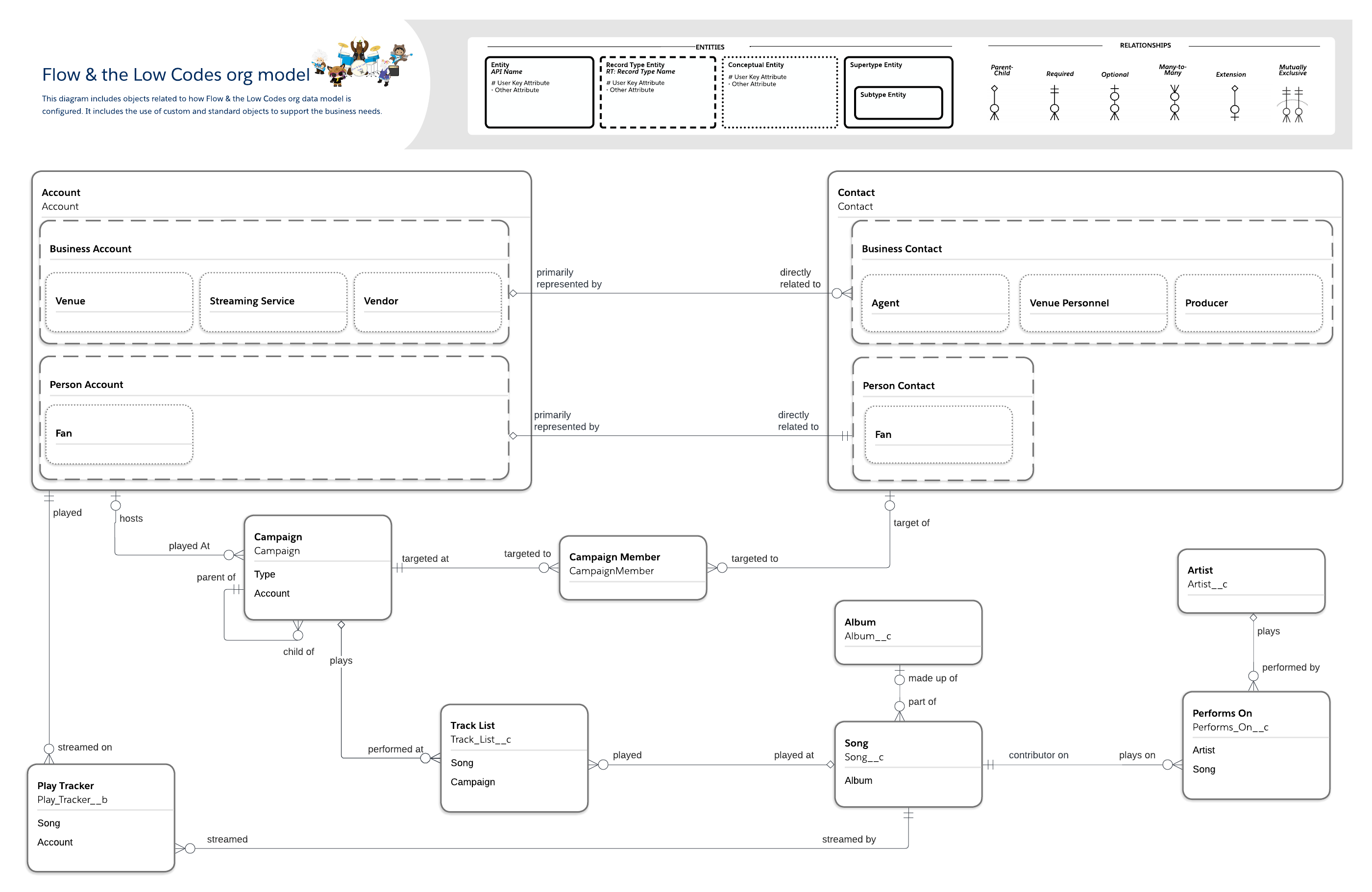
Entity Diagram
Need more help? The Trailblazer Community awaits!
You may remember when superbadge collaboration wasn't allowed, and we're grateful for everyone's commitment to independent work when that policy was in place. These days, however, you're welcome to reach out to the community when you're stuck, and you're encouraged to answer others' questions to help unblock your fellow Trailblazers. So go ahead and ask for help, but don't forget that a superbadge is an assessment, and you'll get the most value out of it if you try to do as much as possible on your own. And as always, remember that superbadge orgs and full solutions should never be shared.
이 기사를 통해 문제를 해결했습니까?
개선을 위한 의견을 보내주세요.
