Sélectionner une organisation
Partner Learning Camp B2B Solution Architect Courses
About the Salesforce B2B Solution Architect Credential
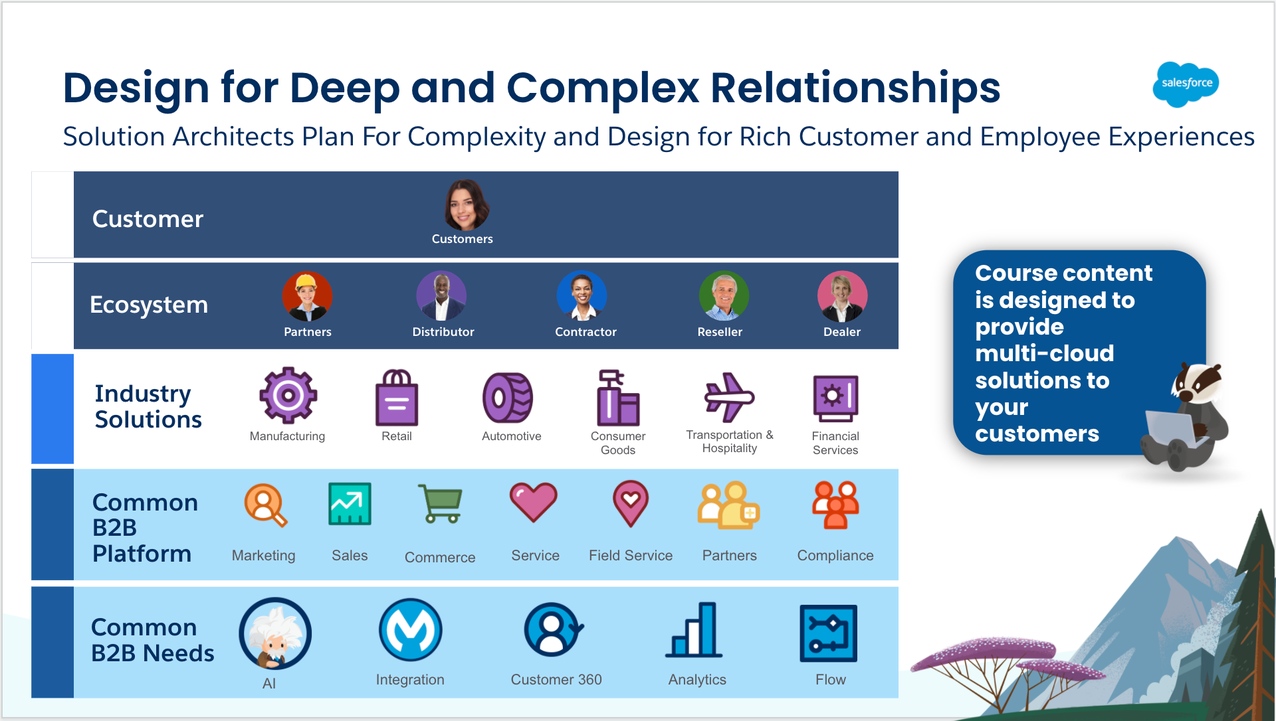
The Salesforce Certified B2B Solution Architect expands our Salesforce architect community and allows customers and partners to design domain-specific, multi-cloud solutions on the Salesforce Customer 360 Platform to create frictionless customer experiences that maximize business value. This credential validates that a B2B Solution Architect can deliver three leadership forms: including business (demonstrate business leadership by guiding companies on a multi-cloud solution journey emphasizing differentiating customer experiences), delivery (drive successful outcomes by advocating for multi-cloud implementation considerations and best practices based on use-case delivery knowledge which spans the Salesforce Customer 360 Vision and Platform), and technical (provide technical leadership by selecting the proper multi-cloud product features that best align with a company’s vision and business value goals) to create solutions that generate strategic business value for customers. For additional details about the specifics of the exam, refer to the B2B Solution Architect exam guide.
So what does B2B mean to us at Salesforce? What it really means is being able to have meaningful customer engagements on a broader platform that understands broader business relationships. That is what it is all about: understand your business relationships and how they affect your customers’ experience. Connected business relationships provide for meaningful customer experiences. Disconnected business relationships will provide for adverse customer experiences.
What is Partner Learning Camp?
Partner Learning Camp is part of the official Salesforce Partner Community. It is a place for Salesforce’s ISV and consulting partner ecosystem to connect, learn, and grow their business. Partners sometimes have very different interests, and the learning content that the partner enablement team creates is usually very specific to the needs of this unique community.
Partner Learning Camp B2B Solution Architect Course Catalog
We have decided to make the Partner Learning Camp B2B Solution Architect enablement content accessible to all Trailblazers! This course catalog is a great resource to help you prepare for the exam. Consider making these courses part of your prep plan.
FAQ
- Will the Partner Learning Camp courses I complete show on my Trailblazer profile page?
- No, the courses here are provided as additional resources to help you prepare for the Salesforce B2B Solution Architect exam.
- I’m a Partner and I have access to the Partner community. Should I complete these courses?
- Yes, but you should do this by officially enrolling in the courses inside Partner Learning Camp rather than through the links in this article. Learning activities are tracked there and this is the best way to ensure your learning journey is captured and contributes to your partner scorecard. You can engage directly by clicking here.
Cet article a-t-il résolu votre problème ?
Dites-nous ce que nous pouvons améliorer !
