Seleccionar una organización
Restricting record visibility for email messages synced by Einstein Activity Capture
Fecha de publicación: Sep 22, 2026
Descripción
If "Sync Email as Salesforce Activity" is turned on in Einstein Activity Capture (EAC), activity sharing rules also control the visibility of synced email data. Restricting email visibility to only the sender or recipient at the Email Message level is not supported.
Default Sharing Behavior
By default, Activity sharing settings control access to Email Message records:
- Private: Only the activity owner (the EAC user who synced the email) and users above them in the role hierarchy can edit or delete the Email Message record.
- Controlled by Parent: Users can view, edit, transfer, or delete an Email Message based on their access to the parent record it is associated with.
The Email Message object has no independent sharing model or Organization-Wide Default (OWD), and Restriction Rules cannot be applied to it directly.
💡 Idea: EAC – Email Message Object Needs OWD Sharing Settings
Solución
This article explains how to restrict visibility of Email Message records synced by Einstein Activity Capture (EAC), using a Restriction Rule on the related Task object.
Why This Works
When "Sync Email as Salesforce Activity" is enabled in EAC, emails sent or received from customers are automatically synced into Salesforce as both Task and Email Message records. Since Email Message records are linked to Task records, you can use a Restriction Rule on the Task object to effectively limit visibility of the associated Email Message records.
## Steps to Create the Restriction Rule
- Navigate to Setup > Restriction Rules.
- Select the Task object and create a new rule.
- Configure the rule with the following criteria:
- User Criteria: `$User.IsActive` Equals `True`
- Record Criteria: `Assigned To ID (OwnerId)` Equals `$User.Id`
- Activate the rule.
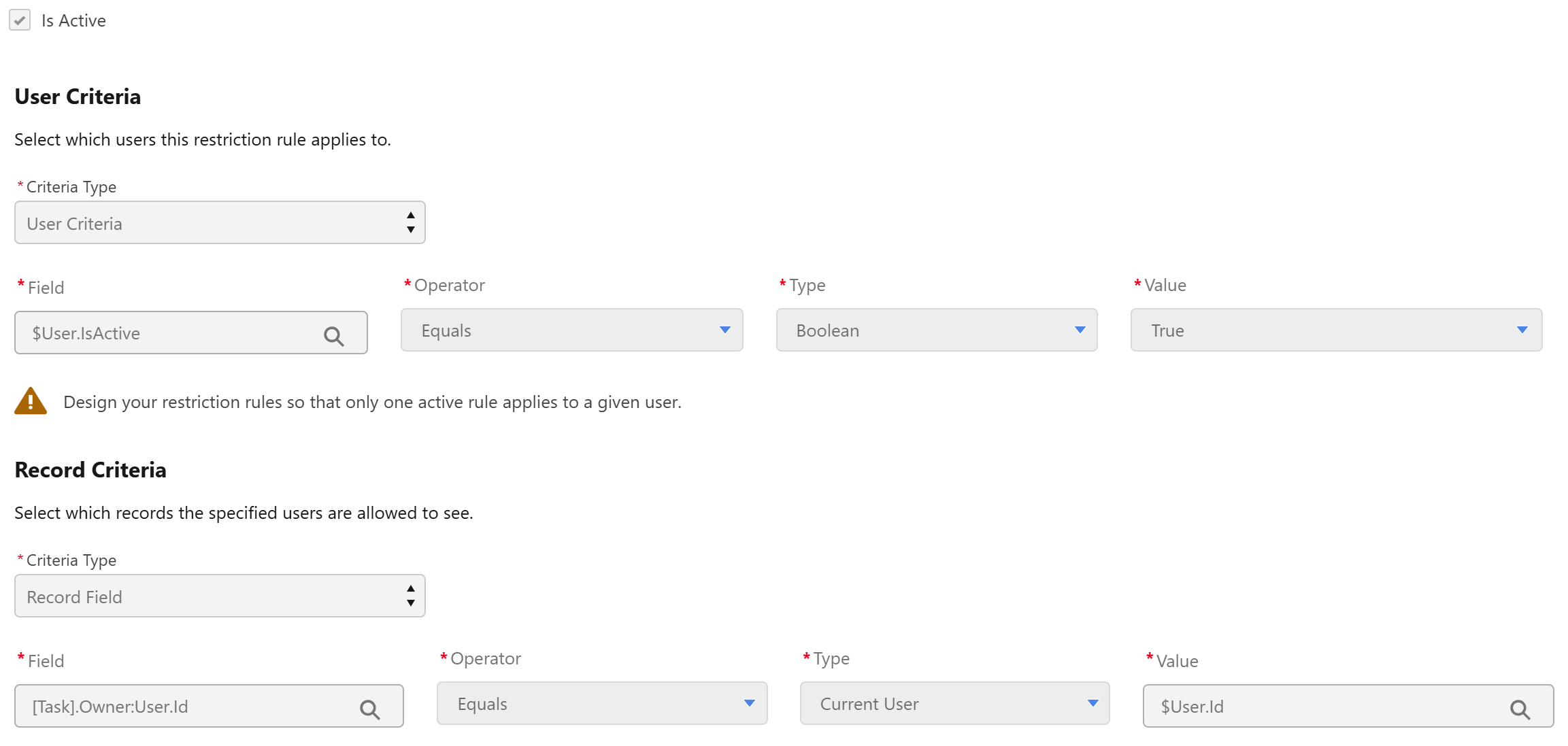
Result: Once applied, Email Message records synced for one user will not be visible to other users.
Limitations
This workaround does not apply to the System Administrator profile, or to users with any of the following permissions:
- View All Activities
- View All Data
- Modify All Data
Note: Users with any of the above permissions will continue to have unrestricted access to all Email Message records regardless of this rule.
Recursos adicionales
Número del artículo de conocimiento
005387256
¿Resolvió este artículo su problema?
¡Háganos saber cómo podemos mejorar!
