Seleziona un'organizzazione
Difference Between Total and Sum in Reference Lines
Data pubblicazione: Oct 20, 2026
Descrizione
Explains the difference between Total and Sum aggregation options for reference lines in Tableau Desktop.
Risoluzione
When configuring reference line aggregation options in Tableau Desktop, the distinction between Total and Sum is as follows:
- Total (TOTAL) : The value calculated directly from all underlying data rows within the specified scope (Table, Pane, or Cell).
- Sum (SUM) : The sum of the aggregated values (marks) displayed in the view within the specified scope.
Example:
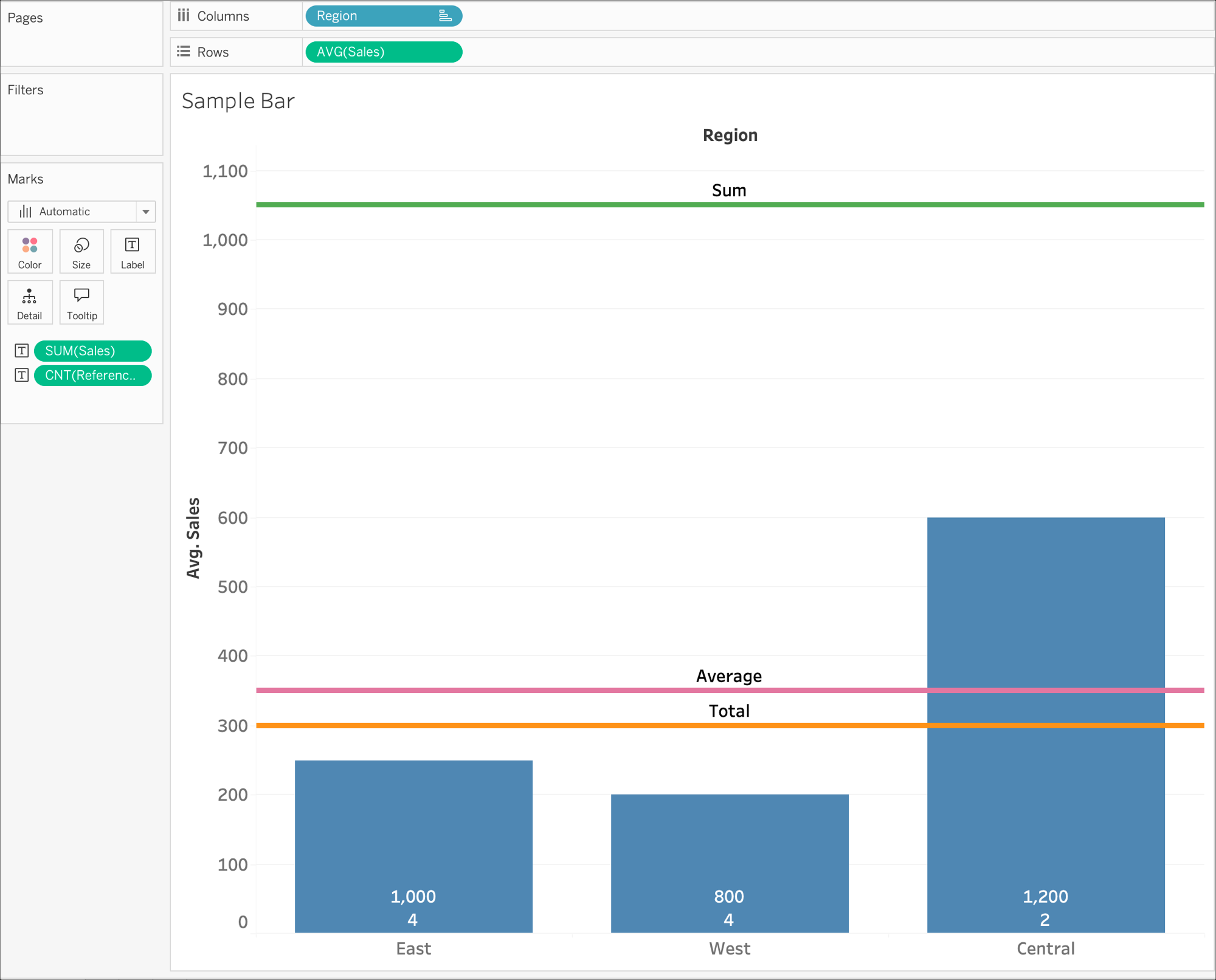
Consider a bar chart displaying average Sales for each Region:
- East: Average Sales = 250 (Data row count: 4)
- West: Average Sales = 200 (Data row count: 4)
- Central: Average Sales = 600 (Data row count: 2)
When adding a reference line for [Average Sales], the calculations produce the following results based on the chosen option:
- Sum (SUM): Sum of average values across regions
250 + 200 + 600 = 1050 - Total (TOTAL): Average calculated across all 10 underlying data rows
((250 × 4) + (200 × 4) + (600 × 2)) ÷ (4 + 4 + 2) = 300
(Reference)
- Average (AVG) : Sum of average values divided by the number of regions
(250 + 200 + 600) ÷ 3 = 350
Risorse aggiuntive
Numero articolo Knowledge
005462388
Questo articolo ha risolto il problema?
Facci sapere, così possiamo migliorare!
