In Modelsamensteller zijn navolgbare variabelen velden die u kunt wijzigen om de voorspelde uitkomst van een model te beïnvloeden. Door navolgbare variabelen in te stellen, kan het model recepten leveren (voorgestelde acties die een gebruiker kan ondernemen om een uitkomst te verbeteren).
Gebruikers toestaan modellen te beheren in AI-modellen
Hiermee kunt u modellen maken, bijwerken en verwijderen in AI-modellen.
MACHTIGINGENSETS
Data Cloud-architect
Toegang op beheerdersniveau tot alle voorzieningen van AI-modellen, inclusief de mogelijkheid om modellen te maken, bij te werken, te verwijderen en te activeren.
Data Cloud-gebruiker
Beperkte toegang voor het gebruik van een model, inclusief het ophalen van voorspellingen en verbeteringen die zijn afgeleid van een model.
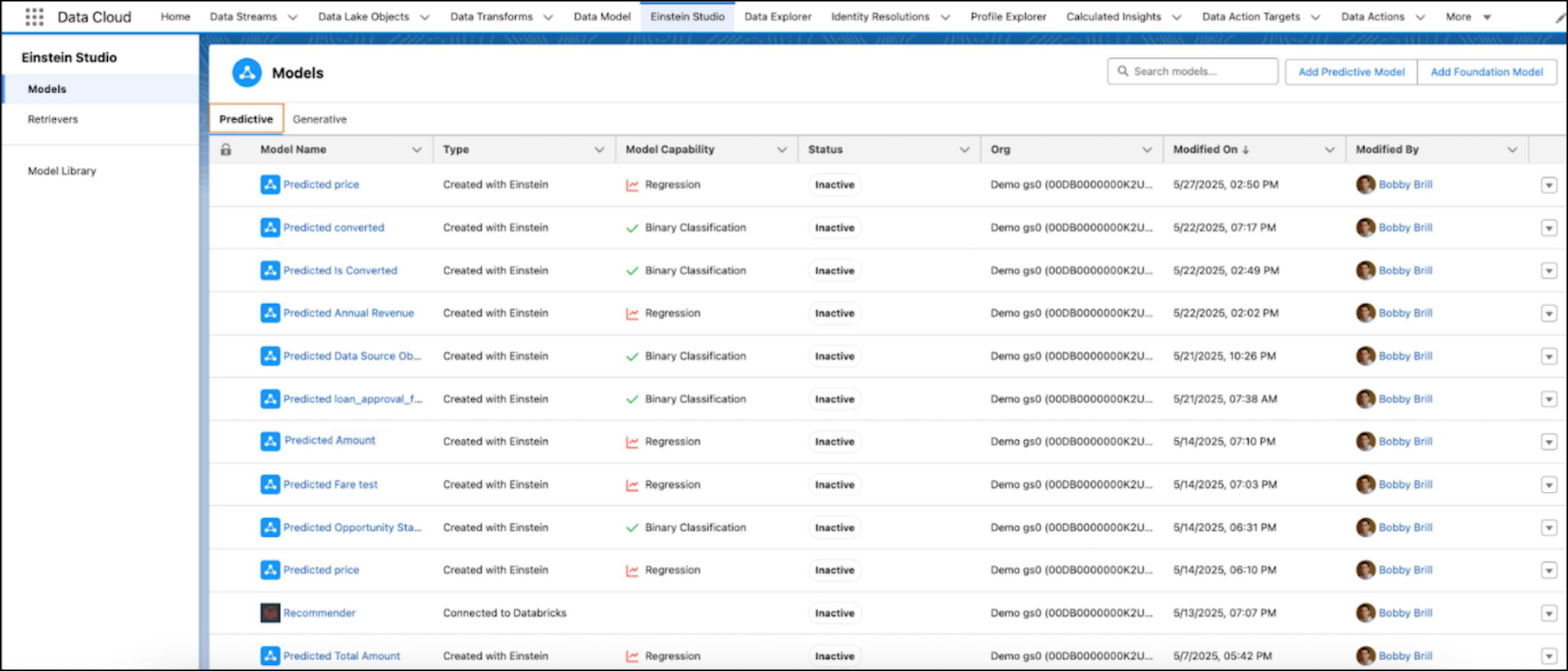
Ga in AI Models (voorheen Einstein Studio) naar het tabblad Voorspellingsmodellen.
Klik op uw model.
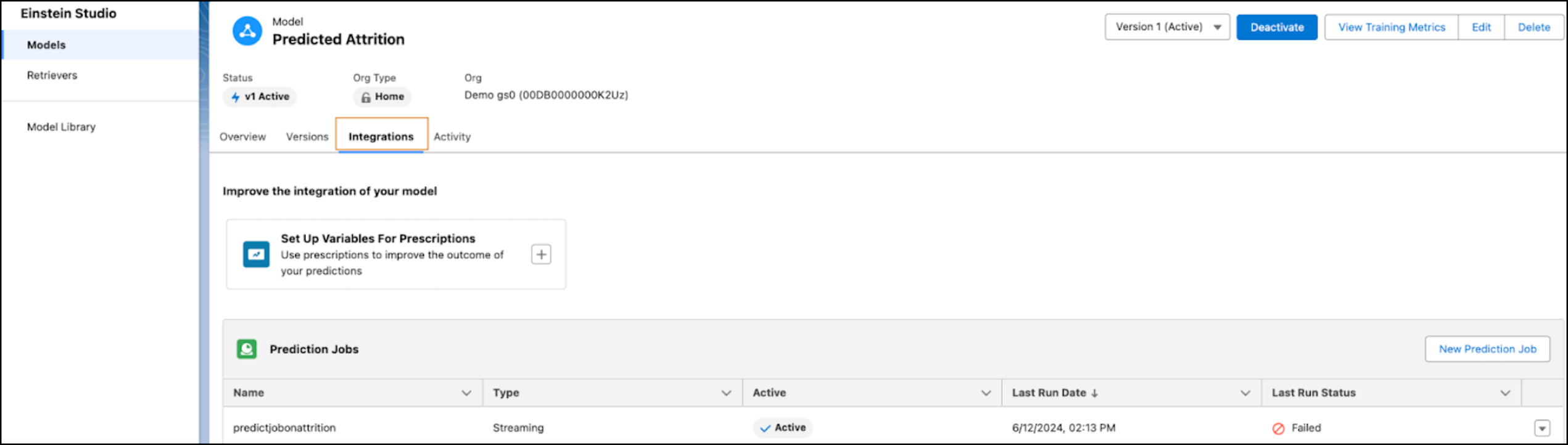
Als u voorspellingen en voorschriften wilt ophalen, zorgt u ervoor dat het model is geactiveerd.
Klik vanuit het model op het tabblad Integraties om variabelen voor recepten in te stellen.
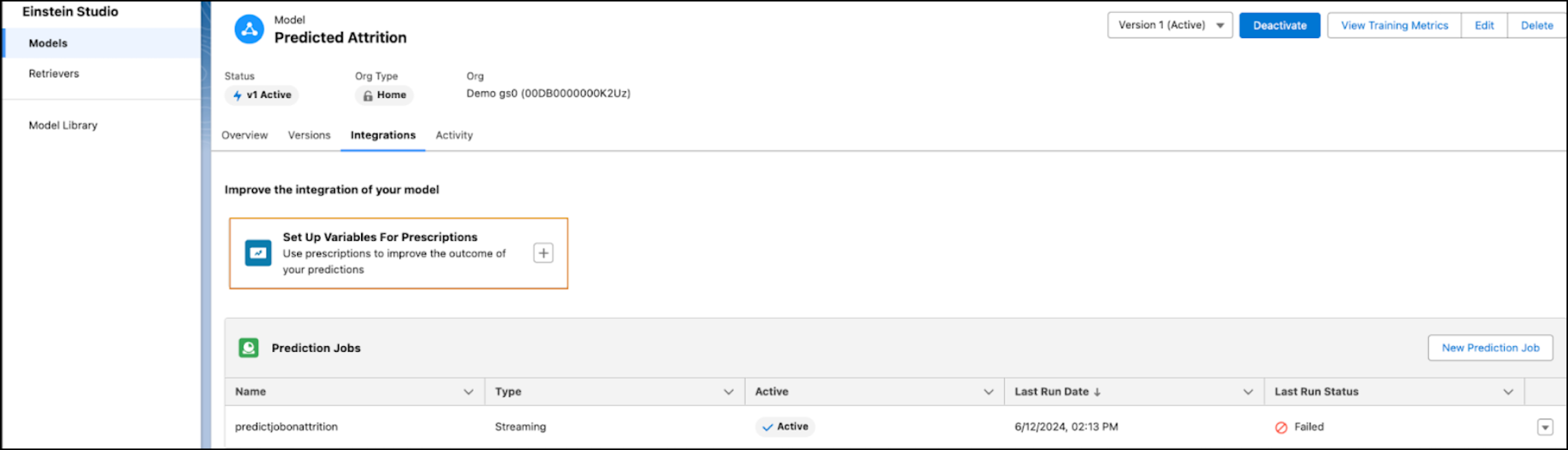
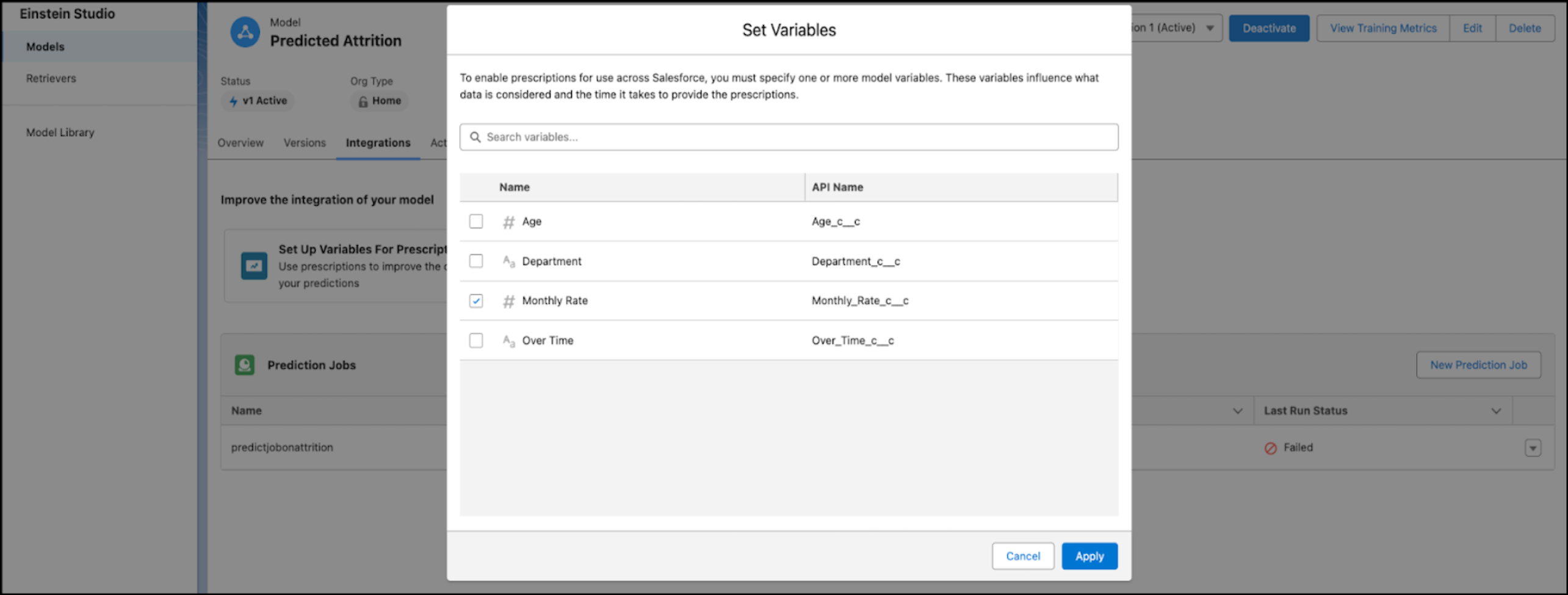
Klik op het pictogram + om te zoeken en selecteer de velden die u als navolgbare variabelen wilt instellen.
Selecteer variabelen die waarschijnlijk de voorspelde uitkomst zullen beïnvloeden. Modelsamensteller stelt recepten voor op basis van de variabelen die u hier instelt.
Stel minstens één navolgbare variabele in om recepten uit het model te krijgen.
Klik op Toepassen.
Heeft dit artikel uw probleem opgelost?
Laat ons weten wat we kunnen doen om te verbeteren!
Wordt geladen
Salesforce Help | Article
Cookie Consent Manager
Cookie Consent Manager
General Information
Required Cookies
Functional Cookies
Advertising Cookies
General Information
We use three kinds of cookies on our websites: required, functional, and advertising. You can choose whether functional and advertising cookies apply. Click on the different cookie categories to find out more about each category and to change the default settings.
Privacy Statement
Required Cookies
Always Active
Required cookies are necessary for basic website functionality. Some examples include: session cookies needed to transmit the website, authentication cookies, and security cookies.
Functional Cookies
Functional cookies enhance functions, performance, and services on the website. Some examples include: cookies used to analyze site traffic, cookies used for market research, and cookies used to display advertising that is not directed to a particular individual.
Advertising Cookies
Advertising cookies track activity across websites in order to understand a viewer’s interests, and direct them specific marketing. Some examples include: cookies used for remarketing, or interest-based advertising.