
You are here:
Explore Subscriber Lifecycle Management Features
Learn about the core elements of Subscriber Lifecycle Management.
This diagram illustrates the key Salesforce technology used in Subscriber Lifecycle Management and how those elements are connected.
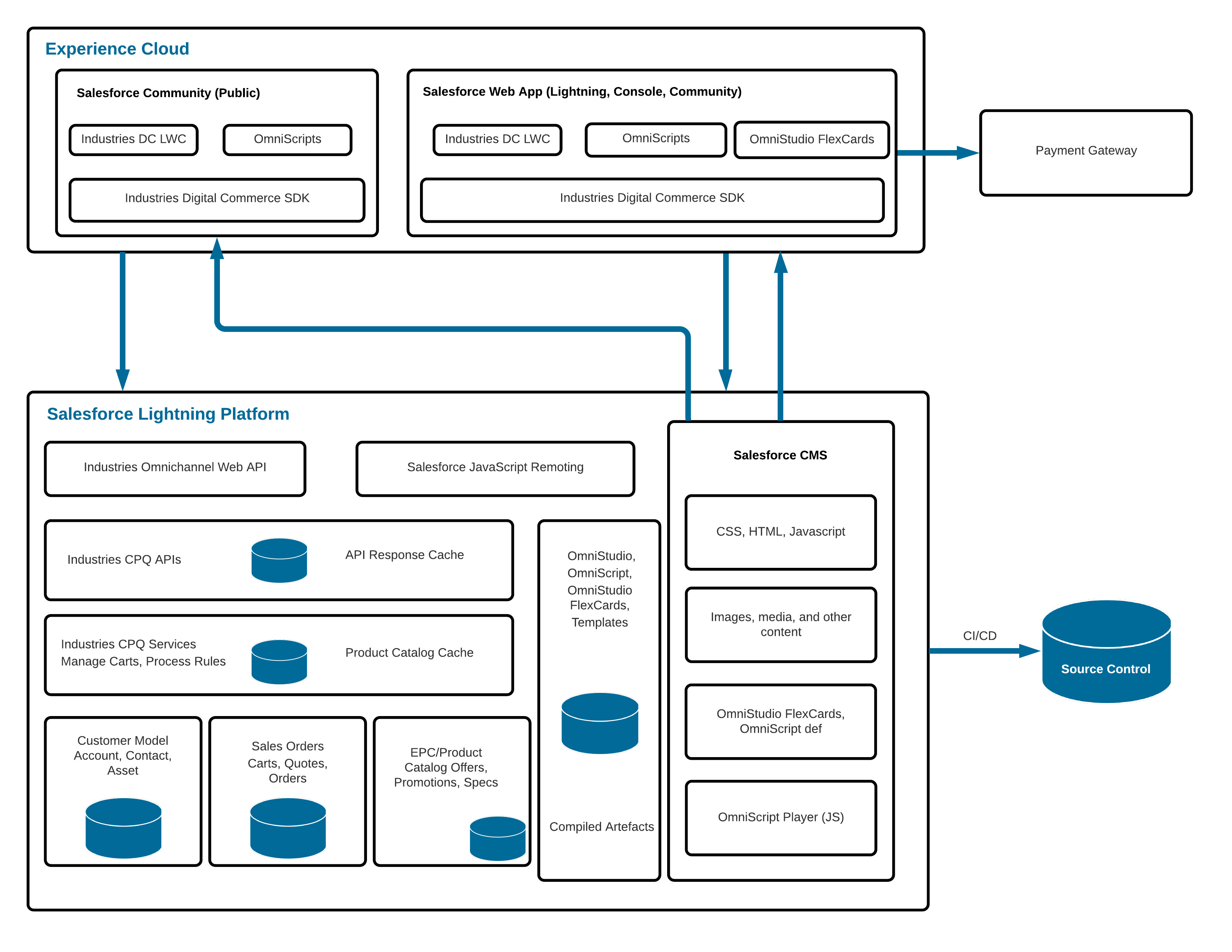
Following are the key benefits and capabilities of Subscriber Lifecycle Management:
- Maximize subscriber lifetime value.
- Monetize audiences faster.
- Attract, convert, and onboard subscribers quickly to drive content engagement.
- Deliver omnichannel customer care.
- Leverage digital channels to simplify service, deflect calls, and serve subscribers on any device and channel from anywhere.
- Measure and optimize for growth.
- Surface timely, actionable, and predictive insights to streamline acquisition, personalized service and retention.
- Drive retention and loyalty.
- Personalize the entire subscriber lifecycle, design data-driven retention journeys and curate loyalty programs.
- Out-of-the-box, Subscriber Lifecycle Management includes integrations with the Stripe payment gateway, Google address validation APIs, and Industries Order Management.
- In addition, Subscriber Lifecycle Management also offers the flexibility to integrate with other Salesforce products, such as Marketing Cloud and Loyalty Cloud.
Here's what you get with Subscriber Lifecycle Management:
-
Subscriber Lifecycle Management uses the Communications Cloud data model.
-
A reference product model and product configurations so you can run the customer journeys. See Subscriber Lifecycle Management Product Model.
-
Separate user interfaces for anonymous users, logged in subscribers, and customer support representatives:
-
Web shop - for anonymous users to browse products and create an account. See Use Subscriber Lifecycle Management as an Anonymous User.
-
Self-care - for subscribers to view and manage their account. See Use Subscriber Lifecycle Management as a Logged in Subscriber.
-
Agent console - for agents to perform various actions for subscribers. See Use Subscriber Lifecycle Management as an Agent.
-
-
The use of the Digital Commerce API SDK. If you want to enhance the UI or implement your own UI, the SDK methods are already available to be consumed. See Digital Commerce Software Development Kit (SDK).
-
An example implementation of an Omni-Channel shopping cart.
-
An example implementation of customer interaction history.
-
A library of core components that are used to implement the customer journeys. See Core Components for Subscriber Lifecycle Management.
