Create a Custom Object Tab
Give your users access to custom object data and records in an app. Custom object tabs are available only at the app level, not on subtab apps, and function like standard tabs.
Required Editions
| Available in: both Salesforce Classic and Lightning Experience |
Custom Object Tabs and Web Tabs available in: Contact Manager, Group, Professional, Enterprise, Performance, Unlimited, and Developer Editions Visualforce Tabs available in: Contact Manager, Group, Professional, Enterprise, Performance, Unlimited, and Developer Editions Lightning Page Tabs available in: all editions except Database.com |
| User Permissions Needed | |
|---|---|
| To create and edit custom tabs: | Customize Application |
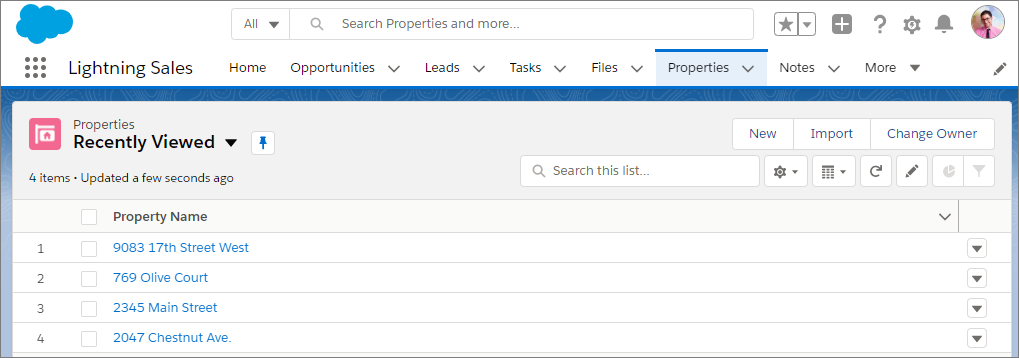
When you add a custom object tab to an app in Salesforce Classic, it appears as a tab. When you add a custom object tab to an app in Lightning Experience, it appears as an item in the app’s navigation bar and in the App Launcher.
- From Setup, in the Quick Find box, enter Tabs, and then select Tabs.
- Click New in the Custom Object Tabs related list.
- Select the custom object to appear in the custom tab. If you haven’t created the custom
object, click create a new custom object now.
The label of the new tab is the same as the plural version of the custom object label.
-
To show Tab Style Selector, click the Tab Style lookup
icon.
If a tab style is already in use, a number enclosed in brackets [] appears next to the tab style name. To view the tabs that use that style, hover over the style name. To filter this list, click Hide styles which are used on other tabs.
- To select the color scheme and icon for your custom tab, select a tab style.
If your org has access to the Documents tab, click Create your own style on the Tab Style Selector dialog to create a custom tab style.
- To access the color selection dialog, click the Color lookup icon and select a color.
- Click Insert an Image, select
the document folder, and select the image that you want to use.
You can also click Search in Documents, enter a search term, and click Go! to find a document file name that includes your search term.
 Note This dialog only lists files in document folders that are under 20 KB and have the Externally Available checkbox selected in the document property settings. If the document used for the icon is later deleted, Salesforce replaces it with a default multicolor block icon (
 ).
). - Select a file, and click OK. The New Custom Tab wizard reappears.
- You have the option to choose a custom link to use as the introductory splash page when users initially click the tab.
- Enter a description of the tab, if desired, and click Next.
- Choose the user profiles that you want to have access to the new custom tab.
For Professional Edition users and Salesforce Platform One license users, tab visibility is set to Default On.
Note A custom object is searchable with or without a custom tab. Go to Search Manager to make your custom object searchable in your org. - Specify the custom apps that you want to include in the new tCRMab.
- To add the tab to your users’ customized display settings if they’ve customized their
personal display, select Append tab to users' existing personal
customizations.Note When this option isn’t selected, you can still see the tab in the users’ customized display settings in Lightning Experience, but it’s not visible in Salesforce Classic.
- Save the tab.
Depending on the visibility settings you selected, you see the tab right away.