Add a tab to show a list of display attachments in the master-detail Displays page. In
Visual Studio Code based Modeler, create a list object to load the attachments and to bind to a
MediaList UI control in a new tab.
Required Editions
Available in: Lightning Experience
Available in: Enterprise and
Unlimited Editions where Consumer Goods Cloud is enabled
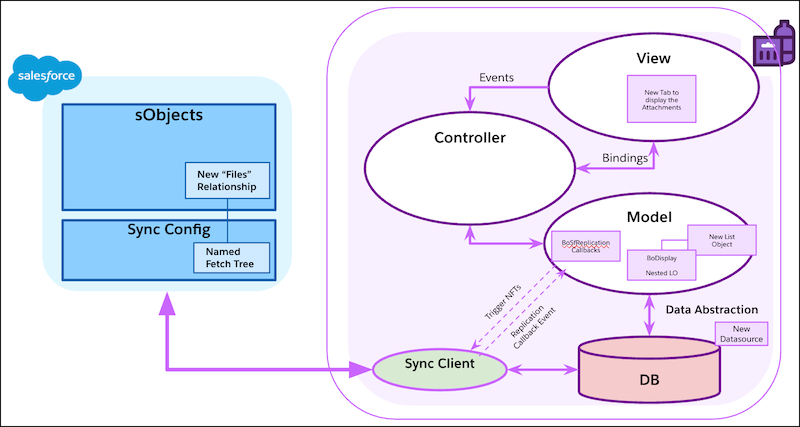
Some backend processes are triggered when the attachments tab is created in the display
record details page.
Sync
This process triggers the syncing of named fetch tree in the replication callback
event.
Data
The model adds a datasource contract for attachments.
Model
The model creates a list object and adds it to the Display object as a nested list
object.
View
The UI flow creates a new tab in the detail page of the display record. It also adds a MediaList
UI control to show the attachments of the selected display record.
Load Attachments to Display Object Create and configure a list object to load the attachments. Add the list object to the Display business object and also add a datasource for the attachments.
Show Attachments on a New Tab on the Displays Detail Page Add a tab in the Display master detail dialog in Visual Studio Code base Modeler. Create a MediaList UI control in the tabbed area to show the list of synced attachments.
Did this article solve your issue?
Let us know so we can improve!
Loading
Salesforce Help | Article
Cookie Consent Manager
General Information
Required Cookies
Functional Cookies
Advertising Cookies
General Information
We use three kinds of cookies on our websites: required, functional, and advertising. You can choose whether functional and advertising cookies apply. Click on the different cookie categories to find out more about each category and to change the default settings.
Privacy Statement
Required Cookies
Always Active
Required cookies are necessary for basic website functionality. Some examples include: session cookies needed to transmit the website, authentication cookies, and security cookies.
Functional Cookies
Functional cookies enhance functions, performance, and services on the website. Some examples include: cookies used to analyze site traffic, cookies used for market research, and cookies used to display advertising that is not directed to a particular individual.
Advertising Cookies
Advertising cookies track activity across websites in order to understand a viewer’s interests, and direct them specific marketing. Some examples include: cookies used for remarketing, or interest-based advertising.