Fulfillment designers can configure the steps to be executed at a future date and time.
They can set a delay for the execution of steps based on the start date of the source line item,
the execution time of the previous steps, or a custom date based on a context definition
field.
Required Editions
Available in: Enterprise, Unlimited, and Developer
Editions
User Permissions
Needed
To configure the steps:
Fulfillment Designer
OR
DRO Admin
Note To schedule steps , enable Future-Dated Steps on the
Dynamic Revenue Orchestrator Settings page. If this feature isn’t enabled, the Execution
Schedule section doesn’t appear on the Fulfillment Definition Steps page.
Create a workspace or select a workspace from the Recently Viewed section.
Create the Fulfillment Step Group, add a step, and enter the details.
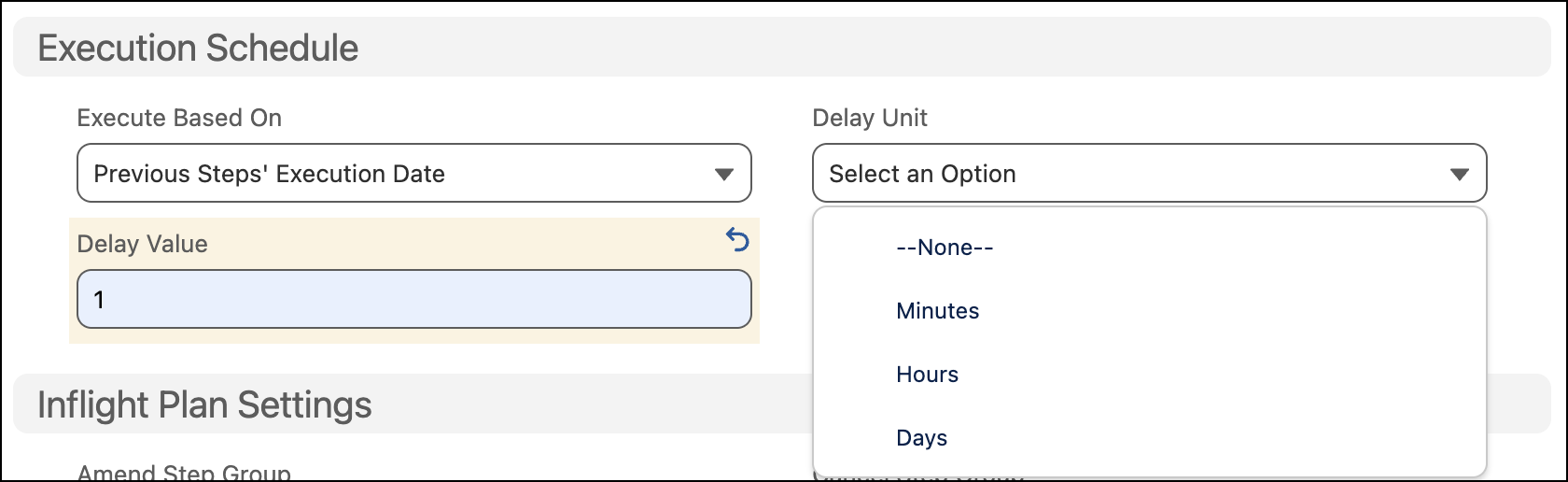
To schedule the execution based on the start date of the source.
Previous Steps Execution Date
To schedule the execution based on the execution date of the previous
steps.
Custom Date
To schedule the execution based on a custom date defined in the associated
context definition.
To set a delay depending on the specified execution schedule, select the delay unit,
and enter a positive number as the delay value.
Save your work.
View Step Status and Details After you submit the order to DRO, go to Fulfillment Lines and select View Fulfillment Plan to view the step status, details, and dependencies.
Use Custom Dates To Schedule Fulfillment Steps Configure the execution of steps in your orchestration plan based on custom dates that correspond to date or datetime tags in context definition. For example, you can map a custom context tag to a custom field to activate a service on a date requested by the customer.
Did this article solve your issue?
Let us know so we can improve!
Loading
Salesforce Help | Article
Cookie Consent Manager
Cookie Consent Manager
General Information
Required Cookies
Functional Cookies
Advertising Cookies
General Information
We use three kinds of cookies on our websites: required, functional, and advertising. You can choose whether functional and advertising cookies apply. Click on the different cookie categories to find out more about each category and to change the default settings.
Privacy Statement
Required Cookies
Always Active
Required cookies are necessary for basic website functionality. Some examples include: session cookies needed to transmit the website, authentication cookies, and security cookies.
Functional Cookies
Functional cookies enhance functions, performance, and services on the website. Some examples include: cookies used to analyze site traffic, cookies used for market research, and cookies used to display advertising that is not directed to a particular individual.
Advertising Cookies
Advertising cookies track activity across websites in order to understand a viewer’s interests, and direct them specific marketing. Some examples include: cookies used for remarketing, or interest-based advertising.