
You are here:
Decomposition Relationship Types
Dynamic Revenue Orchestrator (DRO) supports one-to-one, one-to-many, many-to-one, and many-to-many decomposition relationships.
Required Editions
| Available in: Salesforce Classic (not available in all orgs) and Lightning Experience |
| Available in: Enterprise, Unlimited, and Developer Editions |
Use a one-to-many relationship to fulfill a commercial product as several technical products. Use a many-to-one relationship to consolidate several commercial products into one technical product.
Set the decomposition scope on the technical product to control how often the fulfillment line item is created.
You can also pick a different technical product based on an attribute value. See Define Execution Rules for a Decomposition Rule.
One-to-One Decomposition
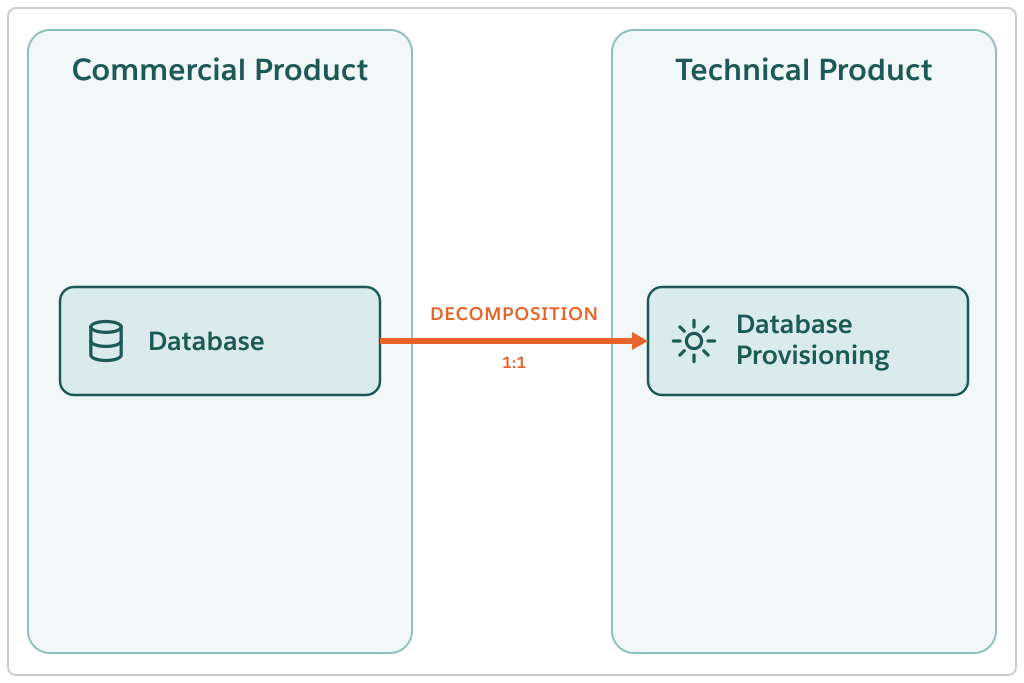
A commercial product maps to exactly one technical product. This link is defined by a decomposition rule, which ensures the commercial product decomposes into that specific technical product.
For example, the Database commercial product decomposes to a Database Provisioning technical product.
One-to-Many Decomposition
A one-to-many relationship decomposes a single commercial product into multiple technical products. Create a separate decomposition rule from the commercial product to each technical product.
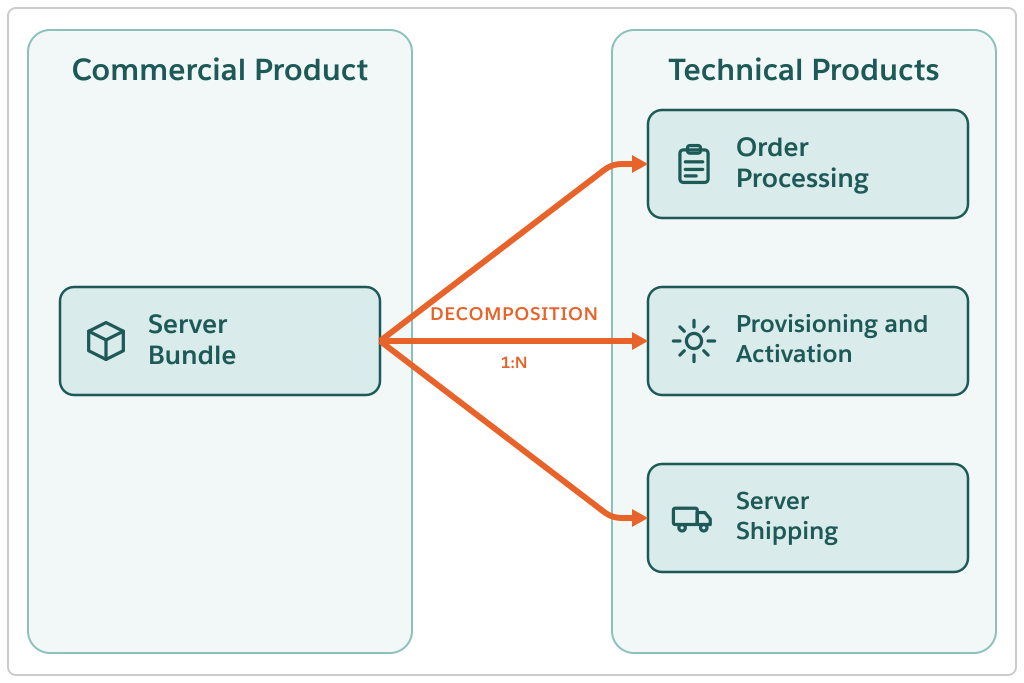
For example, the Server Bundle commercial product decomposes to three technical products on the same order:
- Order Processing
- Provisioning and Activation
- Server Shipping
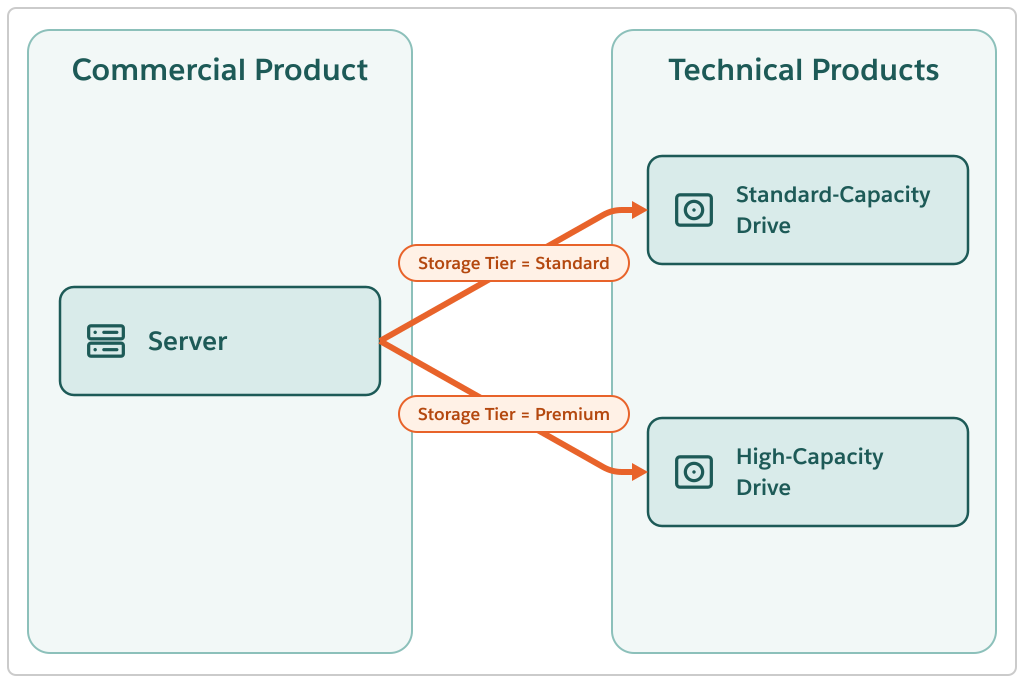
You can define an execution rule to base the technical product based on an attribute value. For example, the Server decomposes to Standard Capacity Drive when the Storage Tier attribute is Standard, or to High Capacity Drive when it's Premium.
Many-to-One Decomposition
A many-to-one relationship consolidates multiple commercial products into a single technical product. Create a decomposition rule from each commercial product to the same technical product.
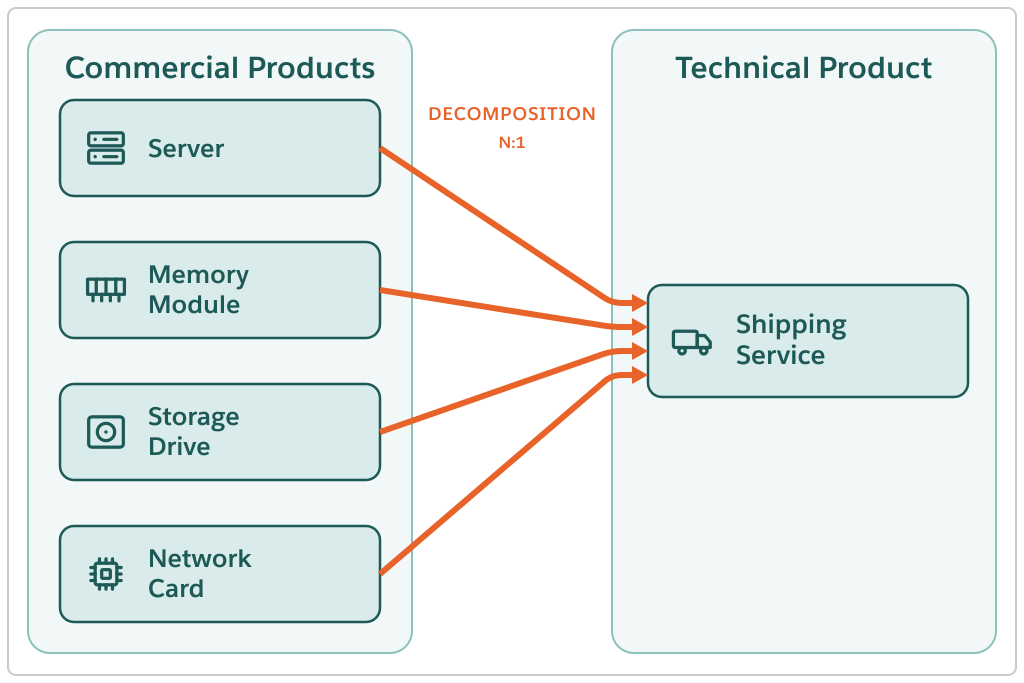
For example, several hardware products on an order need shipping, but you want only one shipping request.
Many-to-Many Decomposition
A many-to-many relationship maps multiple commercial products to multiple technical products. It combines one-to-many fan-out with many-to-one consolidation: author a decomposition rule for each commercial product and technical product pair that you need.
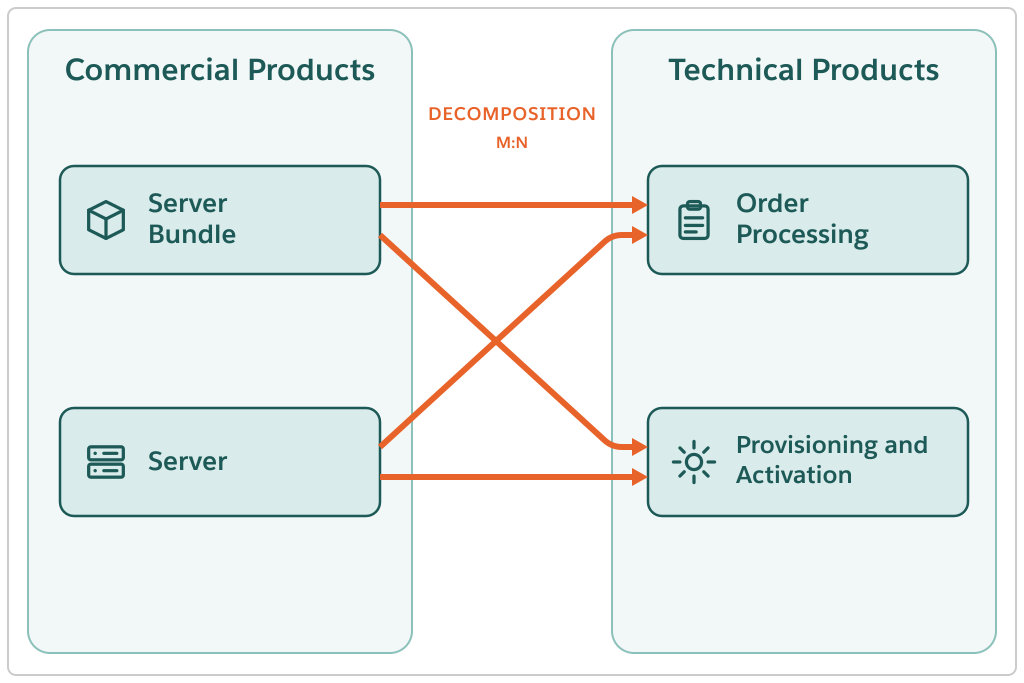
For example, the Server Bundle and Server commercial products both decompose to the Order Processing and Provisioning and Activation technical products.
The relationship type you configure while designing the decomposition defines the possible decomposition. The decomposition result depends on the commercial products present on that specific order and on whether the conditions on the decomposition rules qualify. For example, a many-to-one consolidation occurs only when multiple qualifying commercial products are actually on the same order.
