Rollup Definitions for Record Rollups in Financial Services Cloud
Use record rollup definitions to aggregate records from multiple objects or groups,
without installing the Financial Services Cloud managed package.
Required Editions
Available in: Lightning Experience
Available in: Professional, Enterprise, and Unlimited Editions
where Financial Services Cloud is enabled
Important The standard Record Rollup Definitions feature is available in Salesforce
orgs without installing the Financial Services Cloud managed package. This is different from
the Record Rollups managed package feature, which is available to you after installing the
Financial Services Cloud managed package. For more information, see What’s the Difference Between Record Rollup in Managed
Package and the Standard Record Rollup?.
Record Rollup Definitions
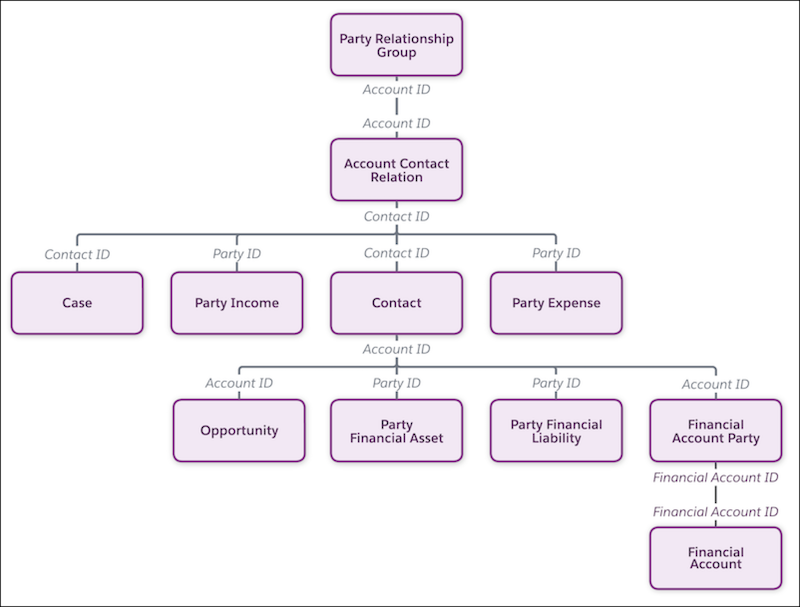
Fragmented data across multiple objects makes it tough for business executives to
consolidate information and make informed decisions. Consolidating information from multiple
objects can be complex, as these objects aren’t always directly linked.
Use Record Rollup Definitions to streamline the aggregation of records from various objects
or groups. Additionally, use filters and join conditions in the record rollup definitions to
effectively and efficiently aggregate records between two objects. To show the record rollup
results in a clear and organized format, use the ShowRecordRollupResults component on a
rollup target object’s record details page. Business executives can make more informed and
precise decisions by using this comprehensive overview of the combined data.
We use three kinds of cookies on our websites: required, functional, and advertising. You can choose whether functional and advertising cookies apply. Click on the different cookie categories to find out more about each category and to change the default settings.
Privacy Statement
Required Cookies
Always Active
Required cookies are necessary for basic website functionality. Some examples include: session cookies needed to transmit the website, authentication cookies, and security cookies.
Functional Cookies
Functional cookies enhance functions, performance, and services on the website. Some examples include: cookies used to analyze site traffic, cookies used for market research, and cookies used to display advertising that is not directed to a particular individual.
Advertising Cookies
Advertising cookies track activity across websites in order to understand a viewer’s interests, and direct them specific marketing. Some examples include: cookies used for remarketing, or interest-based advertising.