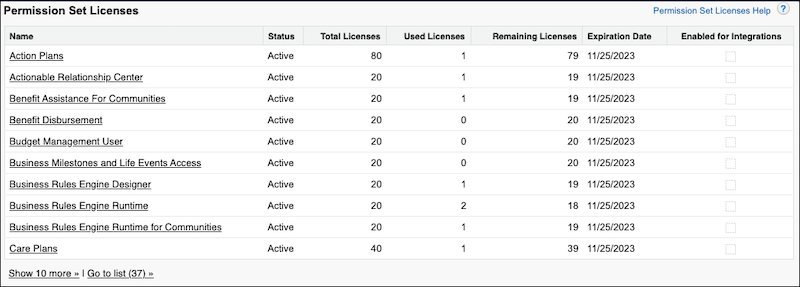
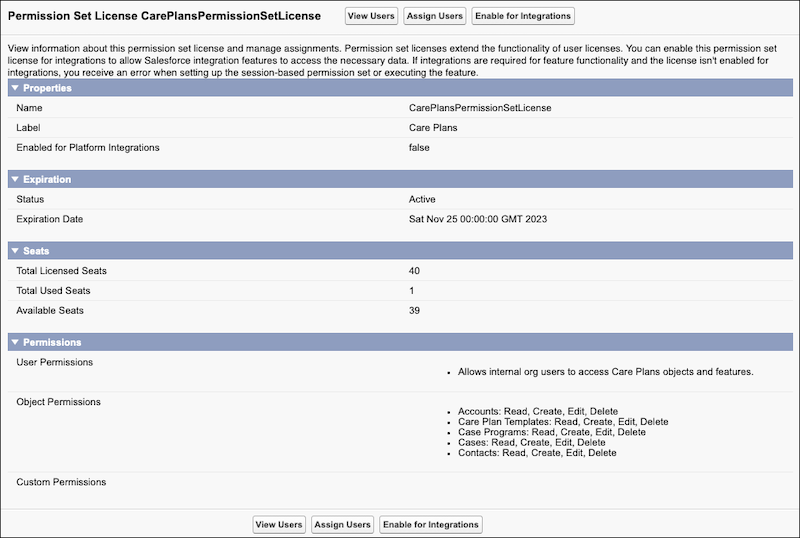
Permission set licenses extend the functionality of a Salesforce user license and provide
access to features and tools. Some permission set licenses are associated with a permission set,
and when you assign the permission set to a user, you automatically assign the permission set
license. Other permission set licenses are assigned directly to a user. Users need both the
appropriate permission sets and permission set licenses to work in Public Sector.
The Salesforce platform, which underlies Public Sector, provides many base permission set
licenses. Public Sector provides additional permission set licenses. The licenses that are
available in your org depend on the product solution and add-ons that you purchase. For
example, if you purchase Public Sector Foundation Advanced, which is based on Service Cloud,
you’ll have all of the standard Service Cloud permission set licenses as well as the
permission set licenses provided by Public Sector.
We use three kinds of cookies on our websites: required, functional, and advertising. You can choose whether functional and advertising cookies apply. Click on the different cookie categories to find out more about each category and to change the default settings.
Privacy Statement
Required Cookies
Always Active
Required cookies are necessary for basic website functionality. Some examples include: session cookies needed to transmit the website, authentication cookies, and security cookies.
Functional Cookies
Functional cookies enhance functions, performance, and services on the website. Some examples include: cookies used to analyze site traffic, cookies used for market research, and cookies used to display advertising that is not directed to a particular individual.
Advertising Cookies
Advertising cookies track activity across websites in order to understand a viewer’s interests, and direct them specific marketing. Some examples include: cookies used for remarketing, or interest-based advertising.