You can customize the information that you display for each entity in the Workspace
Health Monitoring app. For example, you can change the tolerance to set the urgency level and
register to a daily email service.
Required Editions
User Permissions Needed
To configure the Workspace Health Monitoring app
Admin
In Marketing Cloud Intelligence, on the Marketplace tab, select
Apps.
Click Installed Solutions, and then select the Workspace
Health Monitoring app.
Click the Settings icon on each entity card.
Set the tolerance.
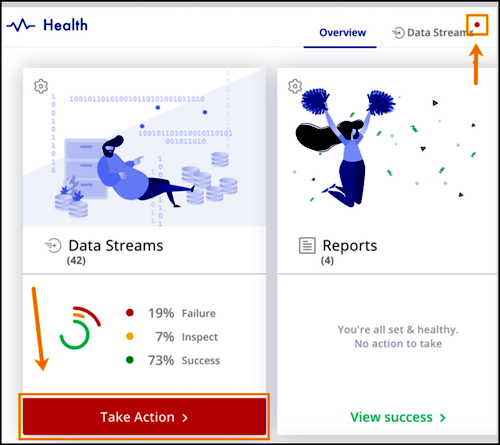
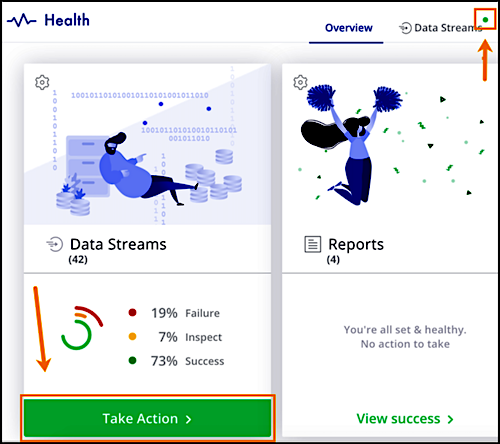
Sensitive: The card appears in red on the main overview and the
top filter even if only one failure occurs.
Proportional: The card appears in red if most items failed. If
not, it appears in yellow or green.
To subscribe users to a daily email status, select Subscribe to daily status
emails, and then enter the email addresses.
Save your work.
Watch this video for more information about configuring the Workspace Health
Monitoring app:
Did this article solve your issue?
Let us know so we can improve!
Loading
Salesforce Help | Article
Cookie Consent Manager
Cookie Consent Manager
General Information
Required Cookies
Functional Cookies
Advertising Cookies
General Information
We use three kinds of cookies on our websites: required, functional, and advertising. You can choose whether functional and advertising cookies apply. Click on the different cookie categories to find out more about each category and to change the default settings.
Privacy Statement
Required Cookies
Always Active
Required cookies are necessary for basic website functionality. Some examples include: session cookies needed to transmit the website, authentication cookies, and security cookies.
Functional Cookies
Functional cookies enhance functions, performance, and services on the website. Some examples include: cookies used to analyze site traffic, cookies used for market research, and cookies used to display advertising that is not directed to a particular individual.
Advertising Cookies
Advertising cookies track activity across websites in order to understand a viewer’s interests, and direct them specific marketing. Some examples include: cookies used for remarketing, or interest-based advertising.