Marketers can use custom components to enhance their email templates and content by
bringing in information and assets, such as surveys or event details, from third parties. Partners
or developers can create custom components. Admins install custom components from an unmanaged
package or via AppExchange. After a component is installed, a user can choose it when they build
email content.
Required Editions
Available in: any
Account Engagement Edition with Salesforce Essentials, Professional, Enterprise,
Performance, and Unlimited Editions
Available in Account Engagement Lightning App only
User Permissions Needed
To install a package:
Download AppExchange Package
To add a custom component to email template or email content:
Access Drag and Drop Content Builder
and
View Setup and Configuration
Anyone with email editing access can edit an email that contains a custom component, even if
they don’t have permissions to add or change the component.
Open an email content record.
Click Edit in Builder.
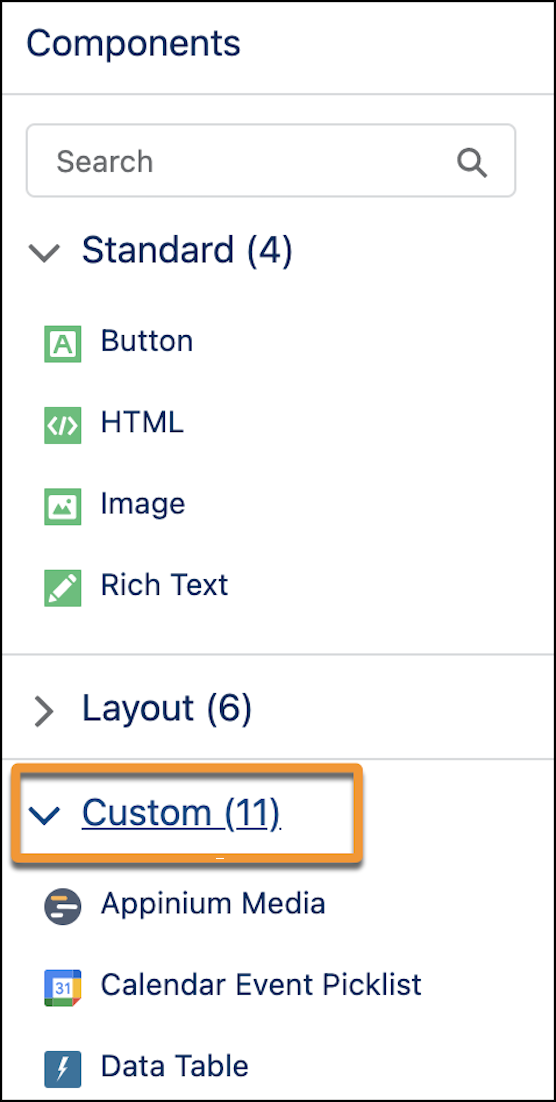
From the left rail, drag a component from the Custom section.
We use three kinds of cookies on our websites: required, functional, and advertising. You can choose whether functional and advertising cookies apply. Click on the different cookie categories to find out more about each category and to change the default settings.
Privacy Statement
Required Cookies
Always Active
Required cookies are necessary for basic website functionality. Some examples include: session cookies needed to transmit the website, authentication cookies, and security cookies.
Functional Cookies
Functional cookies enhance functions, performance, and services on the website. Some examples include: cookies used to analyze site traffic, cookies used for market research, and cookies used to display advertising that is not directed to a particular individual.
Advertising Cookies
Advertising cookies track activity across websites in order to understand a viewer’s interests, and direct them specific marketing. Some examples include: cookies used for remarketing, or interest-based advertising.