An active screen flow with the Make Available in Slack advanced setting can run in the
flow default environment. To send a Slack message that contains a button to run that flow to a
Slack channel or group direct message, create another flow that contains an action.
To open, edit, create, activate or
deactivate a flow using all flow types, elements, and features available in Flow
Builder, including Einstein and Agentforce for Flow:
Manage Flow
Note You don't need to be an admin to have the Manage Flow permission.
Ask your admin to add it to your profile or permission set.
The Slack Send Message to Launch Flow action work with only official Salesforce Slack
apps.
Edit or create a flow that supports Slack Send Message to Launch Flow, and add an
Action element.
These flow types don’t support the Slack Send Message to Launch Flow action: CMS
Orchestrator, EvaluationFlow, Journey, Orchestrator, Survey, SurveyEnrich, and
TransactionSecurityFlow.
In the Action element dialog box, select Slack in the Categories
panel.
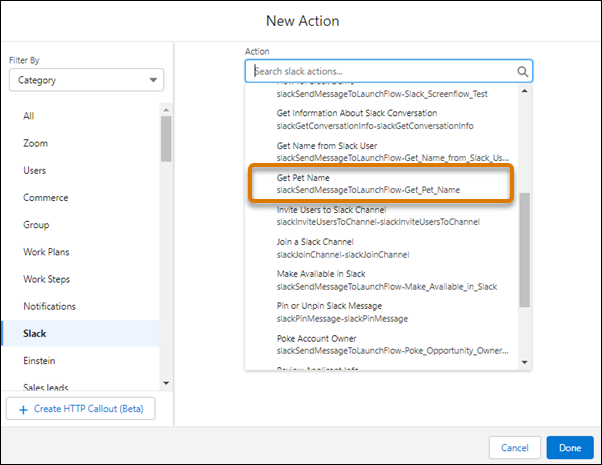
In the Action field, select the version of the slackSendMessageToLaunchFlow action that
has the name of the active flow that you created.
The Slack Send Message to Launch Flow action shows versions for only active screen
flows that have the Make Available in Slack advanced option selected.
The version of slackSendMessageToLaunchFlow to select for the Get Pet Name flow is
Get Pet Name. The API name is slackSendMessageToLaunchFlow - Get_Pet_Name.
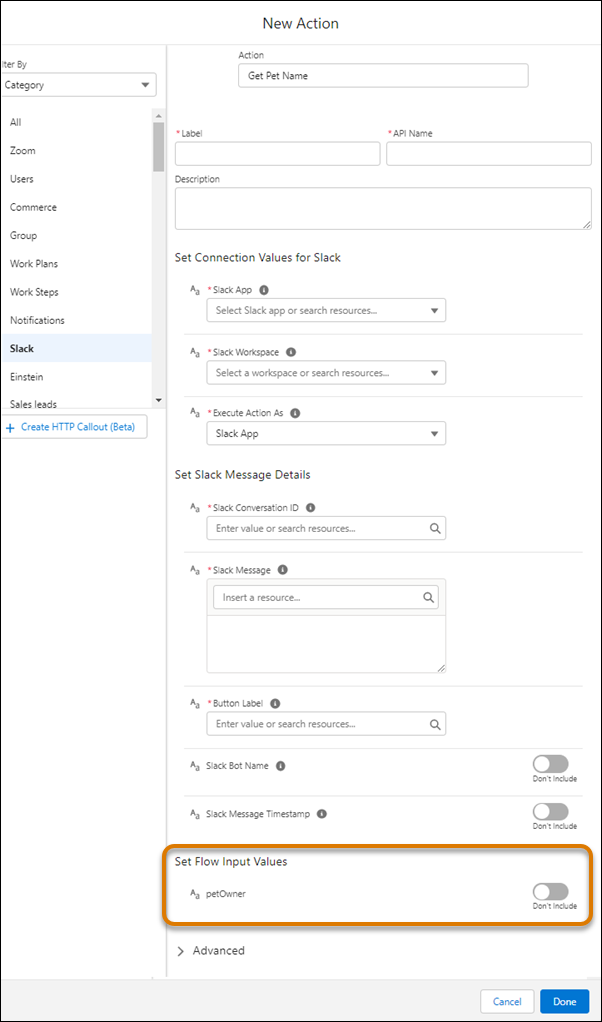
In the New Action dialog, fill in the fields, and then click
Done.
You can select only an official Salesforce Slack app for the Slack app field.
The Get Pet Name version of the Slack Send Message to Launch Flow action has one
input value specific to Get Pet Name: petOwner. All other inputs are standard to the Slack
Send Message to Launch Flow action.
We use three kinds of cookies on our websites: required, functional, and advertising. You can choose whether functional and advertising cookies apply. Click on the different cookie categories to find out more about each category and to change the default settings.
Privacy Statement
Required Cookies
Always Active
Required cookies are necessary for basic website functionality. Some examples include: session cookies needed to transmit the website, authentication cookies, and security cookies.
Functional Cookies
Functional cookies enhance functions, performance, and services on the website. Some examples include: cookies used to analyze site traffic, cookies used for market research, and cookies used to display advertising that is not directed to a particular individual.
Advertising Cookies
Advertising cookies track activity across websites in order to understand a viewer’s interests, and direct them specific marketing. Some examples include: cookies used for remarketing, or interest-based advertising.