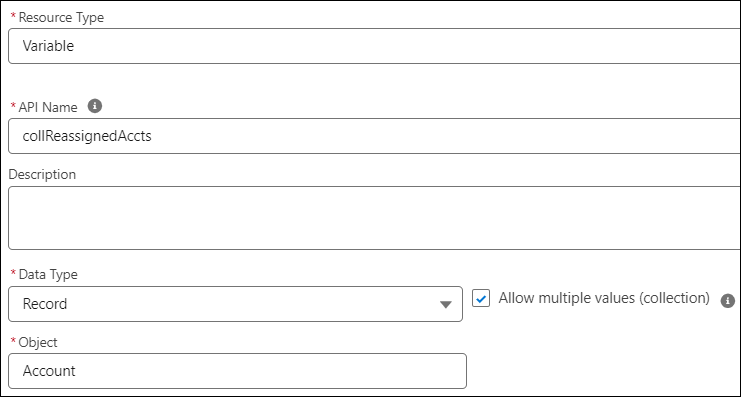
First, create an Account-based record collection variable called
collReassignedAccts.
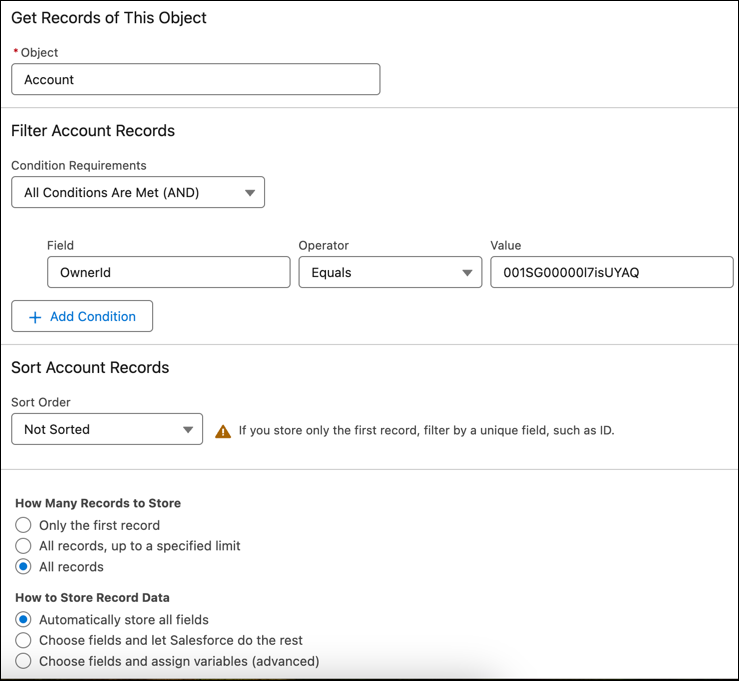
Next, add the Get Records element to get all account records that John Smith owns.
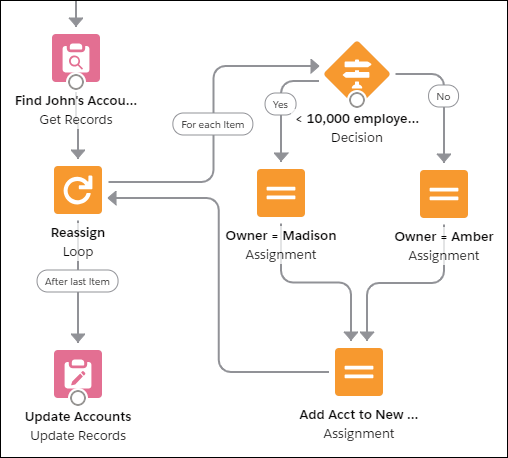
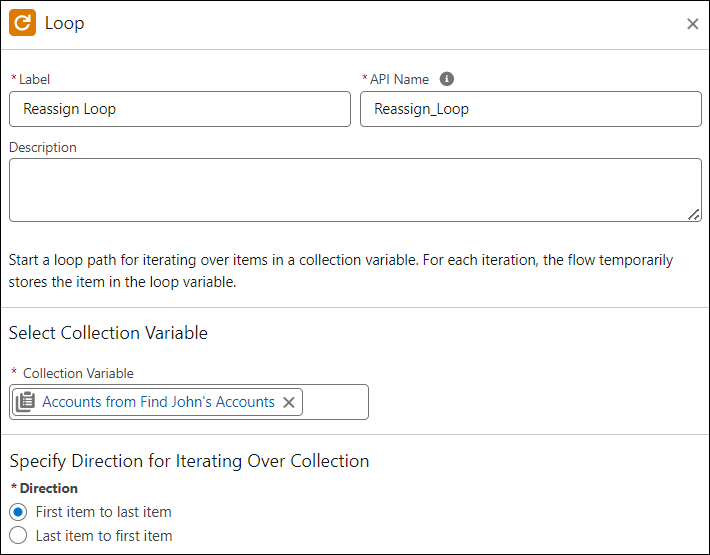
Then create a loop that iterates through the collection. For each item in the
collection, the loop:
Assigns the collection item to the loop variable.
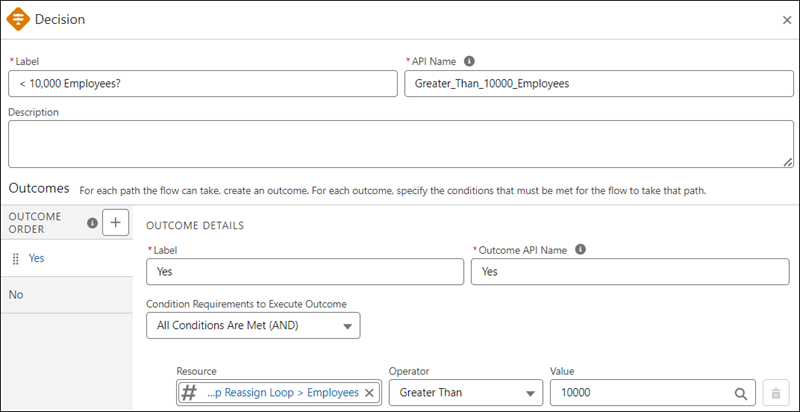
Evaluates whether the account has more than 10,000 employees.
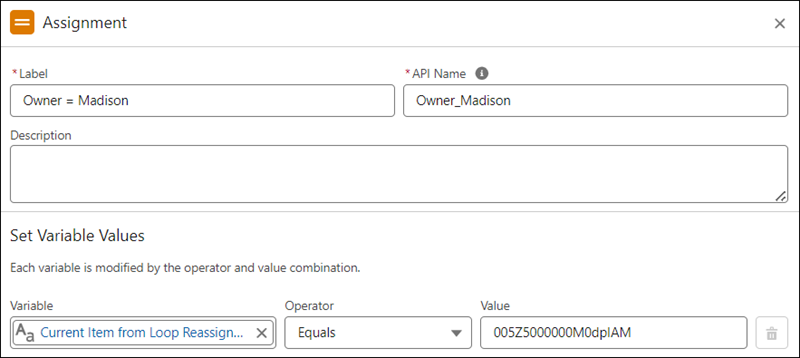
If the account has more than 10,000 employees, assigns Madison's user ID to the
OwnerId field in the loop variable.
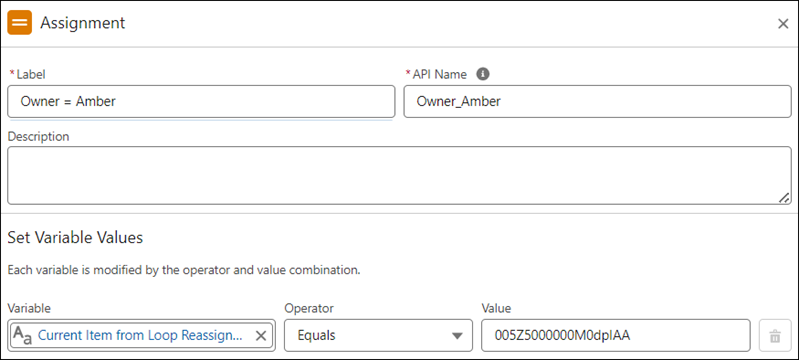
If the account doesn't have more than 10,000 employees, assigns Amber's user ID to the
OwnerId field in the loop variable.
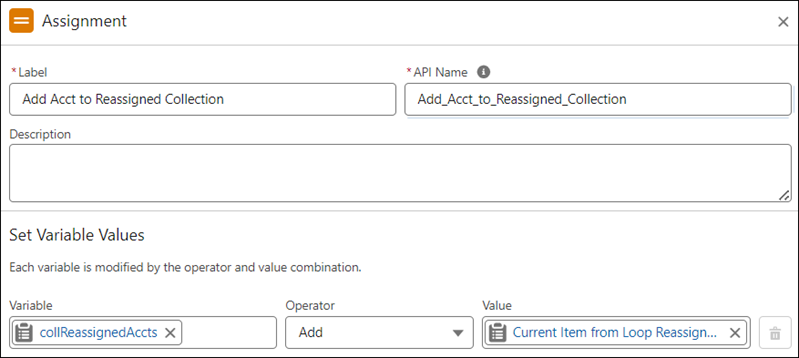
Adds the loop variable's values as a new item in the
collReassignedAccts collection.
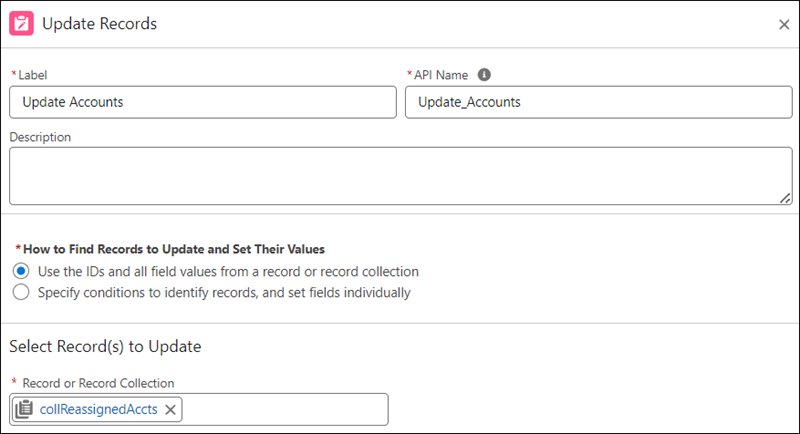
Finally, add an Update Records element to update the accounts in
collReassignedAccts with the new OwnerId after the
loop finishes iterating through the collection.
This section of the flow uses a single query to look up the list of accounts and a
single DML statement to update those accounts. If you updated the records by setting the
fields individually, you would use:
One Update Records element to find all accounts that John owns and have more than 10,000
employees (1 query). Then update those records’ OwnerId to
Madison’s Id (1 DML statement).
One Update Records element to find all accounts that John owns and don’t have more than 10,000
employees (1 query). Then update those records’ OwnerId to Amber’s
Id (1 DML statement).
Did this article solve your issue?
Let us know so we can improve!
Loading
Salesforce Help | Article
Cookie Consent Manager
Cookie Consent Manager
General Information
Required Cookies
Functional Cookies
Advertising Cookies
General Information
We use three kinds of cookies on our websites: required, functional, and advertising. You can choose whether functional and advertising cookies apply. Click on the different cookie categories to find out more about each category and to change the default settings.
Privacy Statement
Required Cookies
Always Active
Required cookies are necessary for basic website functionality. Some examples include: session cookies needed to transmit the website, authentication cookies, and security cookies.
Functional Cookies
Functional cookies enhance functions, performance, and services on the website. Some examples include: cookies used to analyze site traffic, cookies used for market research, and cookies used to display advertising that is not directed to a particular individual.
Advertising Cookies
Advertising cookies track activity across websites in order to understand a viewer’s interests, and direct them specific marketing. Some examples include: cookies used for remarketing, or interest-based advertising.