Associate Discovery Framework-Based Data Capture Forms with Service Appointments
After you build your forms through the Discovery Framework Data Capture flow in Flow
Builder, associate the forms with a work order, a work order line item, or a service appointment
so that mobile workers can launch these forms and collect data during site visits.
Required Editions
Available in: Lightning Experience
Available in: Enterprise, Unlimited, and Developer Editions where
Field Service is enabled
User Permissions Needed
To create service appointments:
Create on service appointments
To create, update or delete assigned resources:
Edit on service appointments
AND
Read on service resources
To access forms built with Discovery Framework Data Capture Flow process type:
Mobile workers can access the forms directly from the Forms tab on Work Order
Overview, or from a service appointment, work order, or work order line item record. This
procedure shows how to associate a form built using the Discovery Framework Data Capture Flow to
a service appointment. Mobile workers can launch the form from the related list on a service
appointment record.
From the App Launcher, find and select Service Appointments.
Add a service appointment.
Select a parent record.
Enter the earliest possible start date and time. Then, enter the due date and time.
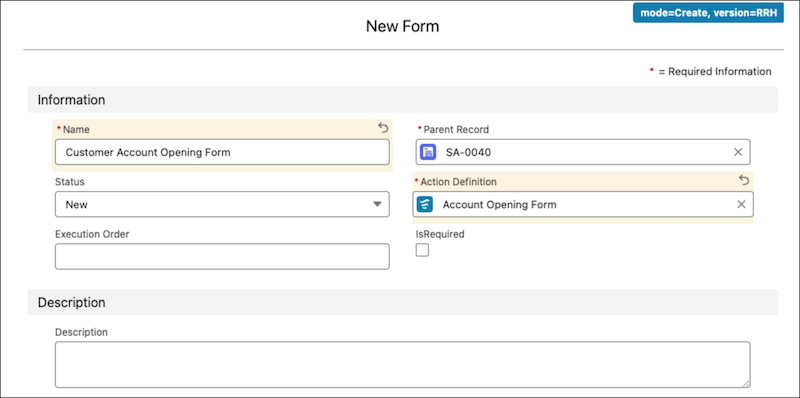
On the Related tab of the service appointment record, add a form.
Enter a name for the form.
In Action Definition, select the screen flow that you created by using the Discovery
Framework Data Capture Flow process type.
Save your changes.
To test the form, launch it from the related list on a service appointment record on the
mobile app.
We use three kinds of cookies on our websites: required, functional, and advertising. You can choose whether functional and advertising cookies apply. Click on the different cookie categories to find out more about each category and to change the default settings.
Privacy Statement
Required Cookies
Always Active
Required cookies are necessary for basic website functionality. Some examples include: session cookies needed to transmit the website, authentication cookies, and security cookies.
Functional Cookies
Functional cookies enhance functions, performance, and services on the website. Some examples include: cookies used to analyze site traffic, cookies used for market research, and cookies used to display advertising that is not directed to a particular individual.
Advertising Cookies
Advertising cookies track activity across websites in order to understand a viewer’s interests, and direct them specific marketing. Some examples include: cookies used for remarketing, or interest-based advertising.