When Queue Management is enabled, supervisors can reassign reps to contact center
groups on the fly. For example, if a queue gets swamped with calls and reps are running at
capacity, a supervisor can reassign a group of reps from another queue. You can’t reassign reps
from different contact centers at the same time. Instead, make changes to each contact center
separately.
Required Editions
This article applies to:
Salesforce Voice with Amazon Connect
Salesforce Voice with Partner Telephony
Salesforce Voice with Partner Telephony from Amazon Connect
When changes are made to a Salesforce contact center group, those changes are also
updated in the associated Amazon Connect routing profile.
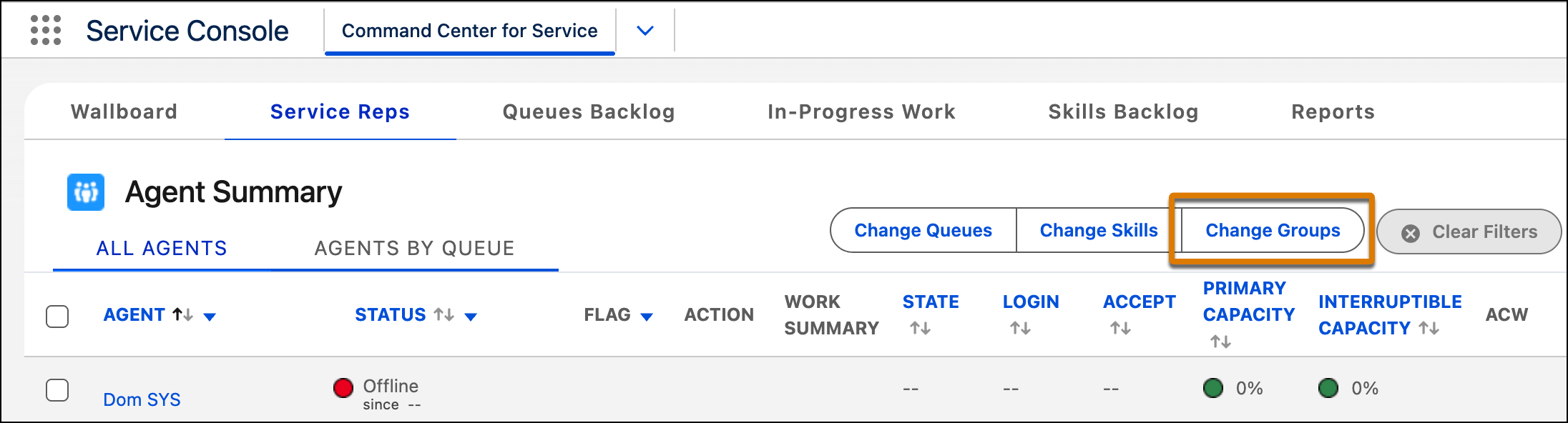
To see the Change Groups button in Command Center for Service, your admin must perform these
prerequisite steps.
Enable Queue Management.
Add Change Groups to the actions in the supervisor configuration assigned to you.
In the Service Reps tab of Command Center for Service, click Change
Groups.
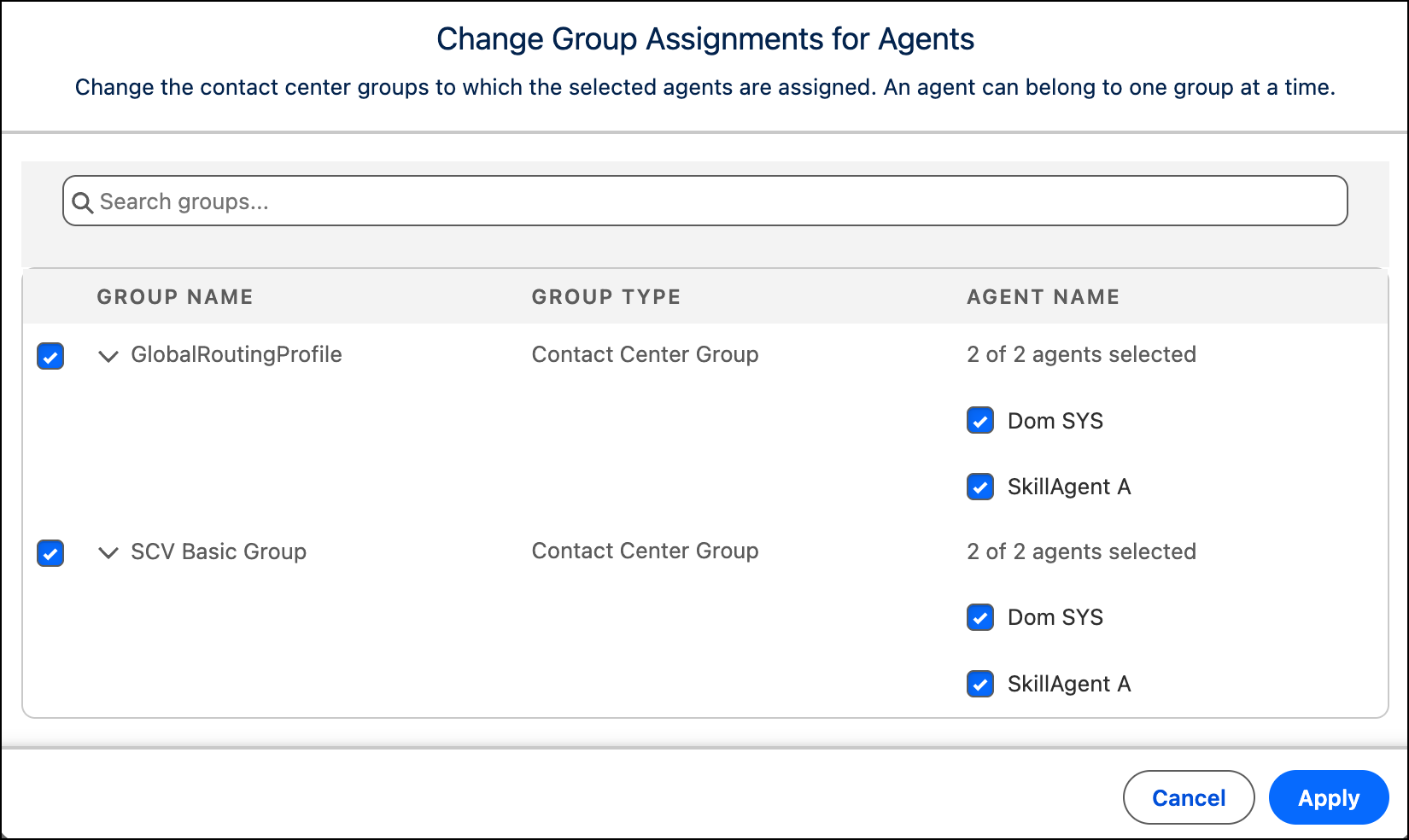
Select the reps that you want to reassign.
Select their new group.
Note If Queue Management isn’t enabled, no groups appear. When reassigning a rep, you
must assign them to a contact center group. If you don't select a group, you'll receive
an error.
Click Apply.
All affected reps receive an email about the change. To apply the change, each rep must
set their Omni-Channel status to offline, and then back to any available status. If a change
can’t be applied, check your email for the details.
We use three kinds of cookies on our websites: required, functional, and advertising. You can choose whether functional and advertising cookies apply. Click on the different cookie categories to find out more about each category and to change the default settings.
Privacy Statement
Required Cookies
Always Active
Required cookies are necessary for basic website functionality. Some examples include: session cookies needed to transmit the website, authentication cookies, and security cookies.
Functional Cookies
Functional cookies enhance functions, performance, and services on the website. Some examples include: cookies used to analyze site traffic, cookies used for market research, and cookies used to display advertising that is not directed to a particular individual.
Advertising Cookies
Advertising cookies track activity across websites in order to understand a viewer’s interests, and direct them specific marketing. Some examples include: cookies used for remarketing, or interest-based advertising.