Because your cache-only key material is stored outside of Salesforce, it’s important to
maintain a functional callout connection. Use the Callout Check page to monitor your connection
and quickly respond to key service interruptions that could prevent the service from fetching your
keys.
Required Editions
Available in both Salesforce Classic (not available in all orgs) and Lightning
Experience.
Available in: Enterprise, Performance, Unlimited, and
Developer Editions. Requires purchasing Salesforce Shield or Shield
Platform Encryption, and the External Key Management Service.
User
Permissions Needed
To generate, destroy, export, import, upload, and configure
tenant secrets and customer-supplied key material:
Manage Encryption Keys
The Cache-Only Key: Callout Check page is accessible after you enable the Cache-Only Key
Service in your org and make your first callout. Data presented as part of a callout check are
never stored in the system of record.
From Setup, enter Platform Encryption in the Quick Find box, then
select Key Management.
Choose the Certificate Unique Name and Named Credential associated with your Unique Key
Identifier.
In the Actions column, next to the key material you want to check, click
Details.
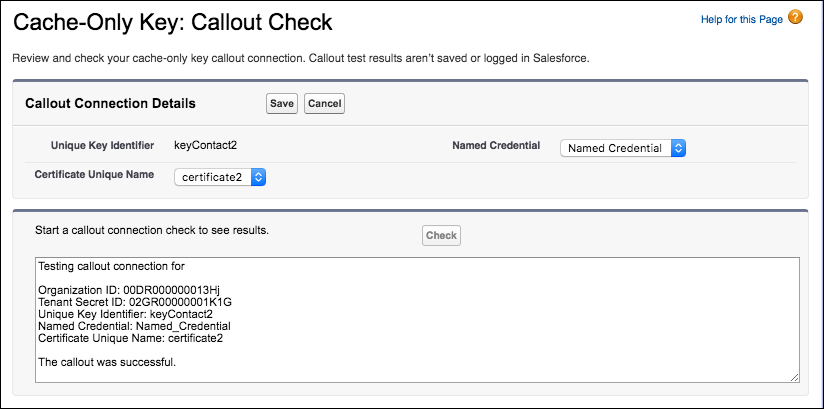
On the Cache-Only Key: Callout Check page, click Check.
Details about your callout connection display on the page. It can take a few moments
for the callout check to complete and display the results.
Review the details about your callout connection. If your callout connection was
unsuccessful, you see a descriptive error message at the bottom of the results pane. Use this
message to make the appropriate adjustments to your key service.
We use three kinds of cookies on our websites: required, functional, and advertising. You can choose whether functional and advertising cookies apply. Click on the different cookie categories to find out more about each category and to change the default settings.
Privacy Statement
Required Cookies
Always Active
Required cookies are necessary for basic website functionality. Some examples include: session cookies needed to transmit the website, authentication cookies, and security cookies.
Functional Cookies
Functional cookies enhance functions, performance, and services on the website. Some examples include: cookies used to analyze site traffic, cookies used for market research, and cookies used to display advertising that is not directed to a particular individual.
Advertising Cookies
Advertising cookies track activity across websites in order to understand a viewer’s interests, and direct them specific marketing. Some examples include: cookies used for remarketing, or interest-based advertising.