Fuzzy matching adds uniformity to spelling variations in variables, resulting in smarter
categorizations and better predictions. Einstein Discovery transforms the data at prediction time,
enabling you to skip cleansing during data prep.
Required Editions
Note Einstein Discovery stories are now models. We wish we could snap our fingers to update
the name everywhere, but you can expect to see the previous name in a few places until we
replace it.
Available in Salesforce Classic and Lightning Experience.
Available with CRM Analytics, which is available for an extra cost in
Enterprise, Performance, and Unlimited Editions. Also available in
Developer Edition.
User Permissions
Needed
To configure text fields in a model:
Create and Update Einstein Discovery Models
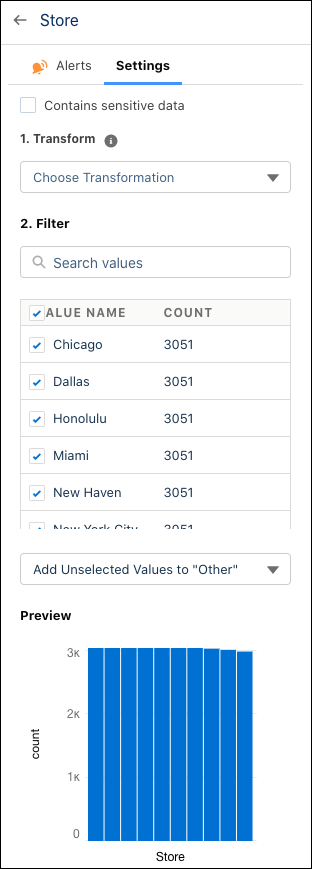
In Model Setup, select a variable that contains spelling variations, click the
Settings tab in the right panel, and preview variable contents.
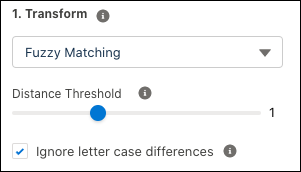
Click Fuzzy Matching in the Transform
dropdown menu.
Einstein Discovery applies the Levenshtein distance algorithm for
Distance Threshold, which is set to 1 by default. Use the lever to
specify how values are to be clustered.
Specify if fuzzy matching can ignore case in the variable by clicking Ignore
letter case differences.
Click Edit Buckets to review results. Adjust a bucket name by
selecting it then clicking the pencil.
Click Done.
Did this article solve your issue?
Let us know so we can improve!
Loading
Salesforce Help | Article
Cookie Consent Manager
General Information
Required Cookies
Functional Cookies
Advertising Cookies
General Information
We use three kinds of cookies on our websites: required, functional, and advertising. You can choose whether functional and advertising cookies apply. Click on the different cookie categories to find out more about each category and to change the default settings.
Privacy Statement
Required Cookies
Always Active
Required cookies are necessary for basic website functionality. Some examples include: session cookies needed to transmit the website, authentication cookies, and security cookies.
Functional Cookies
Functional cookies enhance functions, performance, and services on the website. Some examples include: cookies used to analyze site traffic, cookies used for market research, and cookies used to display advertising that is not directed to a particular individual.
Advertising Cookies
Advertising cookies track activity across websites in order to understand a viewer’s interests, and direct them specific marketing. Some examples include: cookies used for remarketing, or interest-based advertising.