
You are here:
Plan the Dataflow
Before you start creating the dataflow, think about the dataflow design. Consider what data to make available for queries, where to extract the data from, and whether you must transform the extracted data to get the data you want.
To illustrate some key design decisions, let’s consider an example. In this example, the goal is to create a dataset called “Won Opportunities.” The dataset contains opportunity details, including the account name for each opportunity.
To create this dataset, design this dataflow.
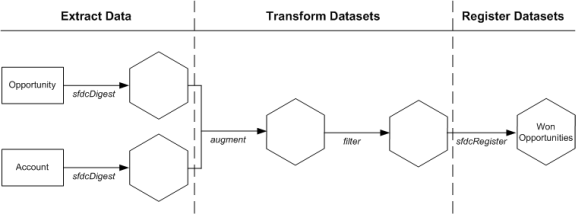
The dataflow extracts opportunity data from the Opportunity object and extracts the account name from the Account object. For each extracted object, the dataflow creates a dataset.
The dataflow then transforms the datasets created from the extracted data. First, the dataflow joins the opportunity and account data into a new dataset. Next, the dataflow filters the records based on the opportunity stage so that the dataset contains only won opportunities. Each time the dataflow transforms a dataset, it creates a dataset.

Finally, because you want users to be able to query won opportunities only, you configure the dataflow to register the final dataset only. However, if you wanted, you could register any dataset created by the dataflow and register as many datasets as you like.
