Control Which Analytics Tab Users Access the Analytics Studio
Specify who can create apps and edit and delete datasets and dashboards by making
Analytics Studio invisible to Analytics Tab users on a per profile basis. When you remove
Analytics Studio visibility from a profile, Analytics tab users with the profile don’t see
Analytics Studio in the App Launcher. They also don’t have the Open in Analytics Studio action in
asset menus and dashboard headers.
Required Editions
Available in Salesforce Classic and Lightning Experience.
Available with CRM Analytics, which is available for an extra cost in
Enterprise, Performance, and Unlimited Editions. Also available in
Developer Edition.
User Permissions Needed
To modify settings:
Manage CRM Analytics
To restrict access to the Analytics Studio within the Analytics tab, complete the following
steps.
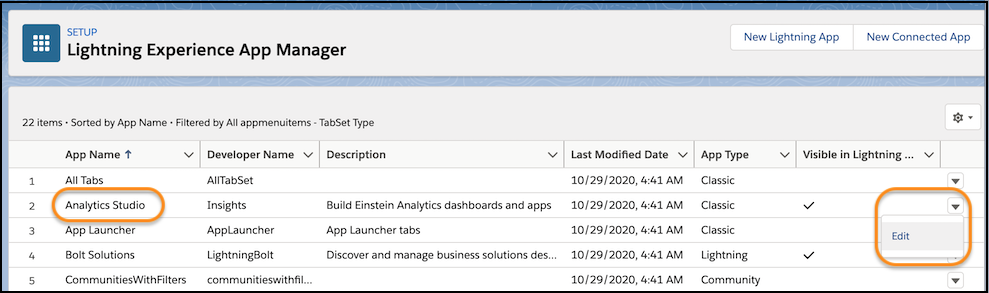
From Setup, in the Quick Find box, enter App
Manager.
In the App Manager, open the Analytics Studio menu and select
Edit.
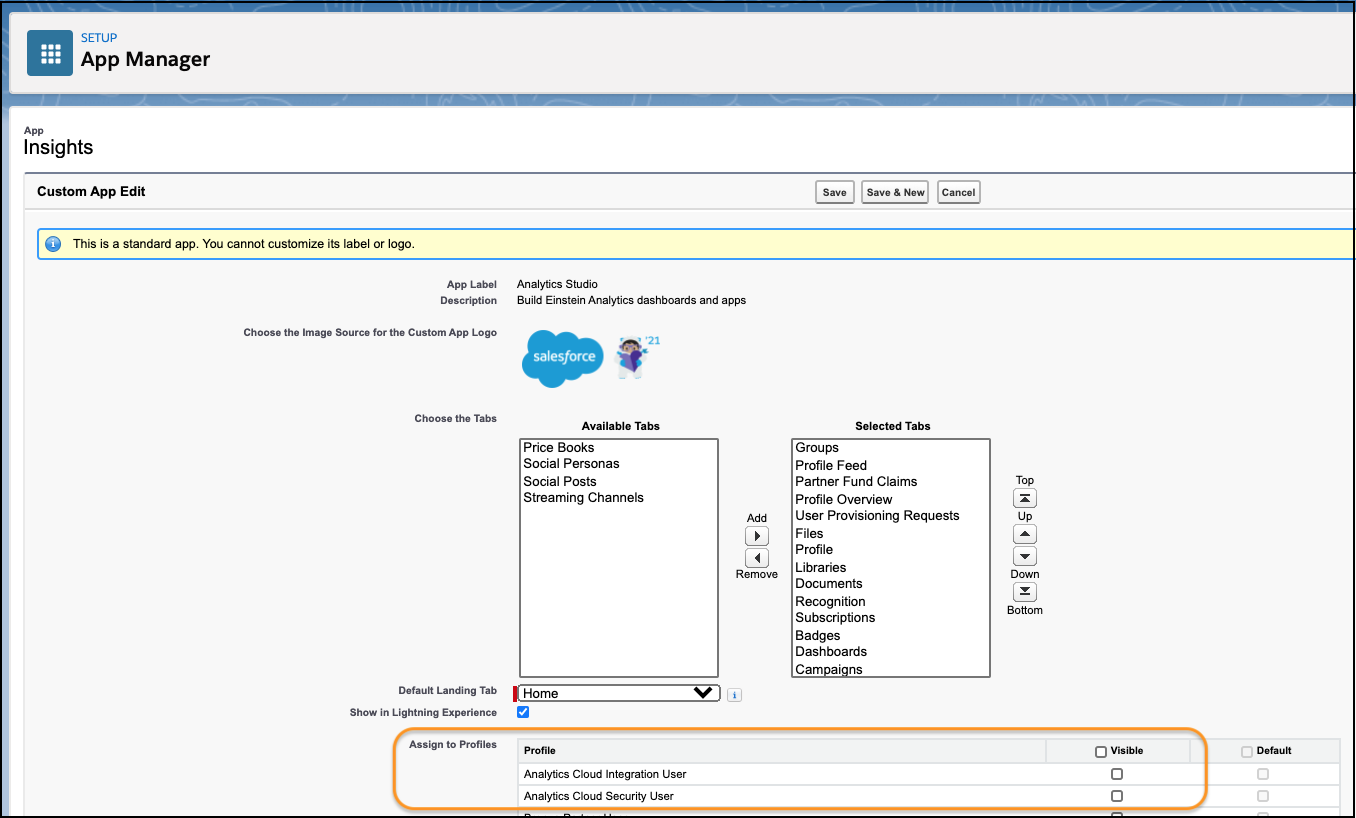
To restrict access to the Analytics Studio for a profile, clear its check from the
Visible column in the Assign to Profiles section.
Important Although disabling visibility removes UI links to Analytics Studio within
the Analytics tab, any URL to the Studio version of an asset always opens it in Studio. The
Studio version URL is available in the Share dialog and is provided in notification and
subscription emails. However, for notifications created on embedded dashboards and in Analytics
Tab, links in notification emails navigate the user to the Analytics Tab.
Note The Visible setting applies to the Analytics tab only. Access to Analytics Studio from
embedded dashboards is controlled through the component’s attributes.
Did this article solve your issue?
Let us know so we can improve!
Loading
Salesforce Help | Article
Cookie Consent Manager
General Information
Required Cookies
Functional Cookies
Advertising Cookies
General Information
We use three kinds of cookies on our websites: required, functional, and advertising. You can choose whether functional and advertising cookies apply. Click on the different cookie categories to find out more about each category and to change the default settings.
Privacy Statement
Required Cookies
Always Active
Required cookies are necessary for basic website functionality. Some examples include: session cookies needed to transmit the website, authentication cookies, and security cookies.
Functional Cookies
Functional cookies enhance functions, performance, and services on the website. Some examples include: cookies used to analyze site traffic, cookies used for market research, and cookies used to display advertising that is not directed to a particular individual.
Advertising Cookies
Advertising cookies track activity across websites in order to understand a viewer’s interests, and direct them specific marketing. Some examples include: cookies used for remarketing, or interest-based advertising.