
You are here:
Connect a SageMaker Model
To consume your predictions in Salesforce, connect your SageMaker model with Data 360 and define the prediction criteria for your use case.
Gather information about your model endpoint and the authentication details.
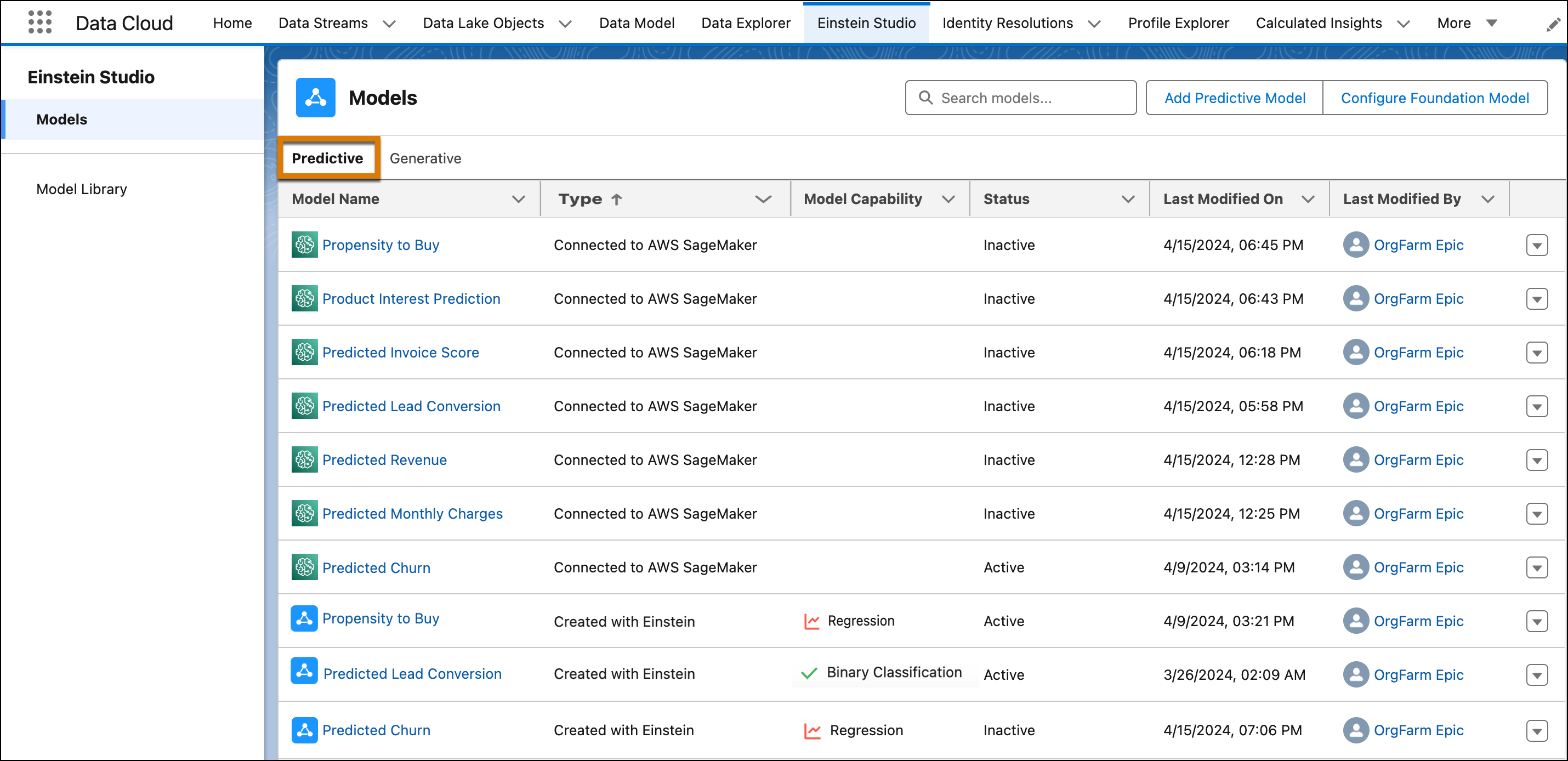
- In AI Models (formerly Einstein Studio), on the Predictive tab, click Add Predictive
Model.
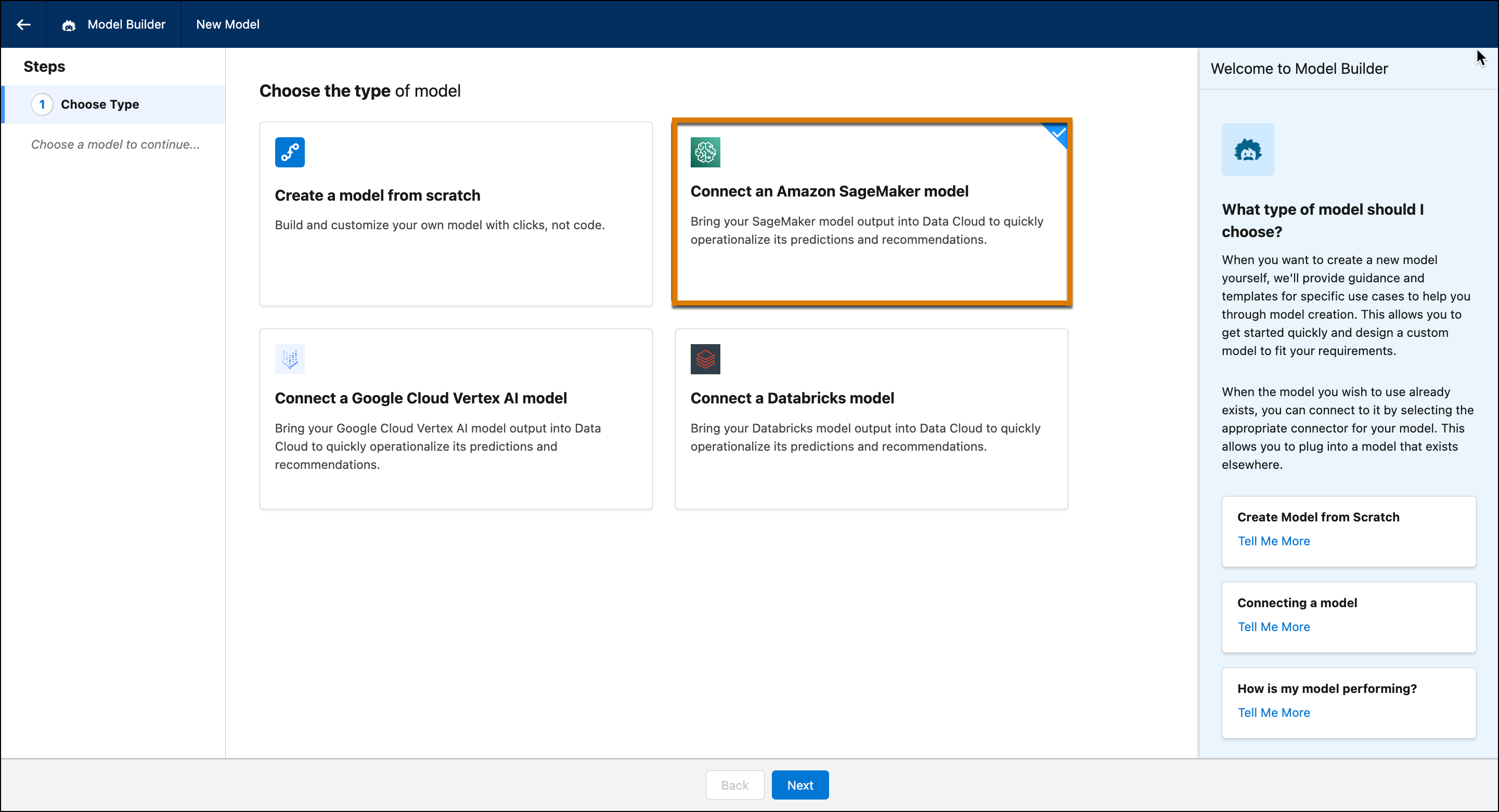
- To choose your model type, click Connect an Amazon SageMaker
model. Then click Next.
- To connect the endpoint and access your model inferences, specify these details. Then
click Next.
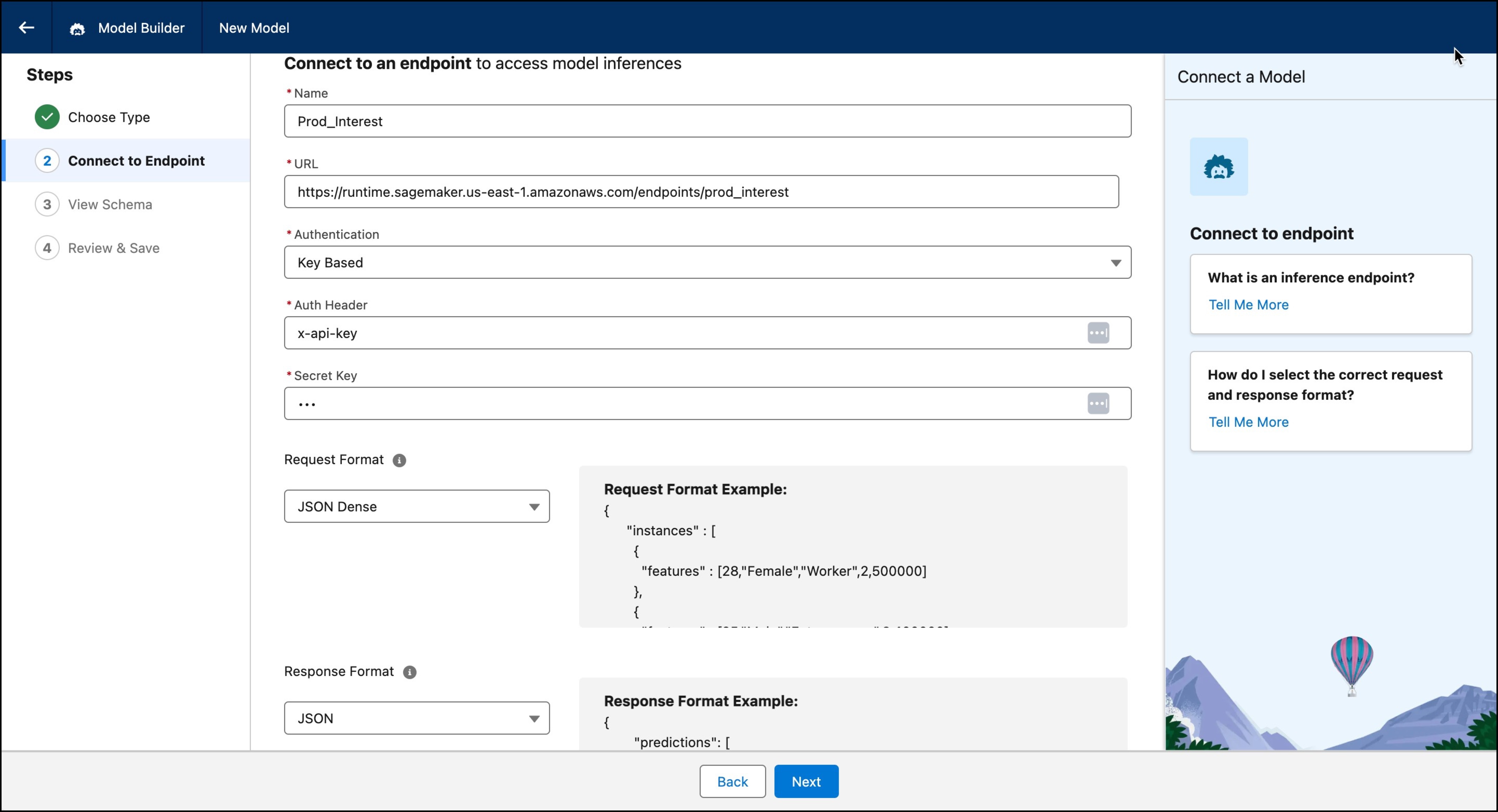
- Name—Endpoint name
- URL—Endpoint URL
- Authentication—Key based or JWT (API gateway required for both)
- Audience—Alphanumeric string or combination for JWT authentication.
- Auth Header—Authorization header
- Secret Key—Alphanumeric string or combination.
- Request Format—Format for requesting data from the application or server.
- JSON dense
- CSV
- Response Format—Format for providing data from a server response.
- JSON
- CSV
- To add schema, click Enter the inputs and outputs.
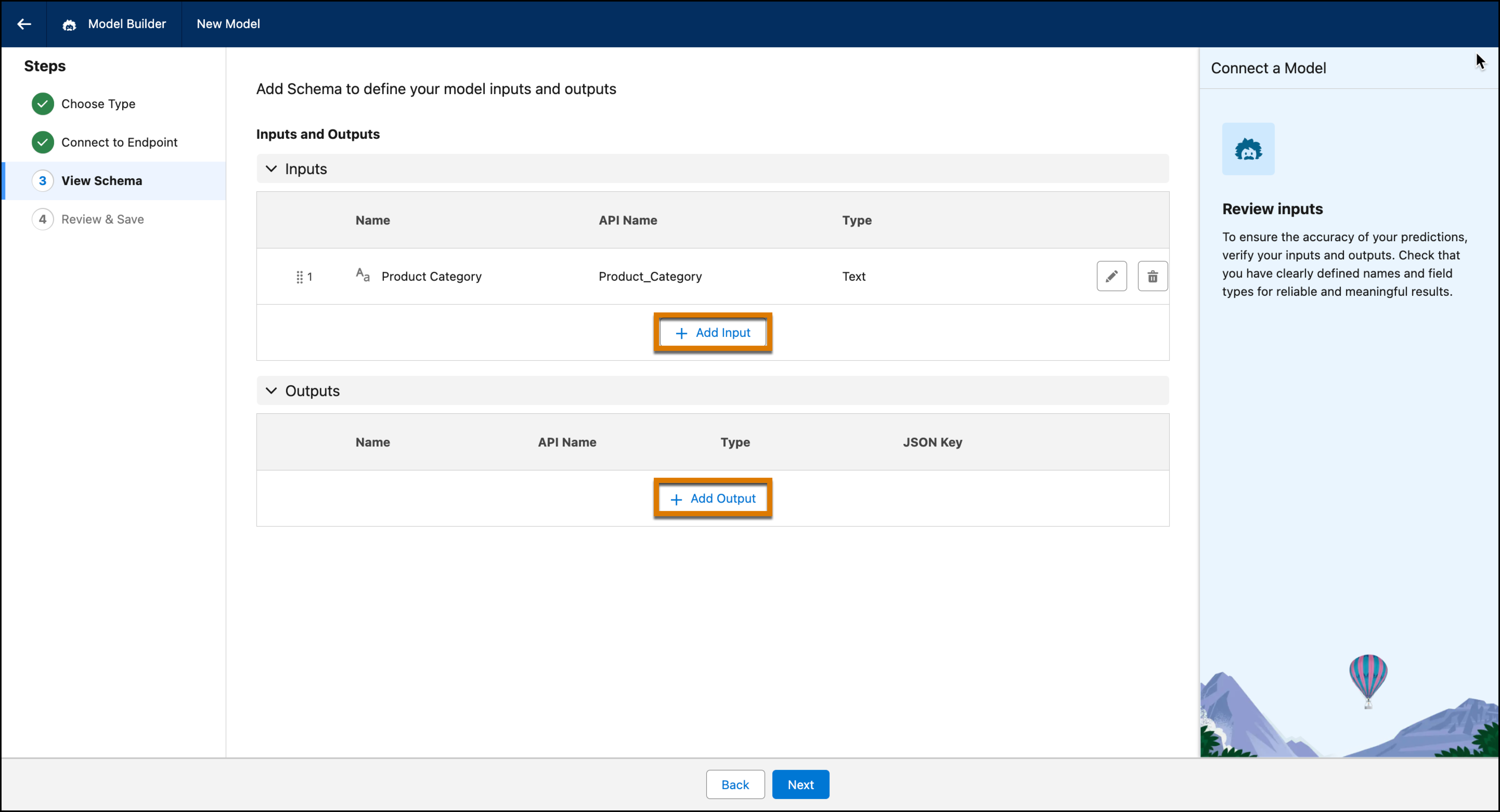
- To add inputs (variables) that can impact your prediction, click Add Input. Then specify a name, an API name, and select the data type. Save your work as you add the inputs.
- To add your outputs, click Add Output. Then specify a name,
an API name, a data type, and the JSON Key in a format similar to
“$.predictions”. Save your work as you add the outputs.
 Important You must position the inputs in the order that matches your SageMaker Select Query. To move an input, drag it to the preferred position in the Inputs section.
- Click Next.
- Review your model settings. Then save your work.
- To update your settings, click the section where you want to make changes. Then navigate through the flow to review all your settings.
- If you're satisfied, click Save.
- Name your model. Then click Save & Connect. After the model is connected, you can find it on the models list view, Predictive Models tab.
- To view your model details, click the model. You can activate, edit, or delete a model on this page.
- After the model is activated, go to the Usage tab. Here you can create prediction jobs that enable you to consume predictions from the model.
- If you created a batch prediction, click Run to refresh your
prediction scores.
 Note With streaming predictions, new inferences are initiated only when there’s a change in the input on your Data Model Object (DMO).
Did this article solve your issue?
Let us know so we can improve!
