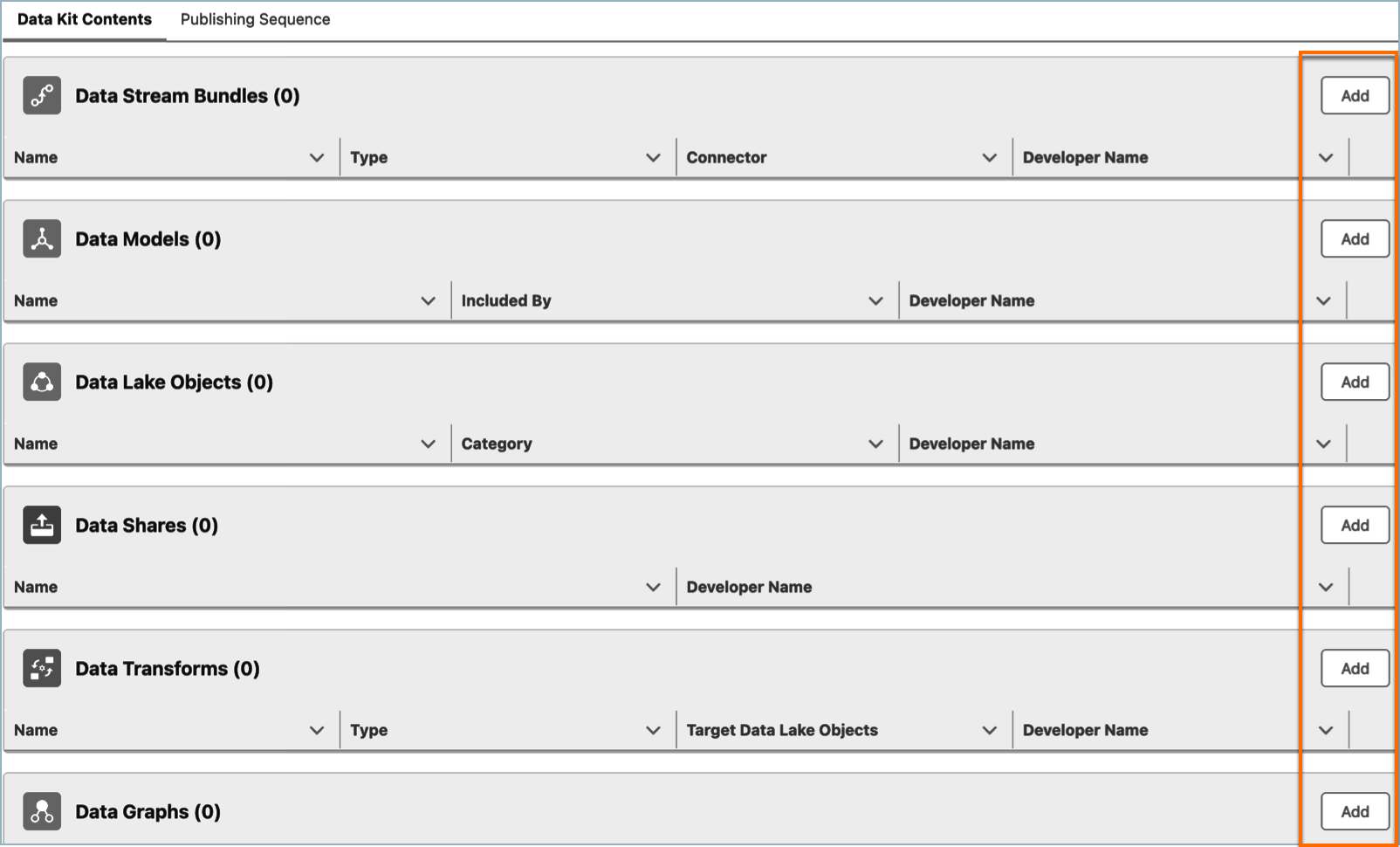
Streamline package creation and the installation experience for Data 360 objects by
wrapping together the metadata and relationships into a data kit. Create a standard data kit
before adding features such as data stream bundles or ingestion APIs to a managed
package.
To review the auto-publishing sequence of the components, click Publishing
Sequence.
The system publishes components based on their creation dates. When there are
dependencies between components, clearly define the sequence order. For instance, if
segments rely on calculated insights, place the calculated insights before the
segments. This ensures all necessary data is available and up-to-date when the
segments are published.
Click Publish.
Your data kit is created. You can now upload the data kit in
Package Manager and deploy the data kit components in your Salesforce org.
We use three kinds of cookies on our websites: required, functional, and advertising. You can choose whether functional and advertising cookies apply. Click on the different cookie categories to find out more about each category and to change the default settings.
Privacy Statement
Required Cookies
Always Active
Required cookies are necessary for basic website functionality. Some examples include: session cookies needed to transmit the website, authentication cookies, and security cookies.
Functional Cookies
Functional cookies enhance functions, performance, and services on the website. Some examples include: cookies used to analyze site traffic, cookies used for market research, and cookies used to display advertising that is not directed to a particular individual.
Advertising Cookies
Advertising cookies track activity across websites in order to understand a viewer’s interests, and direct them specific marketing. Some examples include: cookies used for remarketing, or interest-based advertising.