Create a semantic model to serve specific business needs directly from Data 360. There
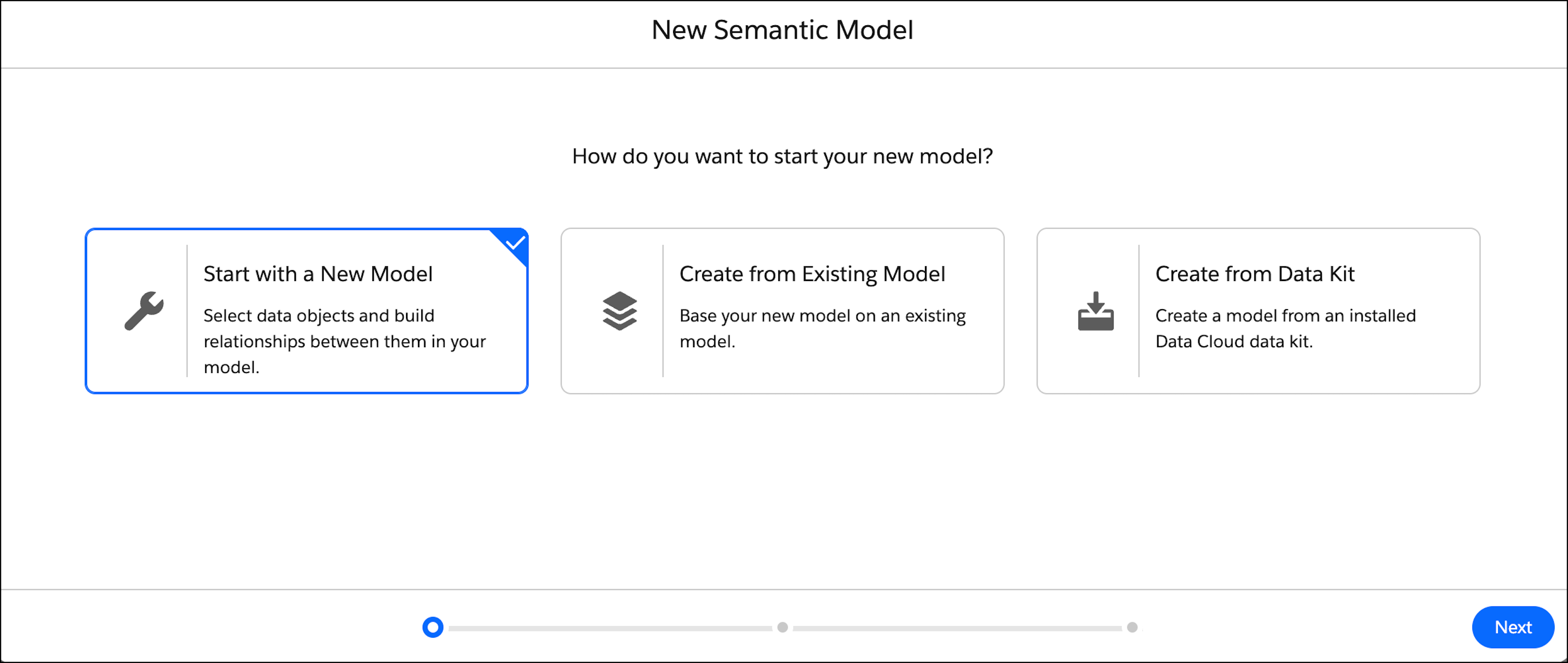
are three ways to create a semantic model: start from scratch, extend an existing semantic model,
or build it using a Data 360 data kit.
In Data Cloud, on the Semantic Layer tab, click New Model.
Select Start with a New Model and then click
Next.
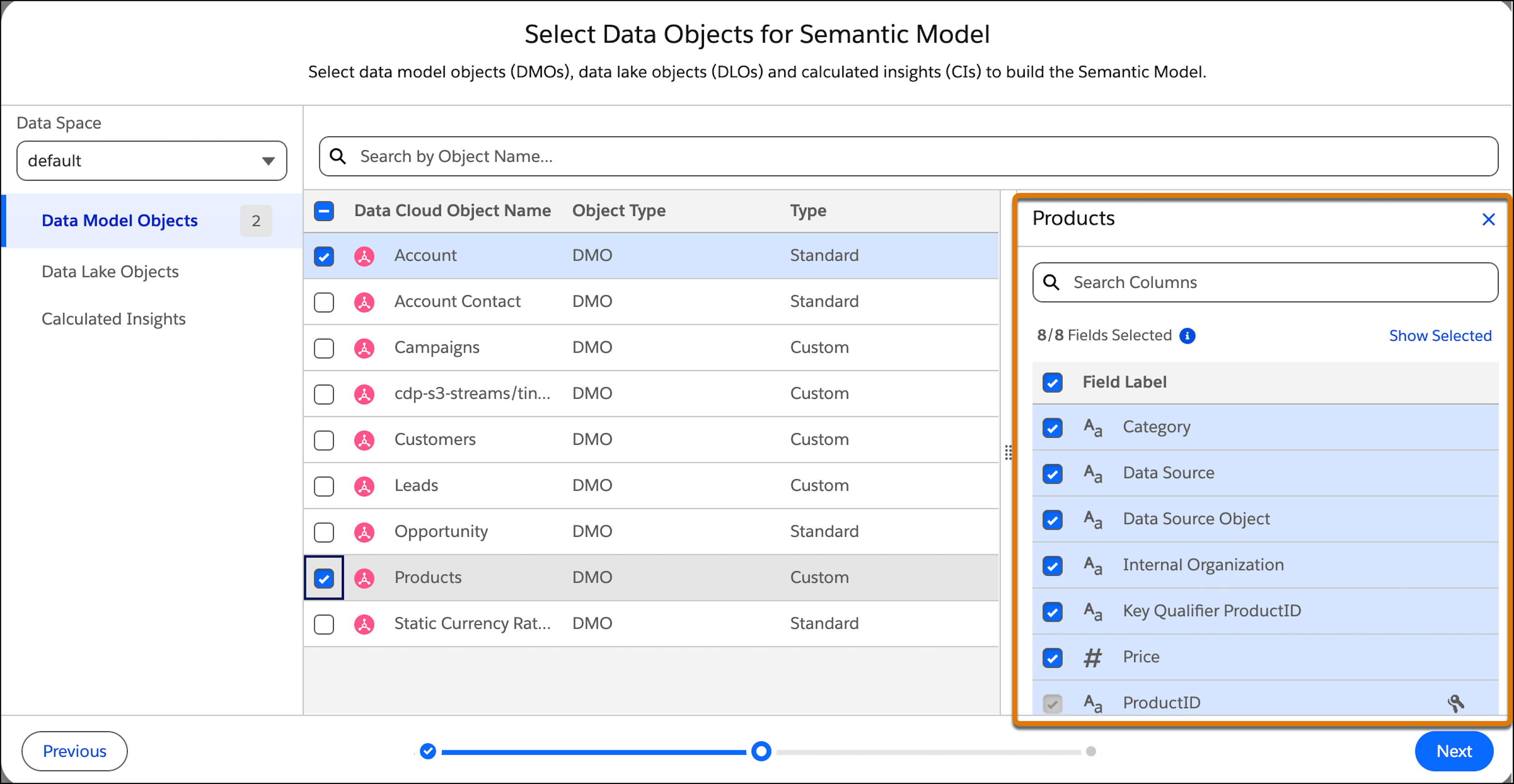
Select the data objects for your semantic model. You can select up to 100 objects.
After you select an object, the object’s fields are listed on the right. All fields are
selected by default.
To not include a field in the semantic model, deselect it.
Note Certain field names, like primary key fields, are required, so you can’t
remove them. You also can’t remove calculated insight fields to maintain data integrity. Field
types that aren’t supported field types are disabled.
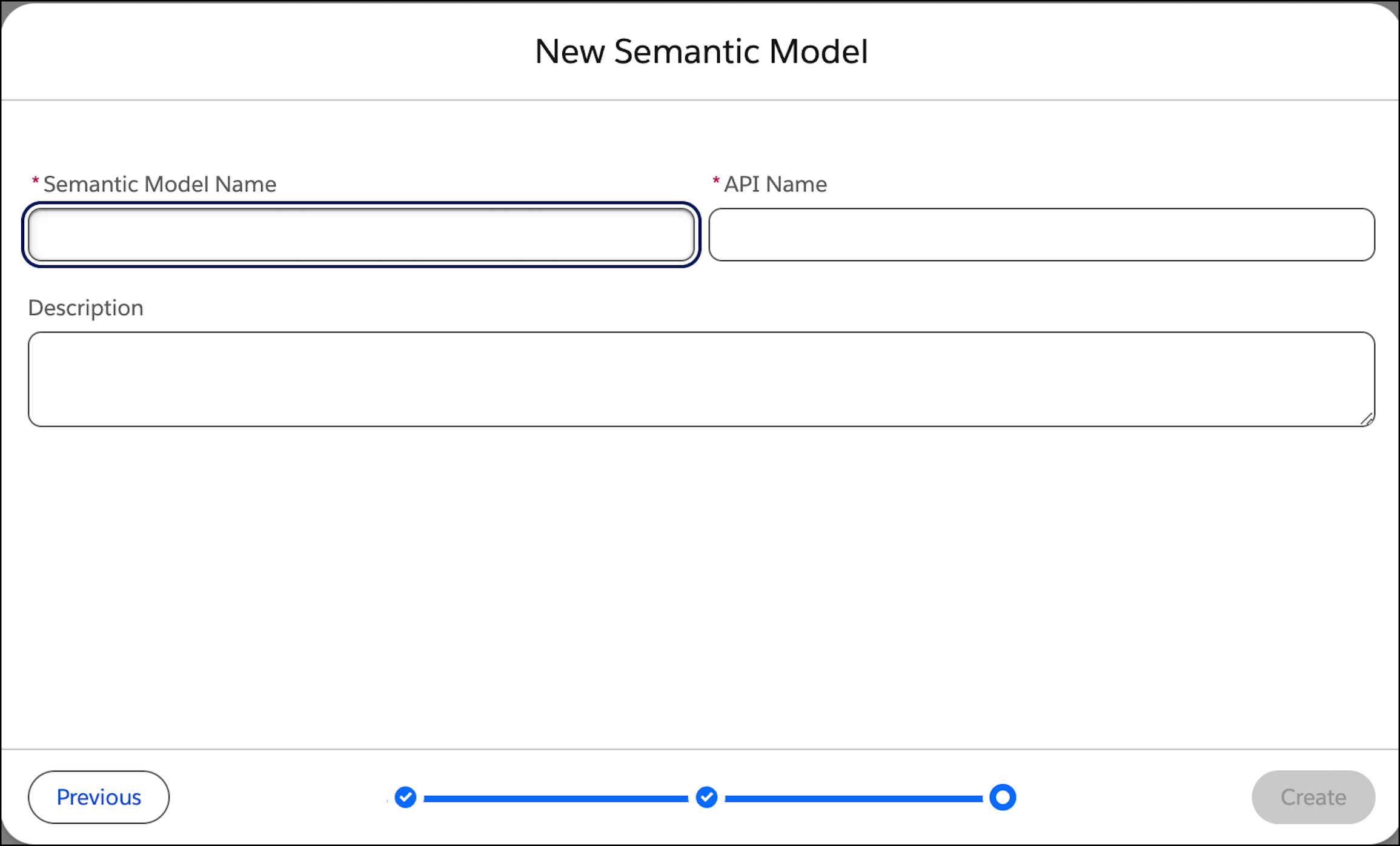
Click Next and then enter the model information.
Give the model a descriptive name and an API name, and enter an optional description. You
can’t change the API name after the model is created.
Click Create.
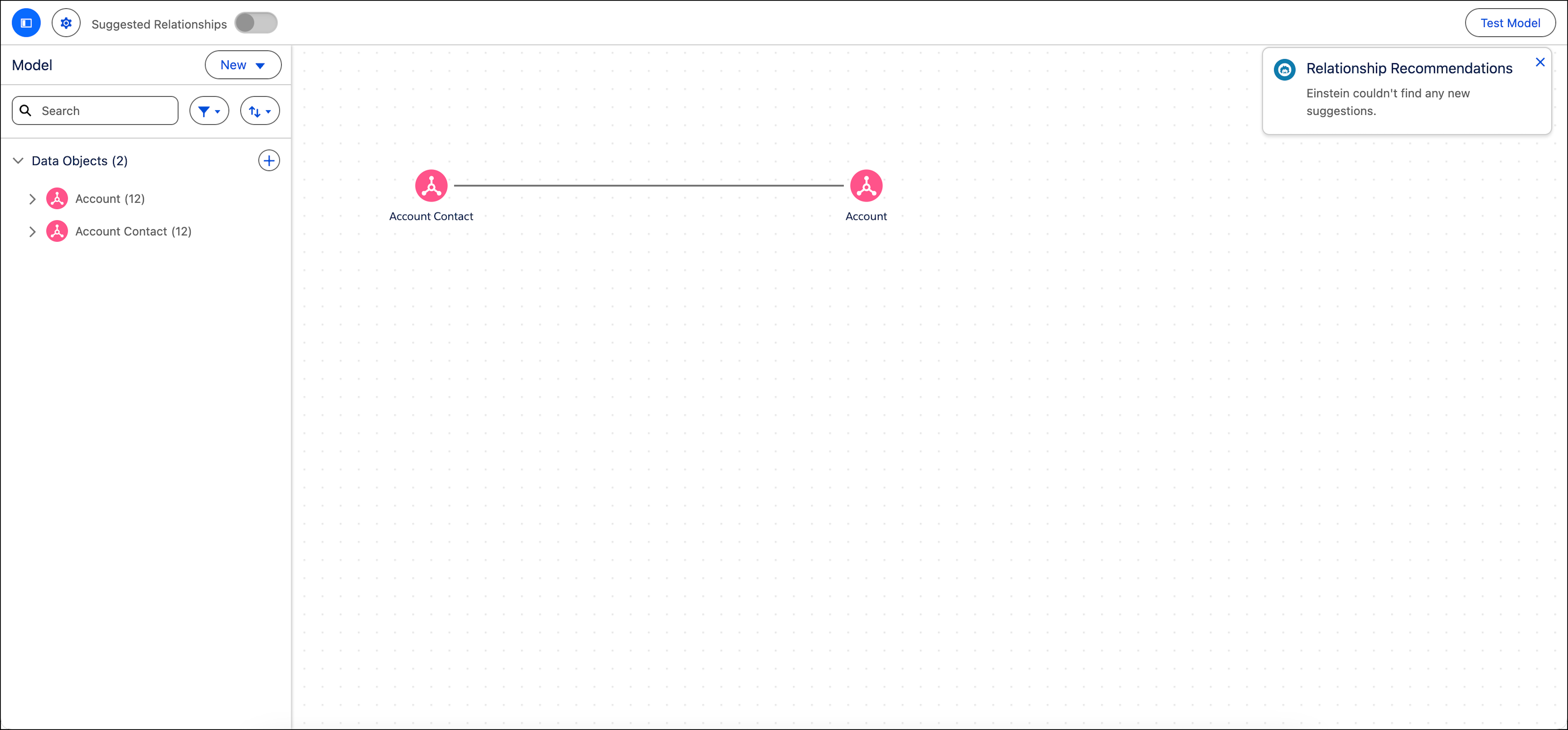
Review the objects to include before you start building the semantic model.
The relationships between DMOs in Data Cloud that were created before are added to the
model. Relationships that create circular relationships — references to the same object
multiple times — are removed.
Did this article solve your issue?
Let us know so we can improve!
Loading
Salesforce Help | Article
Cookie Consent Manager
General Information
Required Cookies
Functional Cookies
Advertising Cookies
General Information
We use three kinds of cookies on our websites: required, functional, and advertising. You can choose whether functional and advertising cookies apply. Click on the different cookie categories to find out more about each category and to change the default settings.
Privacy Statement
Required Cookies
Always Active
Required cookies are necessary for basic website functionality. Some examples include: session cookies needed to transmit the website, authentication cookies, and security cookies.
Functional Cookies
Functional cookies enhance functions, performance, and services on the website. Some examples include: cookies used to analyze site traffic, cookies used for market research, and cookies used to display advertising that is not directed to a particular individual.
Advertising Cookies
Advertising cookies track activity across websites in order to understand a viewer’s interests, and direct them specific marketing. Some examples include: cookies used for remarketing, or interest-based advertising.