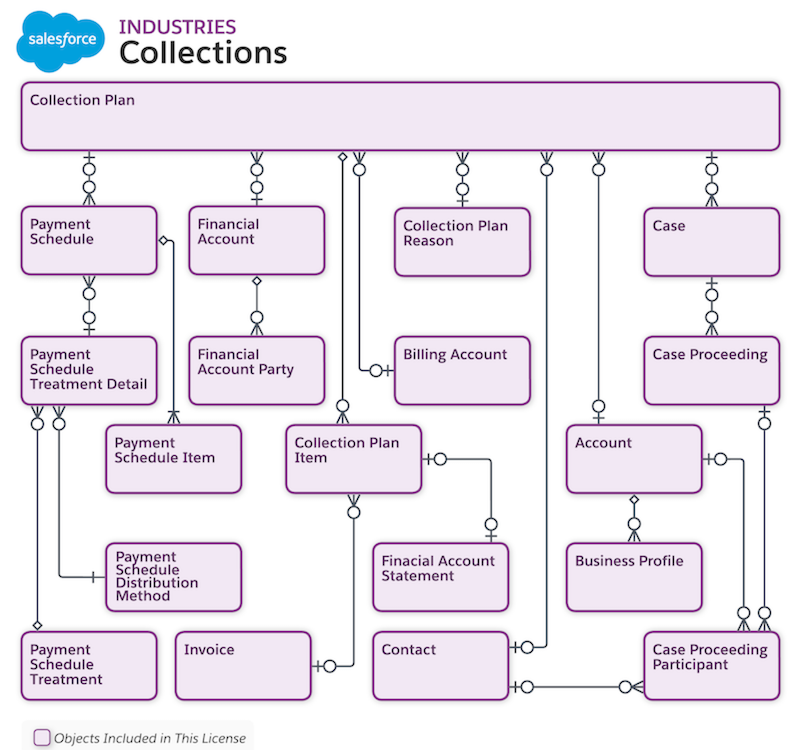
Banks or financial institutions can configure their systems to insert collection-related
details into the Collection Plan and related object records. They can easily import large
volumes of Collections data from CSV files into Collection Plan and related objects. They can
also automate Collections data import processes, ensuring data consistency and integrity by
using the Composite Graph API. Using a single Composite Graph API request, they can create
collection plans, collection plan items, contacts, and other related object records in one
go.
Collection Plan: Stores the details about the outstanding amounts linked to financial
accounts, billing accounts, contacts, or accounts associated with individuals or an
organization.
Collection Plan Item: Represents an instance of a collection plan. Stores the delinquency
details for an invoice or a financial account statement.
Collection Plan Reason: Stores the reason for initiating the collection process, including
non-payment of bills, bankruptcy, outstanding invoices, and deceased account holders.
We use three kinds of cookies on our websites: required, functional, and advertising. You can choose whether functional and advertising cookies apply. Click on the different cookie categories to find out more about each category and to change the default settings.
Privacy Statement
Required Cookies
Always Active
Required cookies are necessary for basic website functionality. Some examples include: session cookies needed to transmit the website, authentication cookies, and security cookies.
Functional Cookies
Functional cookies enhance functions, performance, and services on the website. Some examples include: cookies used to analyze site traffic, cookies used for market research, and cookies used to display advertising that is not directed to a particular individual.
Advertising Cookies
Advertising cookies track activity across websites in order to understand a viewer’s interests, and direct them specific marketing. Some examples include: cookies used for remarketing, or interest-based advertising.