You are here:
Explore the Agentforce Revenue Management Data Model
Learn about the objects and relationships within the Agentforce Revenue Management data model.
Required Editions
| Available in: Lightning Experience |
| Available in: Enterprise, Unlimited, and Developer Editions of Agentforce Revenue Management |
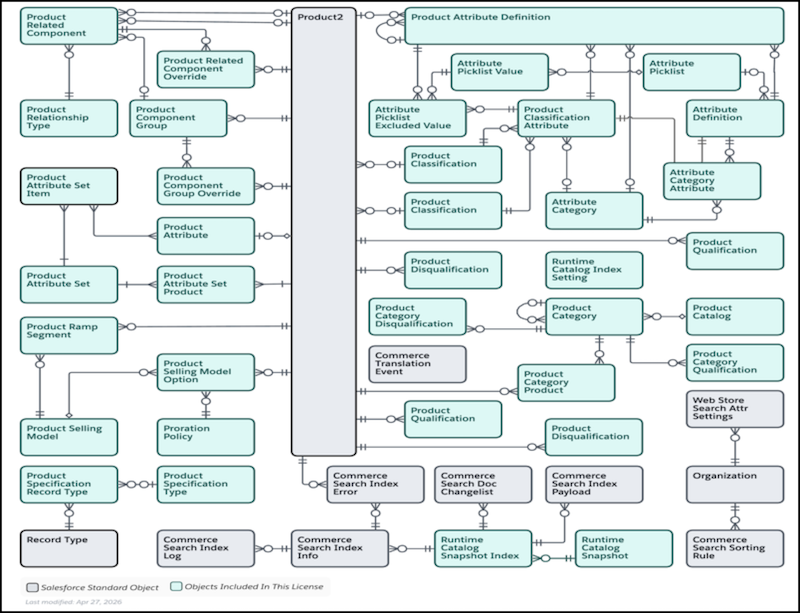
Product Catalog Management
The Product Catalog Management data model depicts the objects and relationships involved in setting up and managing products, rules, and catalogs.
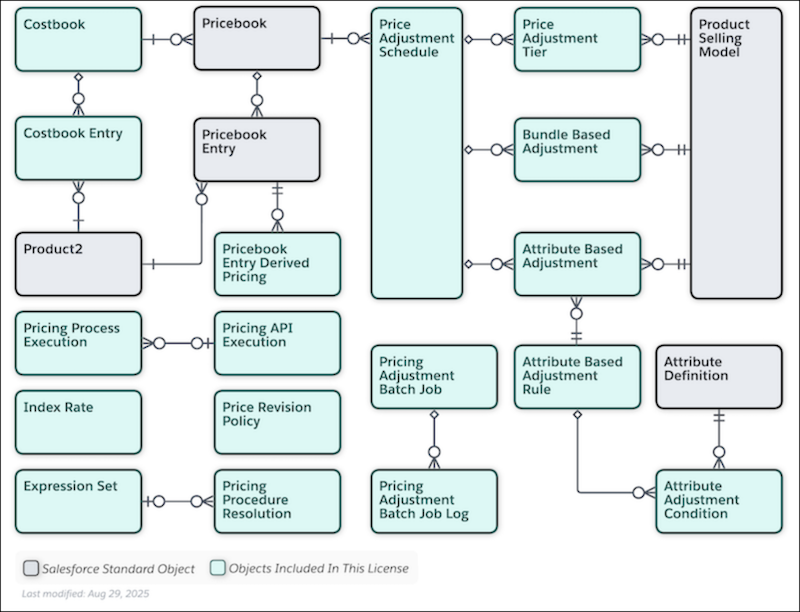
Salesforce Pricing
The Salesforce Pricing data model depicts the objects and relationships involved in managing pricing processes, such as product management and calculation and application of discounts.
Rate Management
The Rate Management data model depicts the objects and relationships involved in calculating and managing consumption-based rates and rate adjustments for products and usage resources.
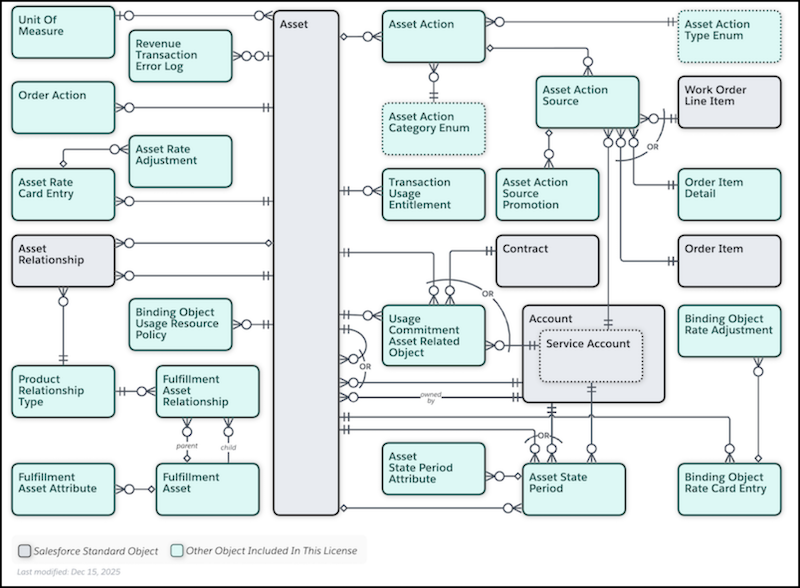
Transaction Management: Asset
The Transaction Management asset data model depicts the objects and relationships involved in tracking and managing Agentforce Revenue Management assets.
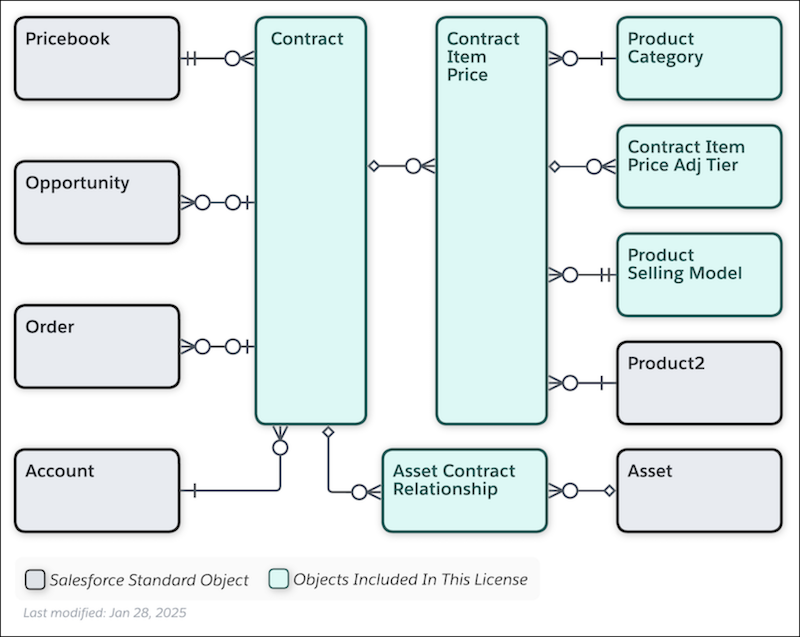
Transaction Management: Contract
The Transaction Management Contract data model depicts the objects and relationships involved in tracking and managing Agentforce Revenue Management contracts.
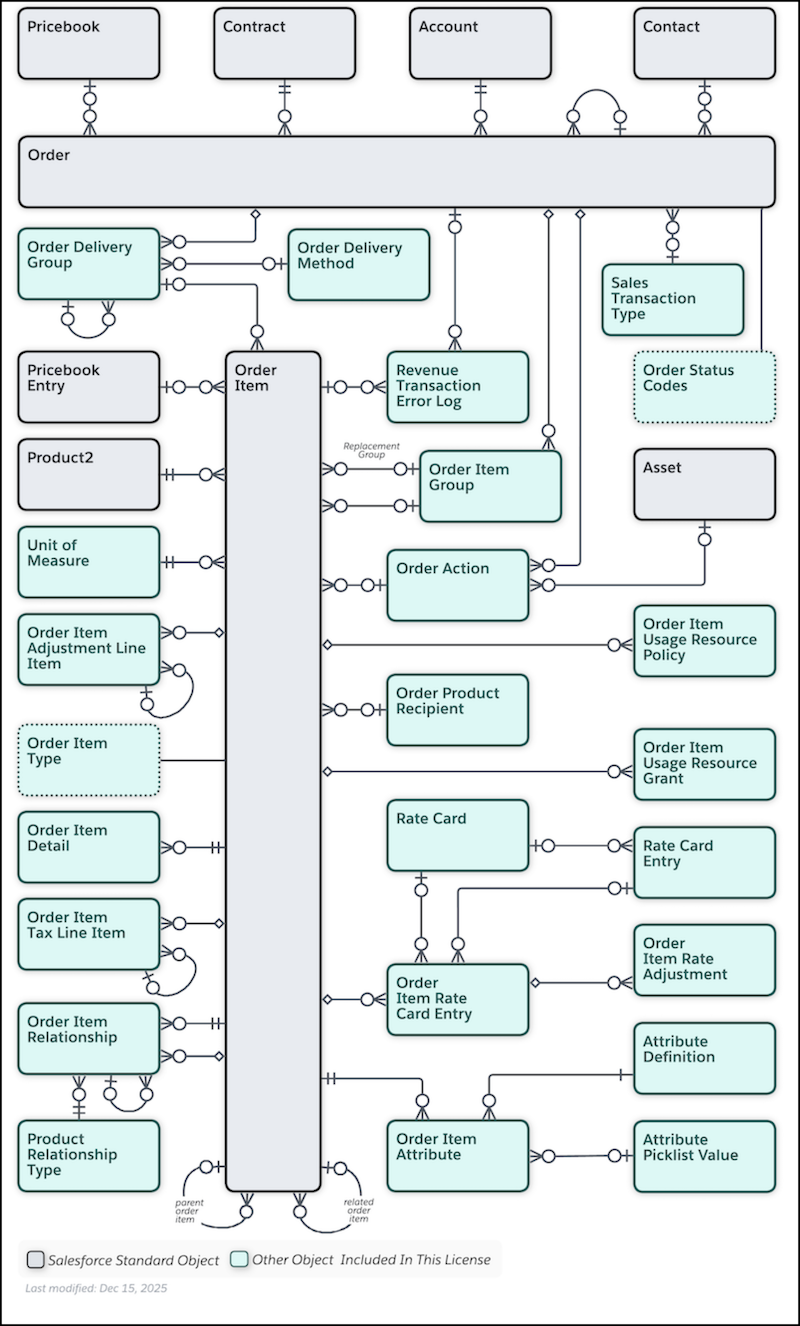
Transaction Management: Order
The Transaction Management Order data model depicts the objects and relationships involved in managing Agentforce Revenue Management orders and order items.
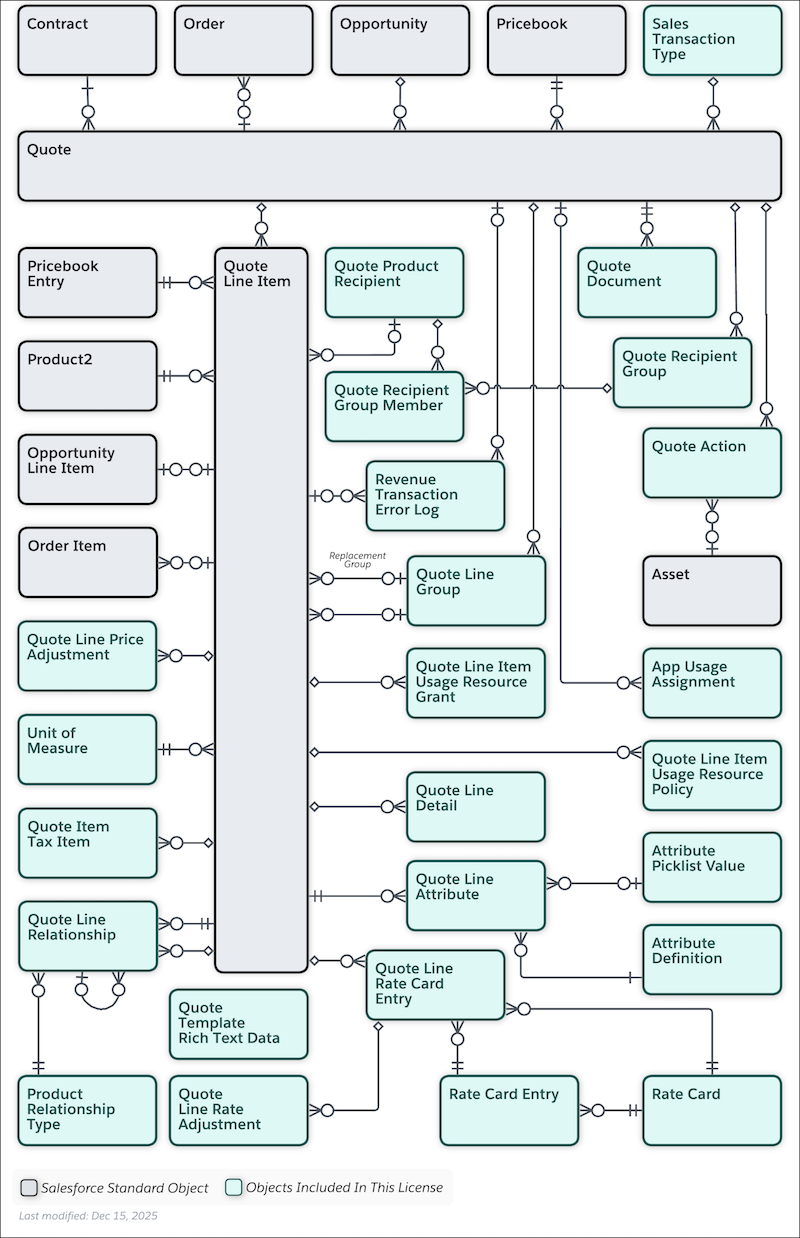
Transaction Management: Quote
The Transaction Management Quote data model depicts the objects and relationships involved in managing quotes and quote line items.
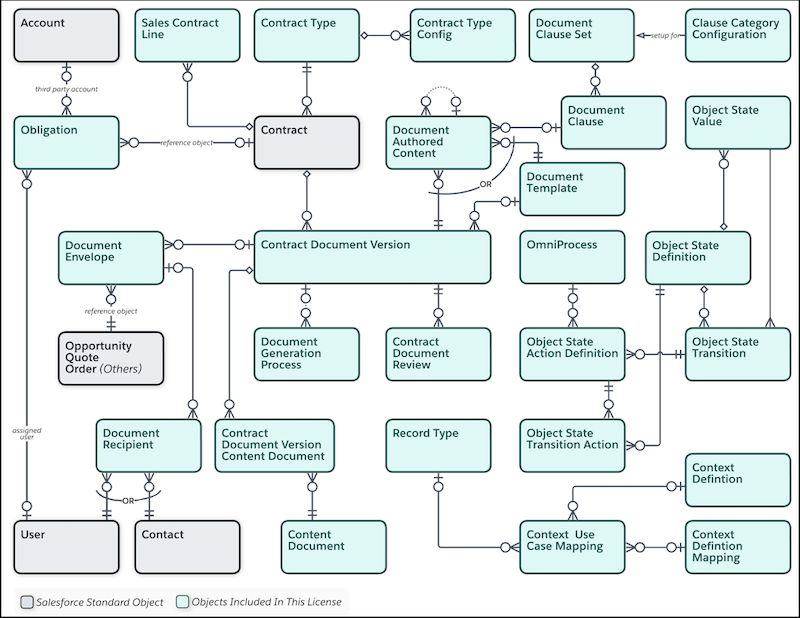
Salesforce Contracts
The Salesforce Contracts data model depicts the objects and relationships involved in managing contracts, right from authoring and negotiations through approval, execution, renewal, and obligations management.
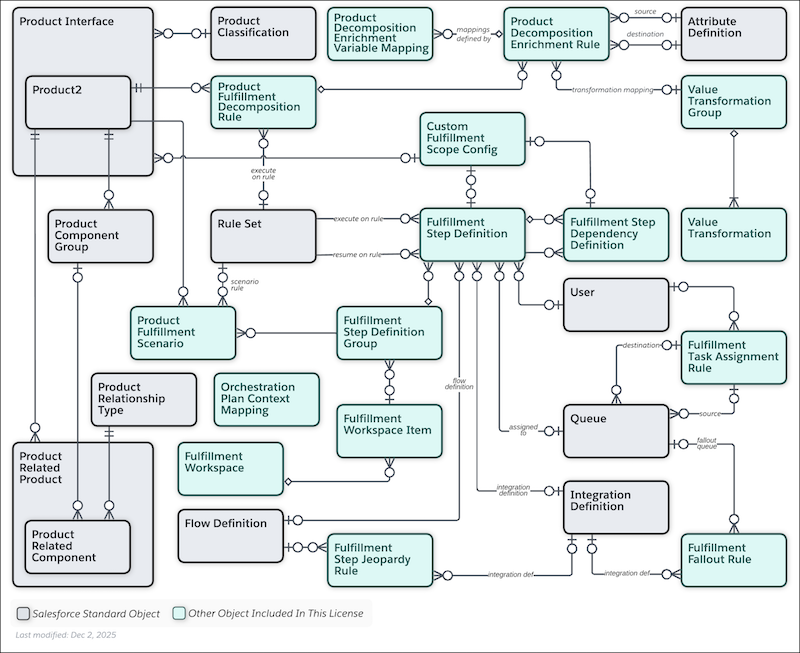
Dynamic Revenue Orchestrator: Design Time
The Dynamic Revenue Orchestrator Design Time data model depicts the objects and relationships that help in the design of the sales transaction fulfillment process.
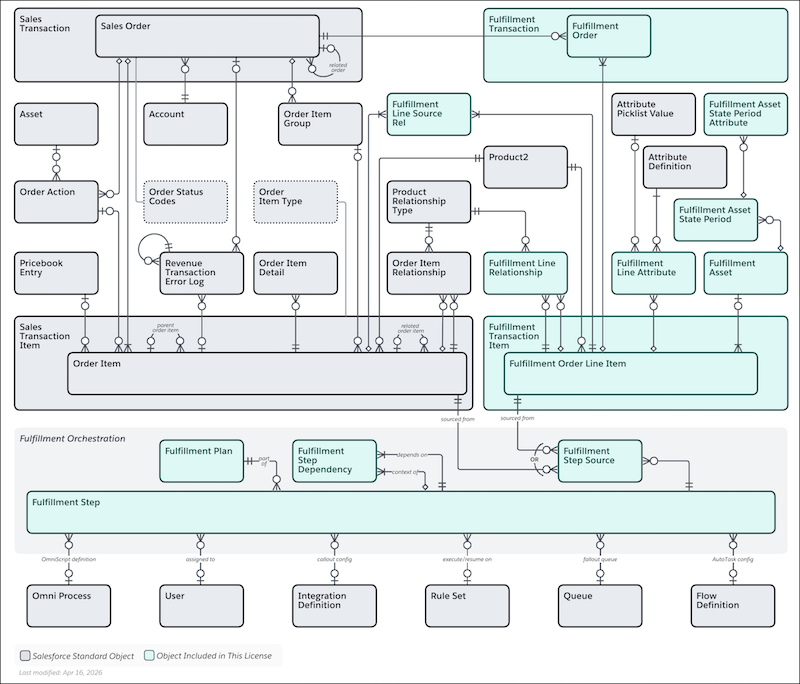
Dynamic Revenue Orchestrator: Fulfillment
The Dynamic Revenue Orchestrator Fulfillment data model depicts the objects and relationships that help in the execution of the sales transaction fulfillment process.
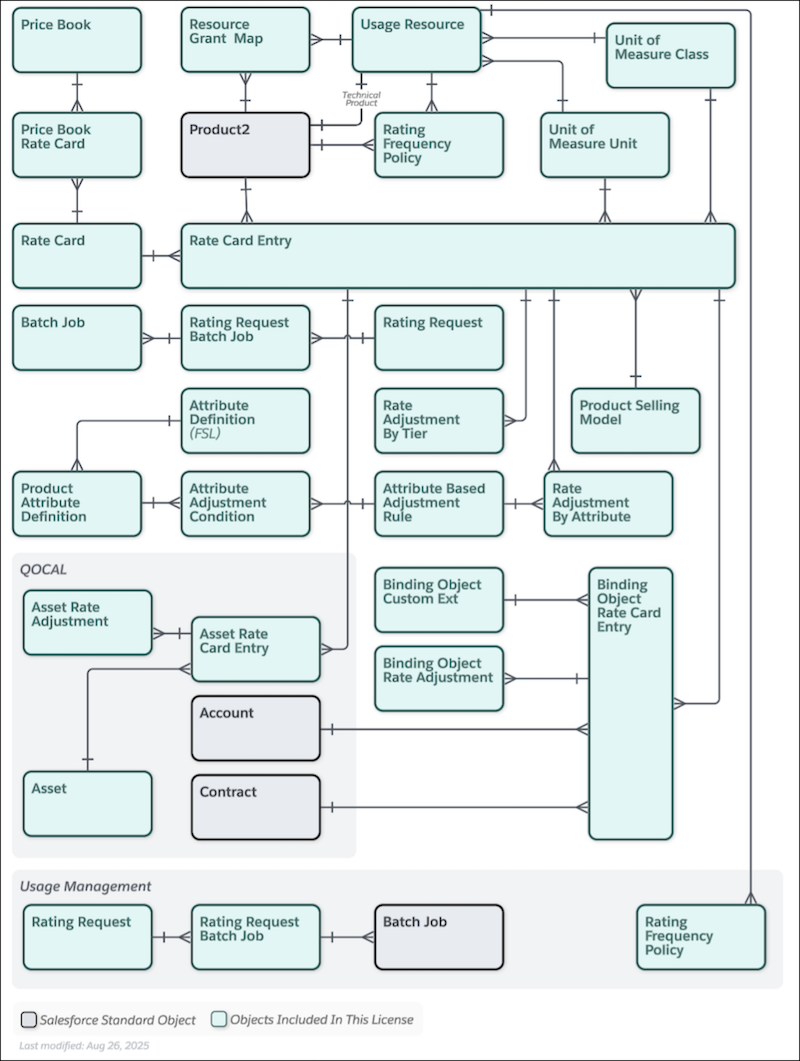
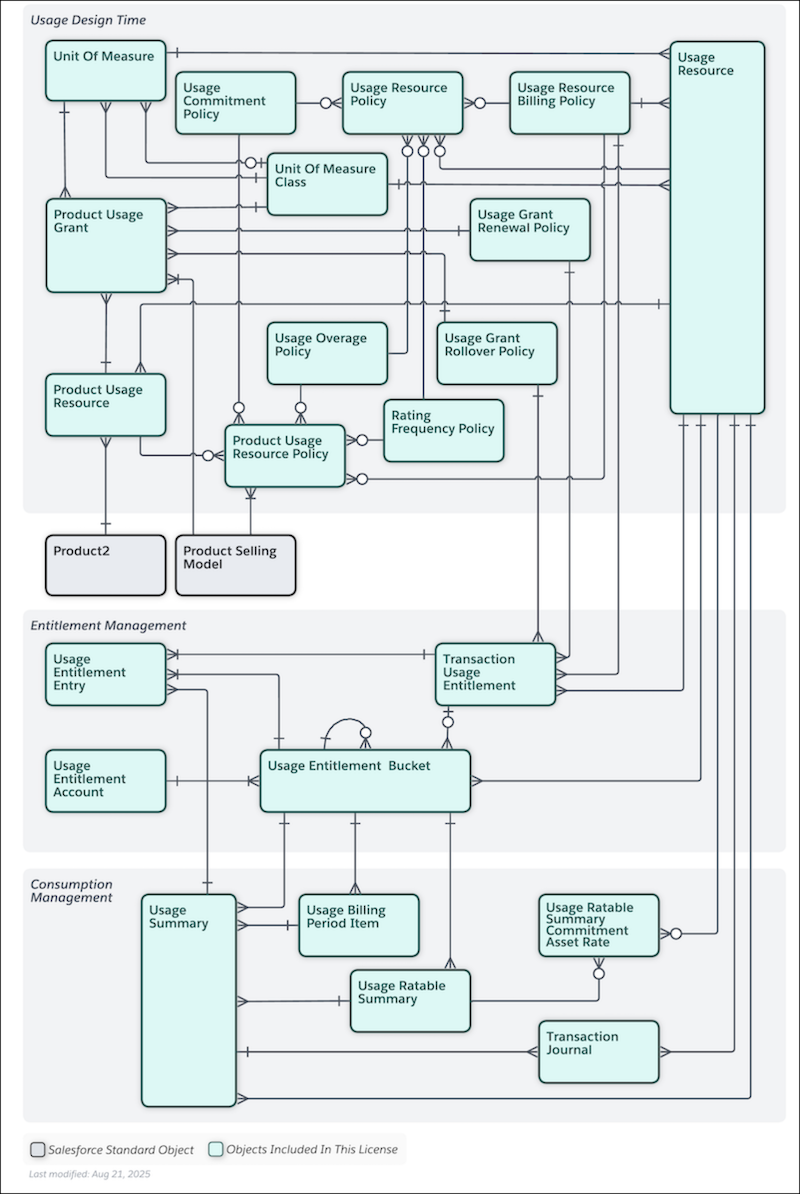
Usage Management
The Usage Management data model depicts the objects and relationships that define an end-to-end usage management model. The model includes objects for defining products, policies, rate cards, rate adjustments and all usage management run time objects for usage-based products and usage resources.
Billing: Accounting
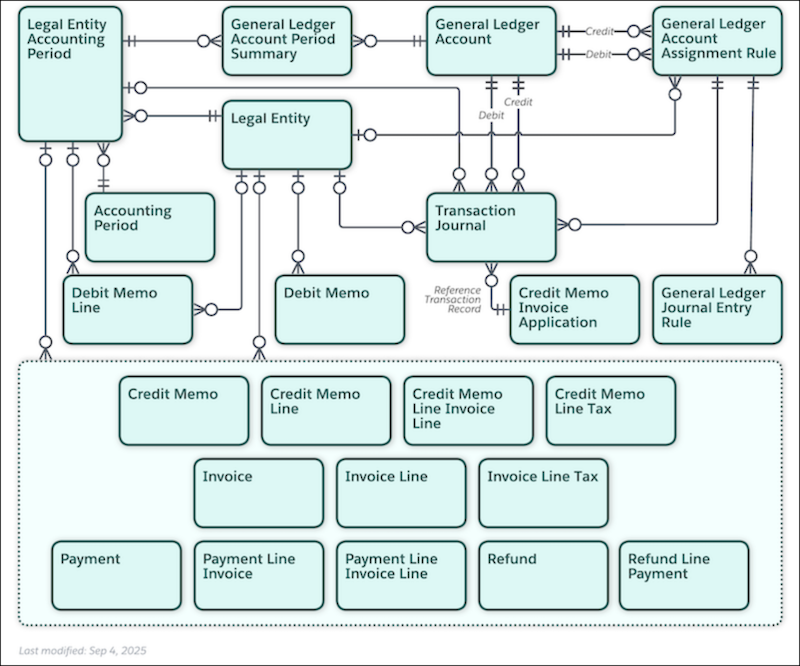
The Accounting data model depicts the objects and their relationships to record and manage the financial accounting process for Invoice, Payment, and Credit Memo records. This process includes defining accounting periods, setting up a chart of accounts, and creating dual journal entries for your legal entities.
Billing: Credit Memo
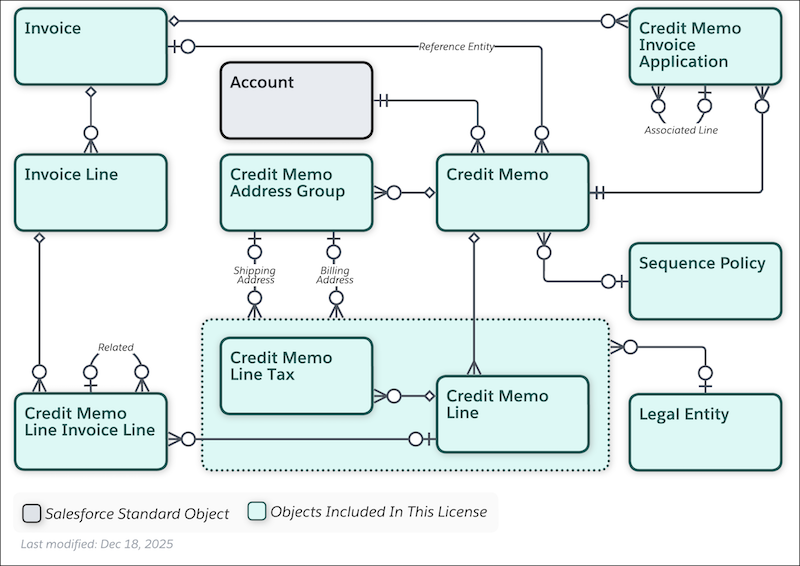
The Credit Memo data model depicts the objects and their relationships to adjust invoices through credit amounts for returns, overcharges, or other billing discrepancies.
Billing: Debit Memo
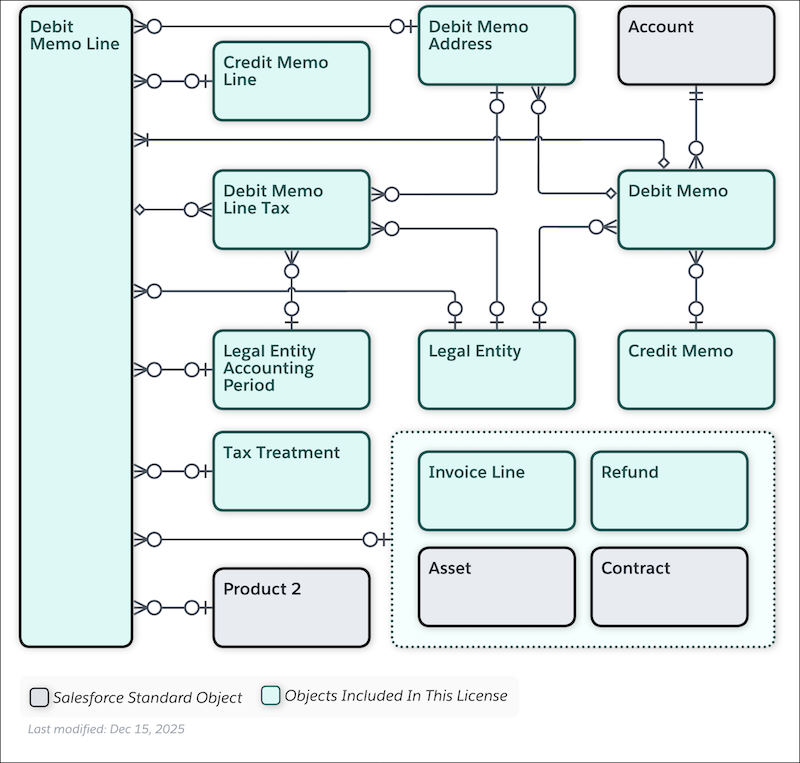
The Debit Memo data model depicts the objects and their relationships to process debit memos when you undercharge your customer or want to add additional charges.
Billing: Invoice
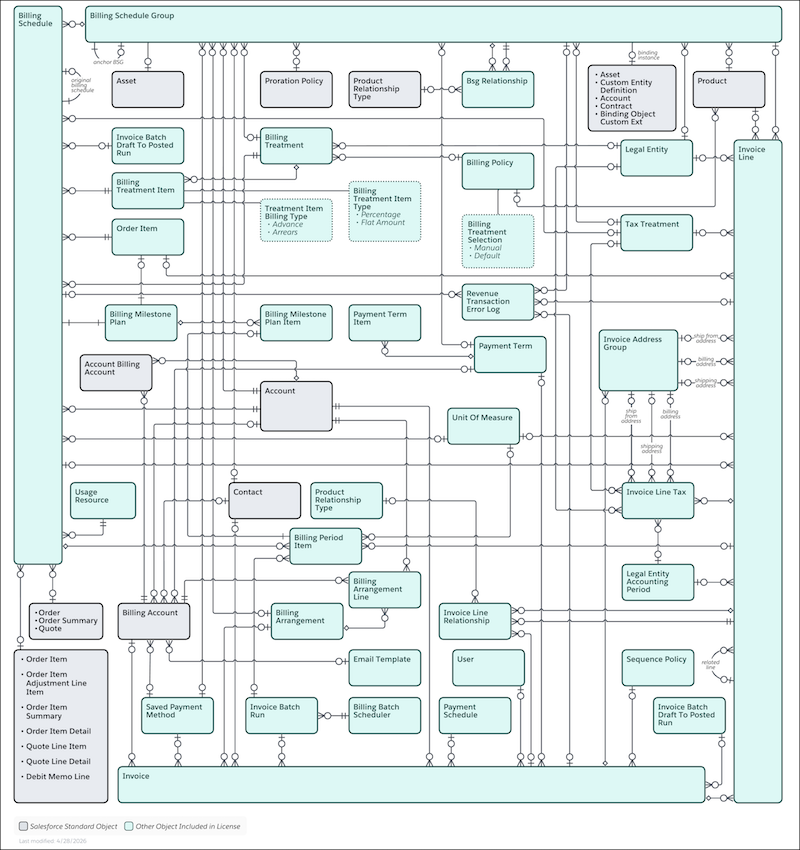
The Invoice data model depicts the objects and their relationships to configure billing criteria, billing periods, and payment due dates for generating billing schedules and invoices aligned with your sales models. This data model also depicts integrating with saved payment methods to store customer payment methods, sequence policies to configure automated sequential numbering for your invoices, and email templates to send emails for invoices.
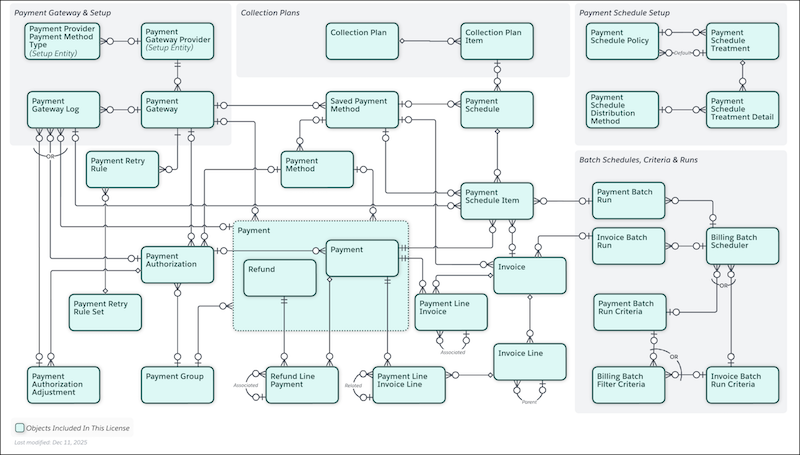
Billing: Payments
The Payments data model depicts the objects and their relationships to manage the processing of customer payments including a timely collection of these payments and their application to appropriate invoices, and issuing refunds when needed.