You are here:
Messaging Data Stream Type Entities in Marketing Cloud Intelligence
The messaging data stream type contains three types of entities: messaging, ads, and overarching.
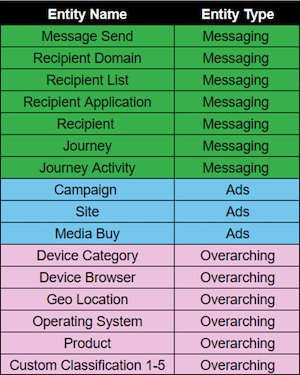
- Message Entities
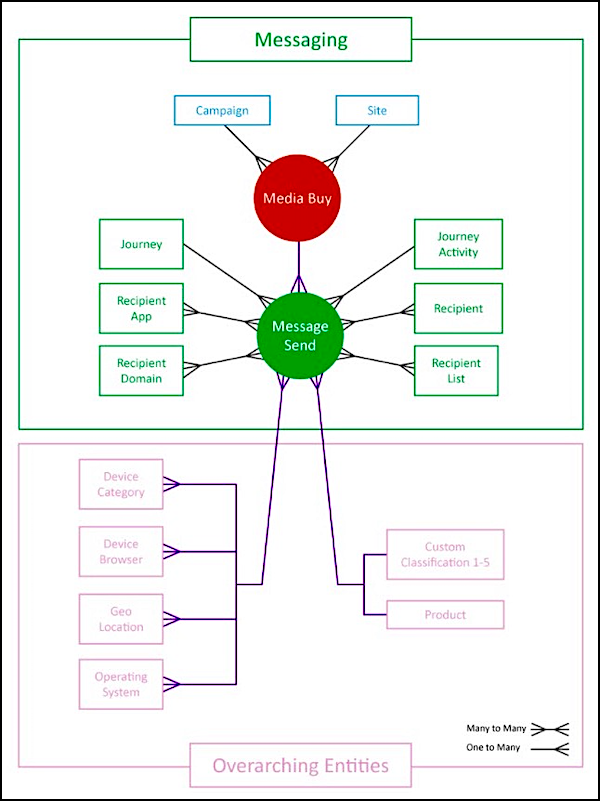
- Message Send is this data stream type’s main entity. All entities and measurements primarily relate to the message send. For example, the recipient list is the name of the list that a message send was sent to. Similarly, the journey is the journey or a workflow that a message send is a part of, and so on.
- Ads Entities
- Ads entities are entities used in Ads-related data stream types. They enable linking messaging data to ads data based on matching dimension values for campaign, site, and media buy. For example, if you have a matching campaign name in a messaging and ads data stream, you can see the message open rate and the impressions that the same campaign generates in each source.
- Overarching Entities
-
Overarching entities are classification-purpose dimensions that exist in all data stream types and enable classifying data from multiple sources for matching values. For example, it’s possible to see all the data from messaging and analytics data stream types for the matching product value.
The hierarchical relationship between entities can be a one-to-many or a many-to-many relationship. This relationship dictates the number of possible values of one entity against the other. For example, the relationship between product and message send is a one-to-many relationship. One product can have many message sends, but each message send can only have one product.
Messaging Measurements
This table lists all the measurements in the messaging data stream type alongside their aggregation method.
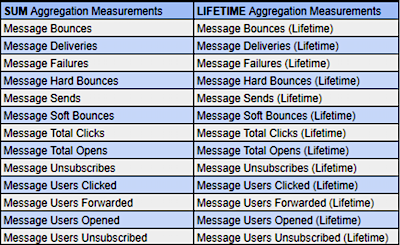
This data stream type has the exact same measurements in both Sum Aggregation and Lifetime Aggregation. For example, message soft bounces from the source data can be mapped to message soft bounces or message soft bounces (Lifetime) in Marketing Cloud Intelligence. You can decide which aggregation method to use based on the relationship between the date breakdown in the source data.
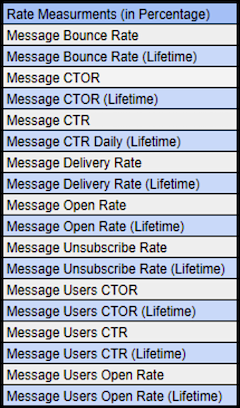
The messaging data stream type also contains Rate Measurements in percentage terms.