Don’t have a standardized digital business process? No problem. Agentforce Supply
Chain helps you transform error-prone, manual processes into automated workflows that use
AI-powered agents to complete tasks. To determine if Agentforce Supply Chain can help your
business reach new levels, review what sets it apart from other automation tools.
Required Editions
License Required
This feature is a workspace that’s external to your Salesforce org and requires
an Agentforce Supply Chain license.
To purchase an Agentforce Supply Chain license, contact your Salesforce account
executive.
Why Use Agentforce Supply Chain?
You want to digitize and standardize processes.
Error-prone, manual processes are standardized into digital workflows to help
minimize costly mistakes.
Start quickly by having AI generate a process blueprint in minutes.
You want to boost productivity with automation, but want a simple setup process.
Automate repetitive tasks so employees can focus on high-value, strategic work.
Easily build blueprints for automated workflows. No technical expertise
required.
AI Agents can handle sophisticated tasks, such as checking for expired certificates,
invoice auditing, fraud review, and contract compliance, contributing to significant
cost savings.
You want easy user onboarding and better collaboration.
Work can be completed through email, eliminating the need for onboarding or signing
into a separate system.
Workers can easily complete forms and approve or reject tasks right from their
email.
Employees, vendors, and partners can collaborate easier with processes securely
embedded into existing workstreams.
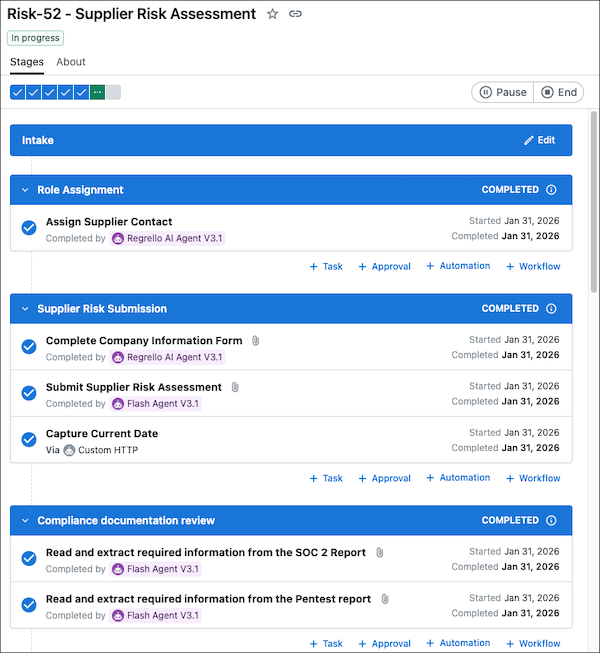
Here's an example workflow with stages and tasks. In this example, the tasks are
assigned to AI agents.
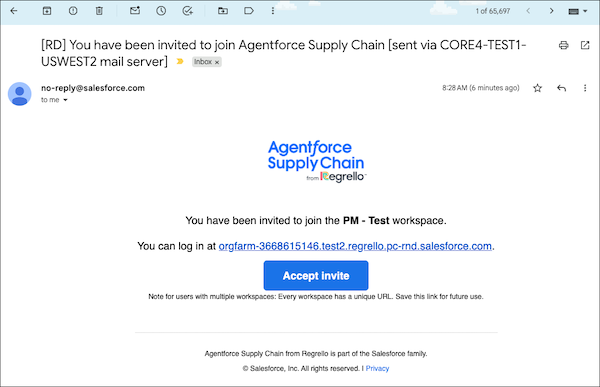
After you purchase an Agentforce Supply Chain license, an Agentforce Supply Chain workspace is
created for your business that's external to your Salesforce org. When the workspace is
ready, you receive an email with information on how to access your Agentforce Supply Chain
workspace.
We use three kinds of cookies on our websites: required, functional, and advertising. You can choose whether functional and advertising cookies apply. Click on the different cookie categories to find out more about each category and to change the default settings.
Privacy Statement
Required Cookies
Always Active
Required cookies are necessary for basic website functionality. Some examples include: session cookies needed to transmit the website, authentication cookies, and security cookies.
Functional Cookies
Functional cookies enhance functions, performance, and services on the website. Some examples include: cookies used to analyze site traffic, cookies used for market research, and cookies used to display advertising that is not directed to a particular individual.
Advertising Cookies
Advertising cookies track activity across websites in order to understand a viewer’s interests, and direct them specific marketing. Some examples include: cookies used for remarketing, or interest-based advertising.