Create Records Directly from the Salesforce Side Panel in Salesforce for Outlook
(Retiring)
Before the Salesforce for Outlook side panel action menu was retired in Summer ’21, reps
could create different kinds of records directly from the side panel in
Microsoft® Outlook®. To continue creating records from Outlook, migrate to
the Outlook integration.
Available with the purchase of Sales Cloud or Government Cloud in: Personal,
Contact Manager, Professional, Enterprise, Performance,
Unlimited, and Developer Editions
User Permissions Needed
To display the Salesforce Side
Panel:
Side Panel in Outlook
configurations
To create records from the Salesforce Side
Panel:
Create and Read on all objects that users
create records from AND Visible on all required
fields in records that users create
Depending on how your administrator set up your action menu, you can create
accounts, cases, contacts, leads, opportunities, and other types of records
customized for your organization—directly from the side panel.
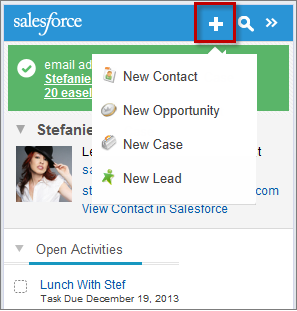
Select an email in Outlook, then click .
You’ll see something like this.
Choose an action.
The actions available to
you depend on the ones your administrator set up, such as New Contact.
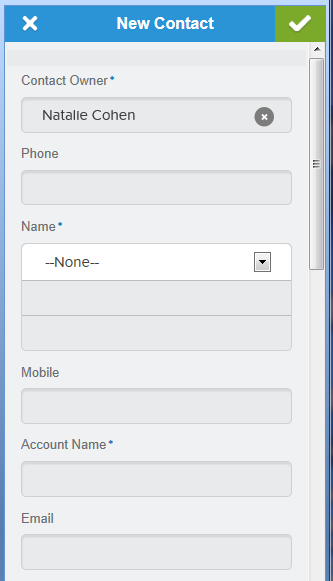
Complete the record detail by providing relevant details.
Click to save the record.
Keep in mind that email attachments
aren’t included in the created records.
We use three kinds of cookies on our websites: required, functional, and advertising. You can choose whether functional and advertising cookies apply. Click on the different cookie categories to find out more about each category and to change the default settings.
Privacy Statement
Required Cookies
Always Active
Required cookies are necessary for basic website functionality. Some examples include: session cookies needed to transmit the website, authentication cookies, and security cookies.
Functional Cookies
Functional cookies enhance functions, performance, and services on the website. Some examples include: cookies used to analyze site traffic, cookies used for market research, and cookies used to display advertising that is not directed to a particular individual.
Advertising Cookies
Advertising cookies track activity across websites in order to understand a viewer’s interests, and direct them specific marketing. Some examples include: cookies used for remarketing, or interest-based advertising.