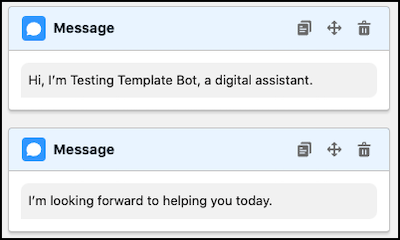
The Welcome dialog is included with all Salesforce bots—it greets your end users that
are interacting with the bot. In the Intro Template’s Welcome dialog, you see the customized
greeting, which includes the bot name you specified in the Guided Setup Flow:
But even before the greeting, there’s an action dialog step that calls the flow Einstein Bots:
Get Customer Context. This action is designed to get context from the bot’s pre-chat form or the
Messaging Session object, so the bot can have a more personalized conversation with your
users.
The Get Customer Context action gets user details, such as name, email, phone number, and
company name. It also pre-creates a case, contact, or lead, if it exists. The bot then uses this
information to skip irrelevant questions and dialogs. For example, if the user already provided
their name, the bot skips the questions asking for first name and last name.
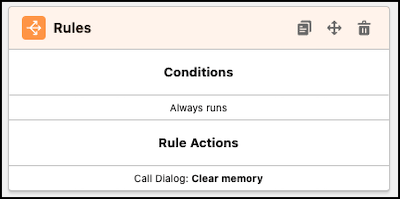
The bot automatically moves from the Welcome dialog to the Main Menu dialog. Here, you see a
rule action that calls the Clear Memory dialog:
This dialog clears the values of certain variables to allow users to go back through the bot
again. Read more about it in Conversation Loopback.
Did this article solve your issue?
Let us know so we can improve!
Loading
Salesforce Help | Article
Cookie Consent Manager
General Information
Required Cookies
Functional Cookies
Advertising Cookies
General Information
We use three kinds of cookies on our websites: required, functional, and advertising. You can choose whether functional and advertising cookies apply. Click on the different cookie categories to find out more about each category and to change the default settings.
Privacy Statement
Required Cookies
Always Active
Required cookies are necessary for basic website functionality. Some examples include: session cookies needed to transmit the website, authentication cookies, and security cookies.
Functional Cookies
Functional cookies enhance functions, performance, and services on the website. Some examples include: cookies used to analyze site traffic, cookies used for market research, and cookies used to display advertising that is not directed to a particular individual.
Advertising Cookies
Advertising cookies track activity across websites in order to understand a viewer’s interests, and direct them specific marketing. Some examples include: cookies used for remarketing, or interest-based advertising.