Give service reps the ability to translate case comments. A rep can translate an end
user’s case comment into the rep’s language in the case feed, as well as translate their
response into the end user’s language in the case comment composer before replying to the
comment.
Give your service
reps permission to translate case comments.
Enable the Service Cloud Translations add-on license.
Enable the org preference for Real-Time translation in Support Settings.
Give your service reps the Real-Time Translations for Case Comments permission set.
Translate Case Comments in the Case Feed
To read a case comment in
your preferred language, translate it in the case feed.
On the Cases tab, click a case number to open it in the case feed.
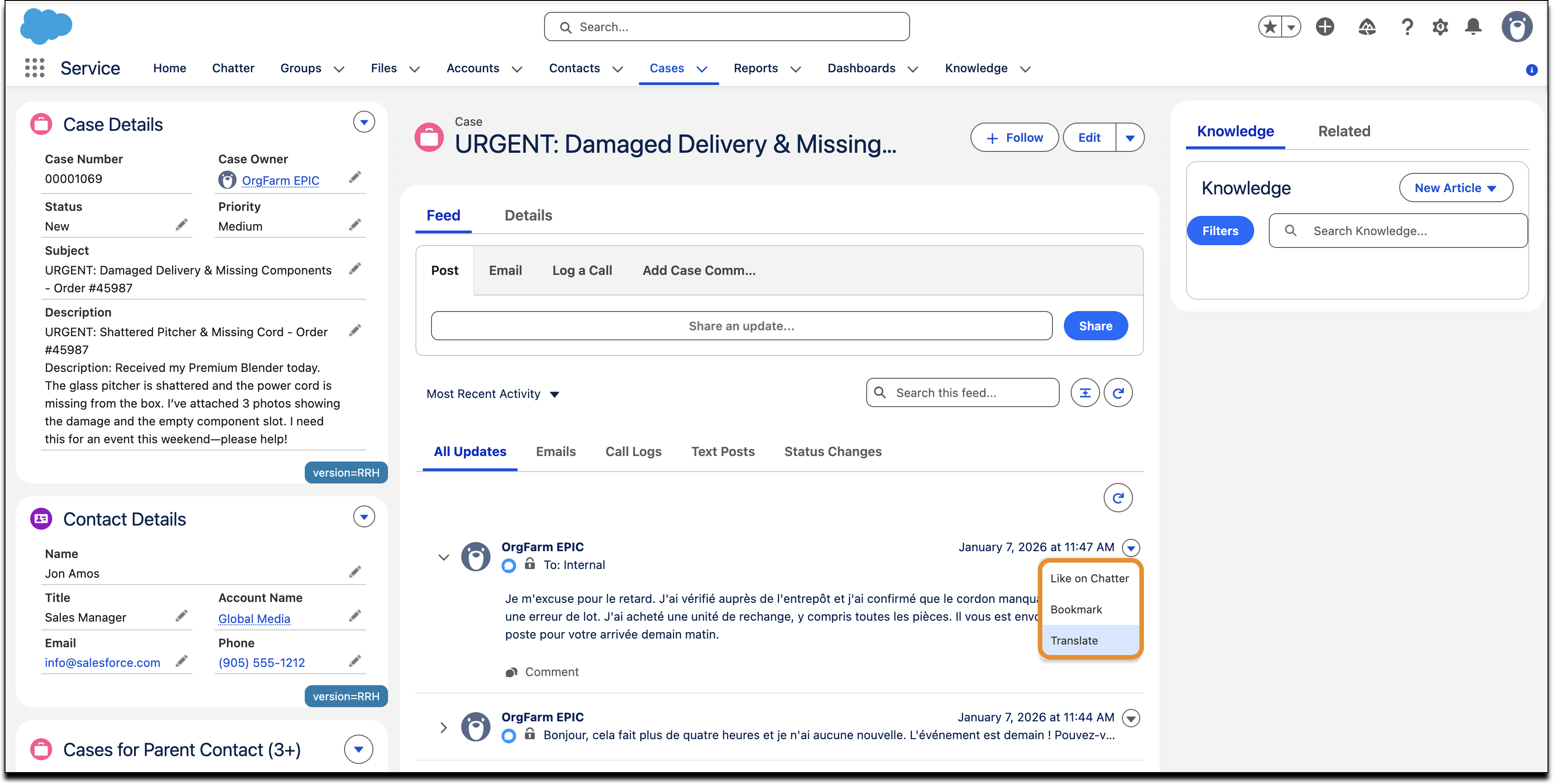
In All Updates, navigate to the case comment you want to
translate. Click the dropdown to the right of the comment, and select
Translate.
Review the translated version of the comment.
Translate Comments in the Comments Composer
Write a reply to a comment
in your preferred language, translate your response in the comment composer into the user’s
preferred language and then send it.
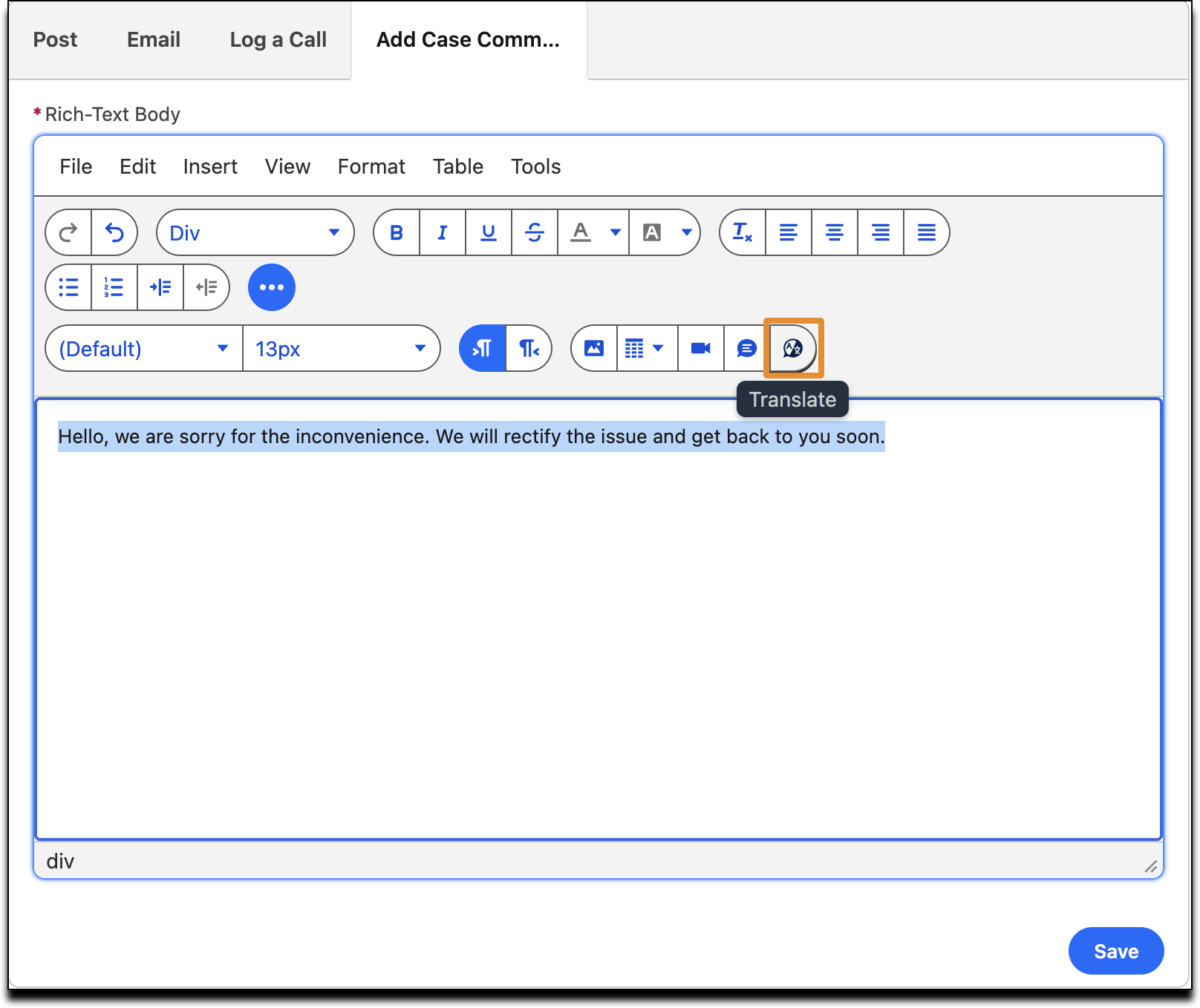
Write the comment in the composer in your preferred language.
Click the Translate button in the toolbar.
In the Translated Text window, select the language you want to translate the comment
into from the dropdown. Click Insert.
Make final edits to your response, save the response and send it.
Did this article solve your issue?
Let us know so we can improve!
Loading
Salesforce Help | Article
Cookie Consent Manager
General Information
Required Cookies
Functional Cookies
Advertising Cookies
General Information
We use three kinds of cookies on our websites: required, functional, and advertising. You can choose whether functional and advertising cookies apply. Click on the different cookie categories to find out more about each category and to change the default settings.
Privacy Statement
Required Cookies
Always Active
Required cookies are necessary for basic website functionality. Some examples include: session cookies needed to transmit the website, authentication cookies, and security cookies.
Functional Cookies
Functional cookies enhance functions, performance, and services on the website. Some examples include: cookies used to analyze site traffic, cookies used for market research, and cookies used to display advertising that is not directed to a particular individual.
Advertising Cookies
Advertising cookies track activity across websites in order to understand a viewer’s interests, and direct them specific marketing. Some examples include: cookies used for remarketing, or interest-based advertising.