When you set up your app, you can choose whether the Omni-Channel component appears as
a sidebar or in the utility bar at the bottom of your screen. The sidebar and utility-bar
versions of the Omni-Channel component have equivalent functionality. However, the sidebar
layout is recommended because it provides more screen real estate and is the primary location
for future Omni-Channel component features.
Note The sidebar layout is available with Enhanced Omni-Channel
only.
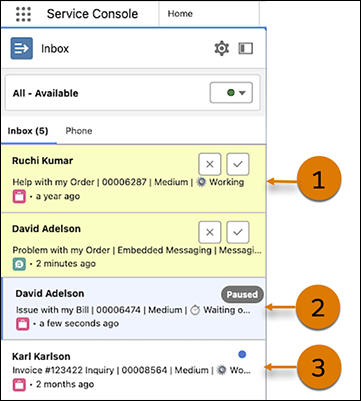
Regardless of which layout you choose, the Omni-Channel component organizes work items with
new work items at the top, in-progress items in the middle, and paused items at the bottom.
Within each of those groups, the inbox organizes work items from most recently updated to
least, with the most recent ones appearing higher in the list. Open work items are highlighted
in yellow and paused work items are highlighted in gray. Updated work items have a blue
dot.
This image shows new work (1), selected work that’s paused (2), and work with an update
notification (3) in the Omni-Channel component.
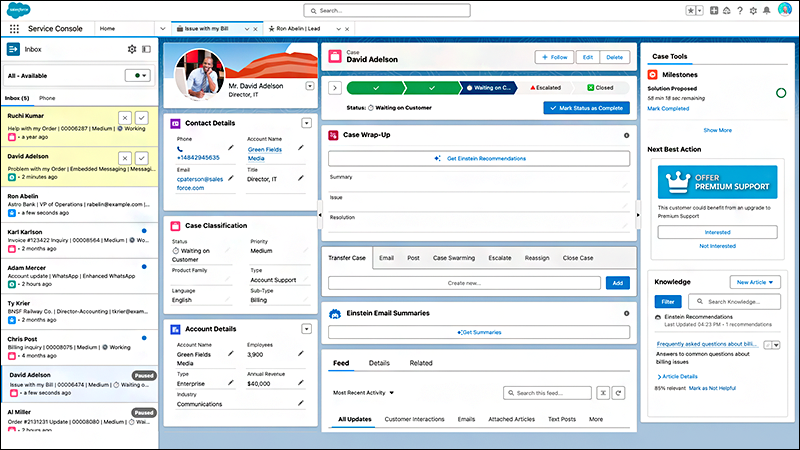
This image shows the Service Console with the Omni-Channel component opened in the
sidebar.
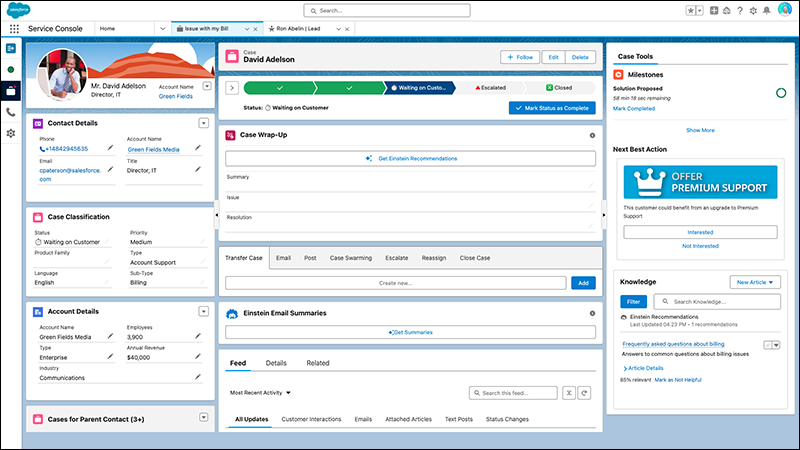
This image shows the same Service Console with the Omni-Channel sidebar view collapsed.
Did this article solve your issue?
Let us know so we can improve!
Loading
Salesforce Help | Article
Cookie Consent Manager
General Information
Required Cookies
Functional Cookies
Advertising Cookies
General Information
We use three kinds of cookies on our websites: required, functional, and advertising. You can choose whether functional and advertising cookies apply. Click on the different cookie categories to find out more about each category and to change the default settings.
Privacy Statement
Required Cookies
Always Active
Required cookies are necessary for basic website functionality. Some examples include: session cookies needed to transmit the website, authentication cookies, and security cookies.
Functional Cookies
Functional cookies enhance functions, performance, and services on the website. Some examples include: cookies used to analyze site traffic, cookies used for market research, and cookies used to display advertising that is not directed to a particular individual.
Advertising Cookies
Advertising cookies track activity across websites in order to understand a viewer’s interests, and direct them specific marketing. Some examples include: cookies used for remarketing, or interest-based advertising.