View, create, and edit records, view your team’s pipeline, and share records with
people and channels—all without leaving Slack.
Required Editions
User Permissions
Needed
To install and log in to the Sales Cloud for Slack app:
Connect Salesforce with Slack
AND
Slack Sales
User
To view accounts, contacts, leads or opportunities using Sales Cloud
for Slack:
Read on Account, Contact, Lead or Opportunity
To view accounts, contacts, leads or opportunities using Sales Cloud
for Slack:
Edit on Account, Contact, Lead or Opportunity
Create, edit, and share records in Slack with these shortcuts and slash commands.
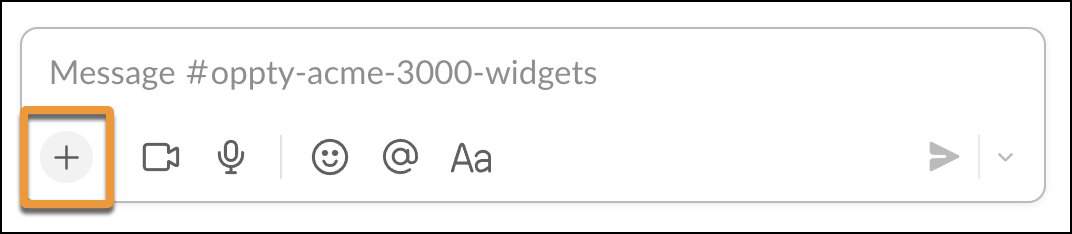
Start typing a command directly into the Slack
message field. For shortcuts, you can also click the Slack shortcut menu. Copying shortcut
text into the message field doesn’t activate the associated action.
Create a record: /create a record with Sales Cloud for
Slack
Search for a record: /sales-search [object] [terms] (For
example, to search for an opportunity called Very Good Coffee, type
/sales-search opportunity Very Good Coffee.)
If you have the correct permissions, you can view related lists and edit the record from
the record view. To share a record, open the record and click Share. Keep in mind that
not everyone has full access to the record. Access depends on the user’s permission
settings in Salesforce.
Note You can see the first 10 records for a related list. To view the full list, open the
related list in Salesforce.
Did this article solve your issue?
Let us know so we can improve!
Loading
Salesforce Help | Article
Cookie Consent Manager
General Information
Required Cookies
Functional Cookies
Advertising Cookies
General Information
We use three kinds of cookies on our websites: required, functional, and advertising. You can choose whether functional and advertising cookies apply. Click on the different cookie categories to find out more about each category and to change the default settings.
Privacy Statement
Required Cookies
Always Active
Required cookies are necessary for basic website functionality. Some examples include: session cookies needed to transmit the website, authentication cookies, and security cookies.
Functional Cookies
Functional cookies enhance functions, performance, and services on the website. Some examples include: cookies used to analyze site traffic, cookies used for market research, and cookies used to display advertising that is not directed to a particular individual.
Advertising Cookies
Advertising cookies track activity across websites in order to understand a viewer’s interests, and direct them specific marketing. Some examples include: cookies used for remarketing, or interest-based advertising.