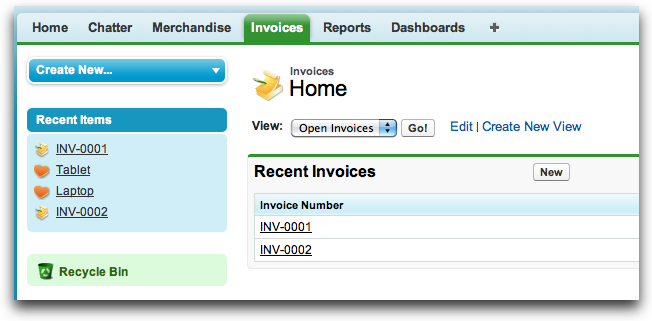
To view all standard and custom objects that are available to you in your org, click
the plus icon (+). To see the records for a particular object, click the record’s
tab.
Required Editions
Available in: Salesforce Classic
Available in: All Editions
The tabs you see depend on your permissions and how your administrator configured
Salesforce. Let’s say your company wanted to track product inventory. The Salesforce
administrator could create custom objects called Inventory and Merchandise and add
them as tabs. You can change the order of
your tabs.
Find Record Data from a Tab
From a standard or custom record tab,
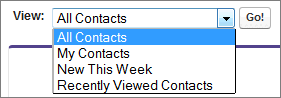
select a view and click Go!.
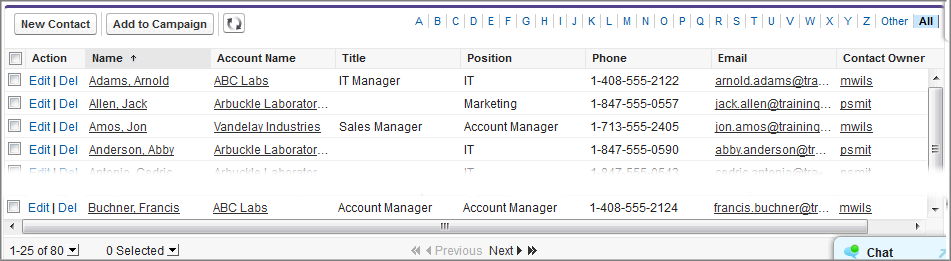
That action takes you to the list view, filtered by the view you
selected.
For example, if you select New This Week on the Contacts tab, the list view
shows you the new contacts that were added this week.
Use Related Lists to Find Record Data
On many records, below the
main page sections, look for related lists. They identify records that are
associated with the record you’re currently viewing. For example, an account record
probably has a related list of contacts at that account. Which records you can view
and update depends on your user profile, user permissions, and sharing settings.
Work with your administrator to make sure that you have access to the records and
data you need.
Did this article solve your issue?
Let us know so we can improve!
Loading
Salesforce Help | Article
Cookie Consent Manager
General Information
Required Cookies
Functional Cookies
Advertising Cookies
General Information
We use three kinds of cookies on our websites: required, functional, and advertising. You can choose whether functional and advertising cookies apply. Click on the different cookie categories to find out more about each category and to change the default settings.
Privacy Statement
Required Cookies
Always Active
Required cookies are necessary for basic website functionality. Some examples include: session cookies needed to transmit the website, authentication cookies, and security cookies.
Functional Cookies
Functional cookies enhance functions, performance, and services on the website. Some examples include: cookies used to analyze site traffic, cookies used for market research, and cookies used to display advertising that is not directed to a particular individual.
Advertising Cookies
Advertising cookies track activity across websites in order to understand a viewer’s interests, and direct them specific marketing. Some examples include: cookies used for remarketing, or interest-based advertising.