
You are here:
Understand the Salesforce Consent Data Model
The Salesforce Consent Data Model is the standard data model for managing consent at multiple levels, from global preferences to more granular controls. This data model, the foundation of Salesforce’s long-term view of consent, considers the individual’s entire experience, not just a single contact point. Any record that relates to an individual can have related consent considered within this model, including leads, users, person accounts, and contacts. It also provides flexibility to choose which level to manage consent initially. You can then add levels of granularity as business needs evolve or regulatory requirements change for managing that consent data.
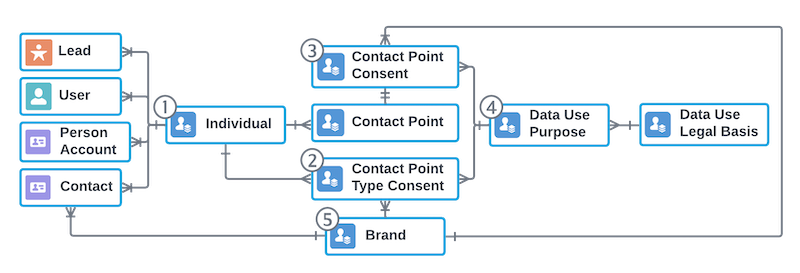
Consent is managed in the data model on four levels: global consent (1), engagement channel consent (2), contact point consent (3), data use purpose (4). Brand (5) isn’t a consent object, but it’s a critical component for distinguishing consent preferences by different brands.
Global Consent
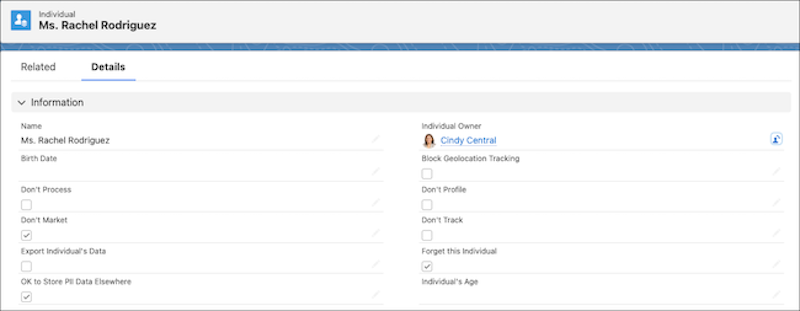
Global consent governs all-or-nothing consent settings managed on the Individual object. Global consent captures whether a customer approved communication.
Data privacy records based on the Individual object contain fields for managing global privacy settings.
- Block Geolocation Tracking—Preference to not track geolocation on mobile devices,
- Don’t Process—Preference to not process personal data, which can include collecting, storing, and sharing personal data.
- Don’t Profile—Preference to not process data for predicting personal attributes, such as interests, behavior, and location.
- Don’t Solicit—Preference to not solicit products and services,
- Don’t Track—Preference to not track customer web activity and whether the customer opens email sent through Salesforce.
- Export Individual’s Data—Preference to export personal data for delivery to the individual.
- Forget This Individual—Preference to delete records and personal data related to this individual.
- Individual’s Age—Indication for whether the individual is considered to be a minor.
- OK to Store PII Data Elsewhere—Indication that you can store personally identifiable information outside of their legislation area. For example, you can store an EU citizen’s personal data in the US.

Engagement Channel Consent
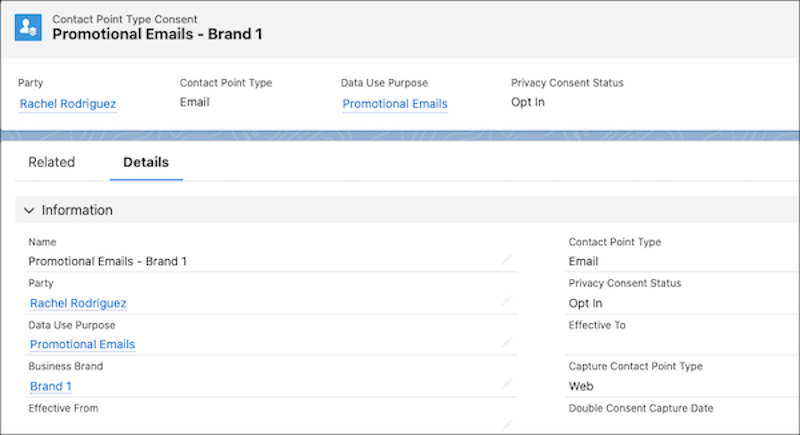
Engagement channel consent is managed on the ContactPointTypeConsent object. Use contact point type consent records to enter consent preferences by a particular contact type, such as email or phone.
Contact Point Consent
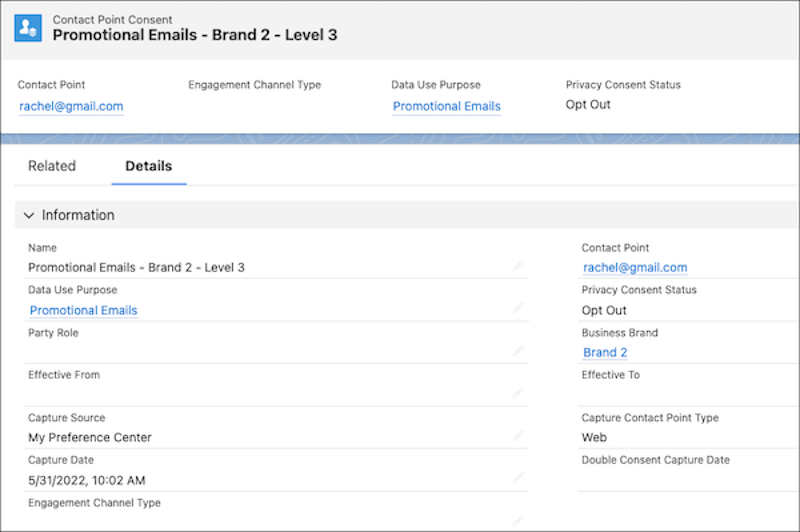
A customer’s consent to be contacted is managed on the ContactPoinConsent object. Contact point consent records help you set consent by a specific contact point to be able to consider different consent preferences. For example, record a customer’s preferences for using a personal email as opposed to a work email address.
Data Use Purpose
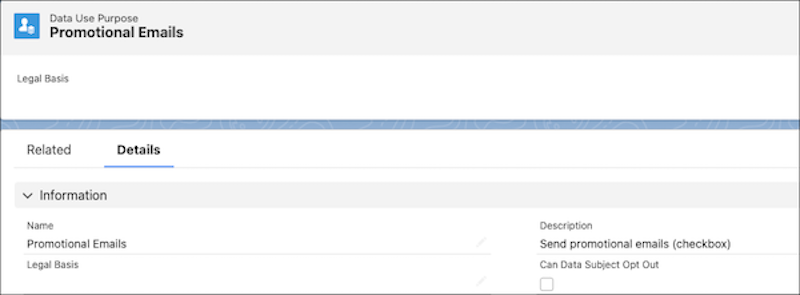
The DataUsePurpose object captures consent based on the reason for a communication. It’s displayed in data use purpose records. The reason can be any legitimate business interest, including items that:
- Are legal in nature, such as recall notices.
- Used for marketing purposes, such as weekly newsletters,
- Provide a service, such as warranty support.
Data use purpose can relate to Contact Point Type Consent and Contact Point Consent objects.
Brand
Brand is managed on the BusinessBrand object. While not strictly part of the consent data model, Brand helps you distinguish between privacy and consent preferences that vary between different brands operating in the same Salesforce org. The Brand object has a native relationship with Contact Point Type Consent and Contact Point Consent objects. To tie an originating contact record with its related contact point consent records in Marketing Cloud Engagement, we also connect Brand to the Contact object.
Understanding Currently Available Consent APIs
Users sometimes store consent preferences inconsistently across different locations. To locate customer consent preferences across multiple records, use Consent API with specific Data Cloud parameters. Tracking consent preferences helps you and your users respect the most restrictive requests.
Consent API aggregates consent settings across the Contact, Contact Point Type Consent, Data Use Purpose, Individual, Lead, Person Account, and User objects when the records have a lookup relationship. The Consent API can’t locate records in which the email address field is protected by Shield Platform Encryption.
The Consent API returns consent details based on a single action, like email or track. The multiaction endpoint allows you to request multiple actions in a single API call.
Related Content

|
Take the next steps in this implementation. |
